UNICEF bringing hope to Bulambuli in Uganda following devastating landslide
The displaced were relocated to a primary school within Bunambutye Resettlement Centre


Bulambuli in eastern Uganda is one of the districts that host the imposing Mountain Elgon ranges that rise in almost identical patterns extending beyond where one could see with a naked human eye providing a jaw-dropping scenery. The journey to Bulambuli takes you through winding roads revealing the region’s breathtaking beauty— slopes and landscapes pitched with lush montane forests, grasslands and moorlands.
The region is an extinct volcano with rocks forming the terrain. It is a fertile area that receives heavy rainfall which continues to attract human settlement. However, behind that beauty, lies a destructive streak to the region’s inhabitants.
Many times, heavy rainfalls lead to landslides that kill and displace people just like on 27 November 2024. This time, the most affected areas were Masugu and Bulugunya sub counties where 30 people were killed with 125 missing and 24 admitted to various health facilities. Hundreds were left homeless.
The displaced were relocated to a primary school within Bunambutye Resettlement Centre, which is accommodating 1,800 people.
Interventions were quickly needed to save more lives especially children and their mothers. “The aftermath of this disaster required swift intervention to address critical sanitation and hygiene concerns in the affected areas, especially in the resettlement centres,” says Martin Naimu, the acting Bulambuli District Health Officer.
“UNICEF recognized the urgency of providing sanitation services, which included emptying the pit latrines that had filled up due to the sudden increase in population, waste generation, and flooding in the lower belt of the district,” he adds. Naimu reveals that the provision of environmental cleaning kits by UNICEF ensured proper hygiene and waste management for the affected persons.

15 tents including five from UNICEF were pitched to provide temporary shelter, each with a leadership structure to support in enhancing discipline and cleanliness within the resettlement centre.
Additionally, UNICEF supported the de-sludging of 50 latrine stances at Bunambutye Primary School, Bunambutye Health Centre III, Muyembe Health Centre IV and two septic tanks at the centre and nearby healthcare facilities leading to the restoration of access.
Two temporary latrines with six stances were constructed. Also, 35 hygiene kits (wheelbarrows, spades, rakes, buckets, hoes, slashers, local brooms, jerrycans, sanitary pads and soap) were delivered.
“Working with other organizations, we established a medical camp and supported health workers and volunteers and supplied safe water to the community. Psychosocial support and training of para social workers is ongoing, coordinated by Strong Minds,” explains JB Kimuli Sempala, the WASH/Emergency Focal Person at the UNICEF Uganda Field Office in Moroto. UNICEF’s Moroto Office is overseeing the response in Bulambuli.
However, despite the fairly well managed and coordinated response, there are still vivid gaps. “We are facing dwindling stocks of antibiotics at the medical camp, which calls for urgent replenishment,” Sempala explains. “Results from water samples from 40 wells show high contamination of water sources because of flooding. This requires urgent support to disinfect the affected wells,” he adds.
To avoid a humanitarian tragedy in the area, there is a “need to step up risk communication and community engagement interventions beyond the centre to raise awareness about the spread of diseases and provision of tools for general cleanliness, bush clearing, and solid waste management,” says Sempala.

According to Rebecca Kwagala, the Chief of UNICEF Moroto Field Office, several supplies have been procured and distributed to the landslide survivors and those relocated to Bunambutye Resettlement Centre.
These include:
- 10 buckets of chlorine sodium hypochlorite – 45kgs each
- 10 boxes of aqua tabs
- 400 water storage containers
- Personal protective equipment for volunteers, hygienists, and village health teams at the reception centre. These include overalls, gum boots (50), heavy duty gloves (50), masks, umbrellas, and t-shirts.
- 50 jerrycans of liquid soap – 5 litres per jerrycan
- 150 cartoons of laundry soap -800gms each
- 42 pieces of mop brushes
- 50 pieces of hand brushes and metallic buckets
- 15 sprayer pumps
- 200 bottles of liquid detergent
- 50 Middle Upper Arm Circumference (MUAC) tapes for screening malnutrition among children aged 6-59 months.
- 36 pieces of tarpaulins
Kwagala added that UNICEF has also procured and installed 20 handwashing facilities for communal latrines, markets, and other community meeting places and 500 pieces of re-usable pads.
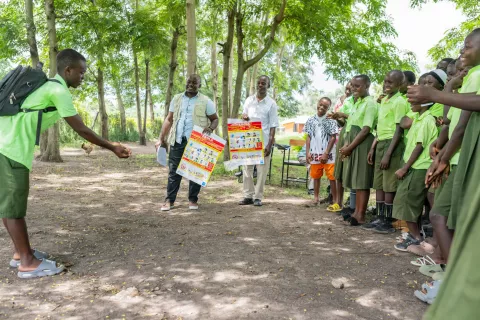
To avert any disease outbreaks among the displaced families, 2000 posters on the prevention of cholera and 1,000 flyers on mpox were printed and distributed, according to Kwagala.
She also explained that a set of malaria kits and malaria screening kits have been provided.