Surviving Ebola and keeping strong amidst stigma
Harriet now lives happily in her community and continues to share her encounter with the deadly Ebola Virus Disease.
In January 2025, Harriet Kamanyi, 55, and her family were excited to have an addition to the family as her sister-in-law was pregnant and her first child had come to live with Harriet and in Kata Village, Katadde Parish in Kasangati Municipality, Wakiso District, Uganda.
The excitement was, however, short-lived as her sister-in-law experienced recurrent health complications in the last stages of pregnancy. ‘She later delivered in hospital but her health continued to deteriorate until she succumbed to an unknown disease that was later suspected to be Ebola’, Harriet narrated.
Harriet noted that while they were completely unaware of the cause of death and risks associated, the family members in company of relatives and friends were involved in transportation and burial of the deceased in Ntoroko District – over 300 miles away from her home in Wakiso.
At the burial, the newborn baby got ill and was admitted to a hospital in Fort Portal where he too died a few days after admission. The body was transported back to Kasanje in Wakiso District for burial.
Before coming to terms with the loss of her sister-in-law and her baby, Harriet’s family was again struck with more tragedy when her nephew died.
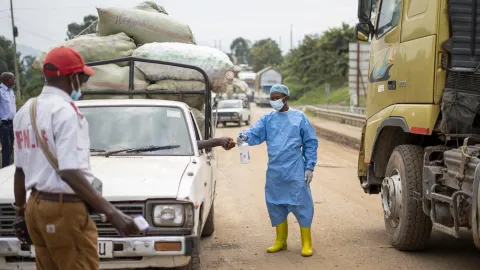
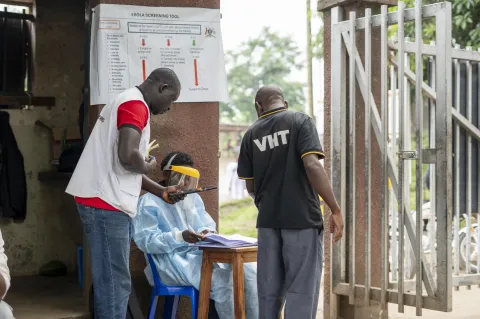
As the family mourned the tragic death of three family members, health workers started visiting them and tracing everyone that participated in care and burial of the deceased persons. This further scared and traumatised the family.

Due to fear and uncertainty, some family members went into hiding when they heard that the cause of recent deaths in the family was Ebola and that all those close to the deceased people were to be taken to the Ebola isolation facility.
“Fear engulfed me when I heard health workers were looking for me. I had to hide in my neighbour’s house. While hiding, I heard health workers asking for my telephone contact,” Harriet recalls.
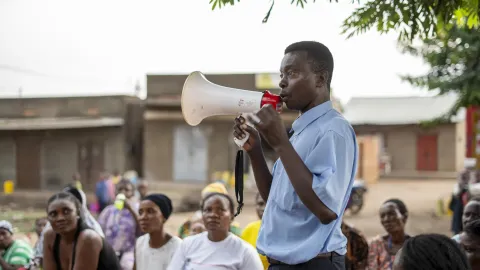
Although they did not get her contact, the health workers did not give up the search. Health workers sensitised Harriet’s family members, local leaders and community members about Ebola and its risks especially for people involved in the care and burial of those who have died of Ebola.
Eventually, health workers found out Harriet was hiding at her neighbour’s home. ‘At the time, I was very weak with a fever and felt a lot of pain. I agreed to be taken to the isolation facility’, Harriet said.
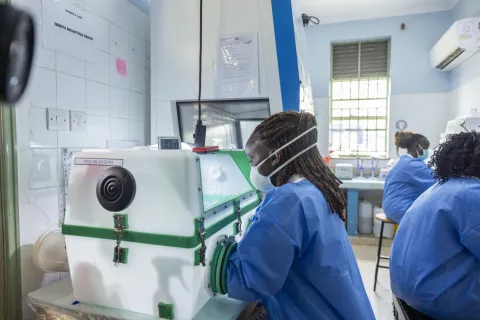
Harriet recounts the process of evacuation from the community to the Ebola isolation facility as one that challenged her abilities. “When I reached the Ebola isolation facility at Mulago hospital, my blood sample was taken, and it turned out to be positive for Ebola. I was worried but I received counselling, medical care and good feeding. I got cured and was happy to be discharged Ebola free,” Harriet says with great relief.
While back at home, Harriet was not well received by the community members, but this did not frighten her since she overcame the deadly Ebola Virus Disease. “My community members isolated me and labelled me Ebola! One day, I went to the shop, but the shopkeeper rejected my money while others feared passing by my house’. Despite all the stigma, Harriet resolved to keep strong and positive about life since she had survived the deadly Ebola Virus Disease.
Even with the denial, isolation and stigmatization by the community, Harriet had the courage to attend her community church prayers and meetings organized by her church leaders.

“I felt relieved and more empowered as I shared my story with my community church members. I was a living testimony that me and others who were taken to isolation got cured and no longer a threat to the community.”
Harriet now lives happily in her community and continues to share her encounter with the deadly Ebola Virus Disease. “I am pleased that I survived the deadly Ebola Virus Disease. I am always free to share my story with my community members, and this has helped me come to terms with what I went through” Harriet Kamanyi, Ebola Survivor.
With support from USAID and Sweden, UNICEF Uganda played a pivotal role in Risk Communication and Community Engagement (RCCE) during the recent Sudan Ebola Virus Disease (SVD) outbreak from January to April 2025. UNICEF, as co-chair of the RCCE pillar, worked closely with the Ministry of Health’s Health Promotion, Education and Communication Department and partners to design culturally sensitive public awareness campaigns to educate communities on recognising Ebola symptoms and reporting suspected cases early. UNICEF intensified sustained messaging through radio, TV, social media, community dialogues, and traditional leaders in high-risk districts, ensuring accurate information reached vulnerable populations. These RCCE efforts were part of a broader joint UN initiative—alongside WHO and others—to strengthen disease surveillance, infection prevention, and psychosocial support
Through targeted communication, community-led contact tracing, and monitoring of more than 500 contacts, UNICEF helped foster community trust, reduce stigma, and played a key role in interrupting transmission chains, contributing to Uganda being declared Ebola‑free on April 26 after 42 days without new cases.