Taking the hospital to the children
UNICEF’s integrated health outreaches are facilitating the transition to full immunization for vulnerable children in Uganda
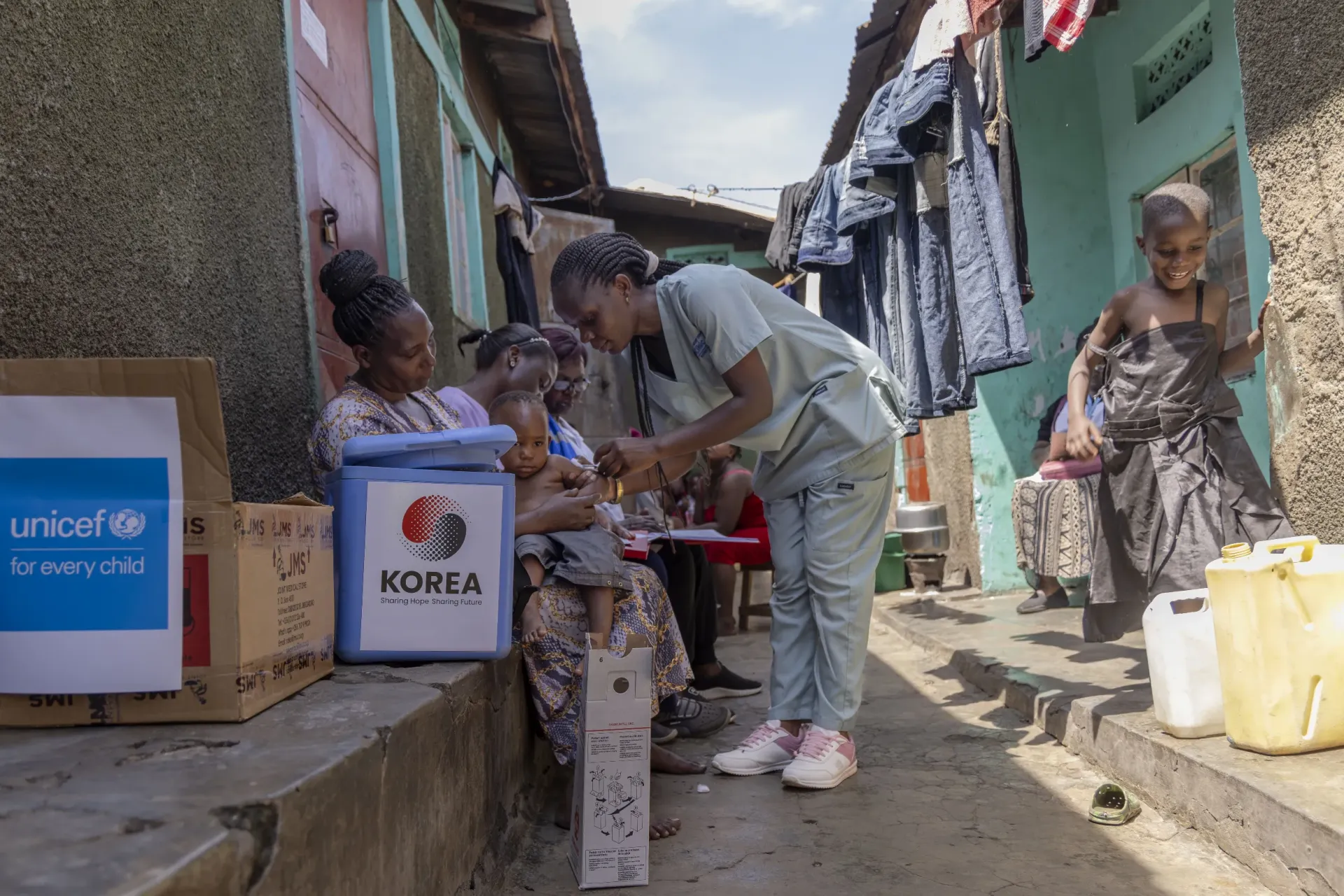
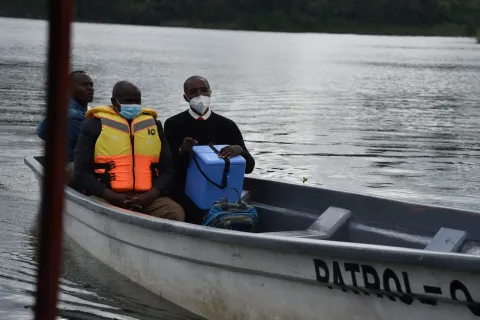
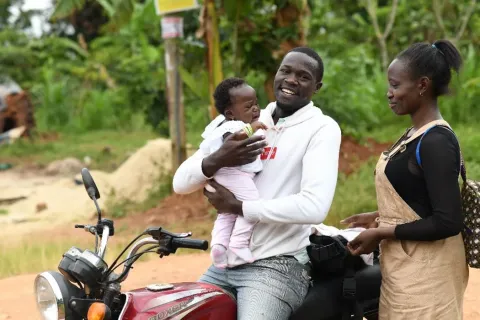
It is 9:00 am, and the waiting area at Kyampisi Health Centre III in Mukono District already has a queue of 15 patients. As one nurse attends to them, a team of five health workers in the adjacent block huddle together, packing syringes, medicine bottles, gloves and other medical supplies in a big blue bag. Soon after, they hop onto motorcycle taxis, known as boda bodas, and ride away. Forty minutes and 13km later, the team arrives at Kanikwa Village, Bulijjo Parish in Kyampisi Sub-County, and finds a growing gathering of women at the home of a community health worker. Each woman is carrying a baby.
“They cannot come to hospital, so we take the hospital to them,” says Sylvia Namuli, a midwife at Kyampisi Health Centre III and the team lead of a community health outreach to Kanikwa Village.
The integrated community health outreaches are a key UNICEF strategy to enhance access to immunization for vulnerable communities, especially zero-dose children – defined as those who have not received the first dose of the diphtheria, tetanus, and pertussis vaccine (DTP1) by the end of their first year of life. Funded by the Government of the Republic of Korea, the Access to COVID-19 Tools Accelerator (ACT-A) Programme is a global effort in 34 countries that seeks to ensure healthy lives and end preventable deaths for all children as captured under Sustainable Development Goal 3 on Good Health and Well-being. Uganda joined the programme in December 2024 and 11 months later, the results are evident in Wakiso, Kampala and Mukono, the three districts of implementation.
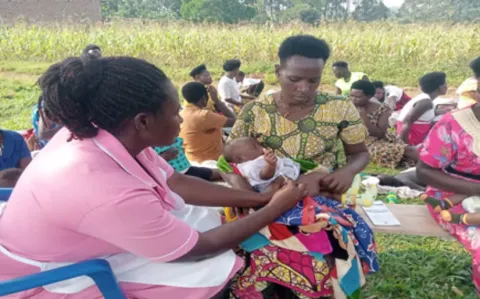
By 10:00 am, the veranda of the community health worker’s home is teeming with young children, cuddled in their mother’s arms. Among them are two-week-old Peter, who was delivered by a traditional birth attendant who made no mention of vaccination to his mother, five-day-old Eseza, who was discharged from the hospital without receiving her first vaccine, and 10-week-old Austin, who had missed a scheduled vaccination. These infants are now able to access vital immunizations, and more. The community outreaches also integrate other health services including HIV testing and referral, malaria treatment and nutrition management, which are a lifeline for those who can’t afford the journey to the hospital. The outreach team lead, Namuli, notes that transport to the nearest hospital costs UGX 15,000 (about US$ 4). “For some mothers who cannot even afford UGX 1,000 (US$ 0.28), this is a lot of money,” she says.
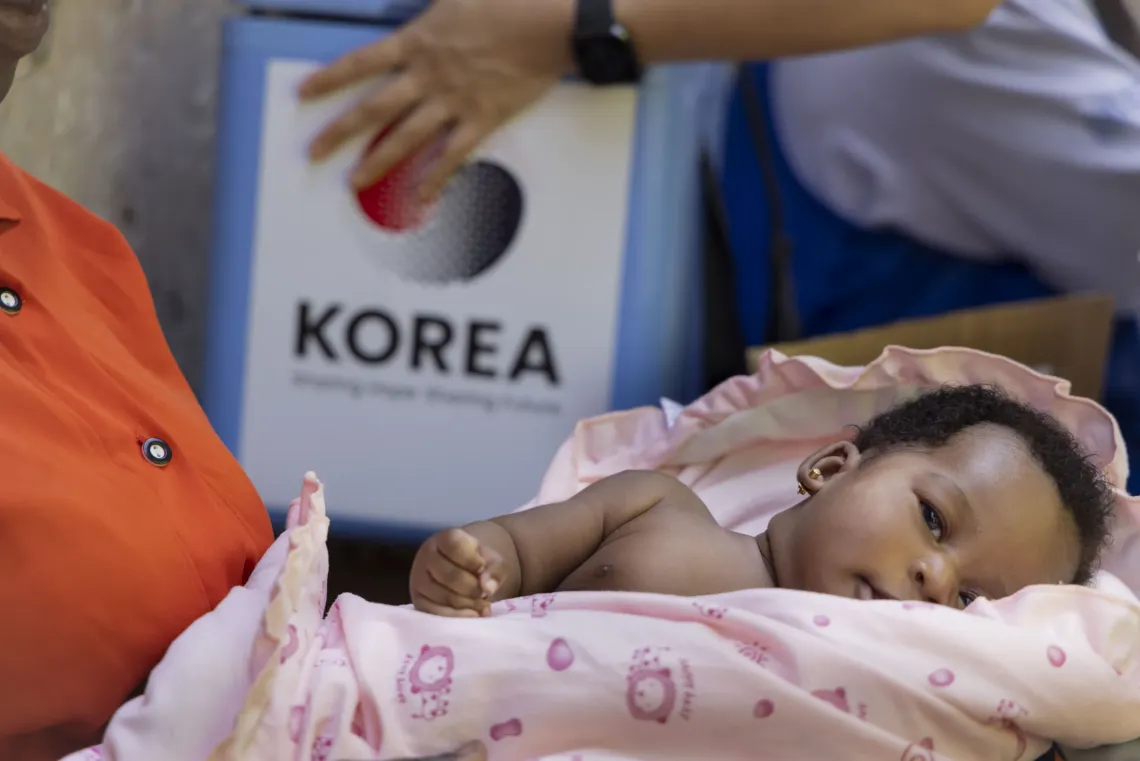
According to Savio Kakeeto, a Zero Dose Consultant at UNICEF Uganda, approximately 312 outreaches are conducted monthly with funding from the Republic of Korea across the three districts between October and December in 2025, reaching underserved children.
“With increased awareness, we are certain that one day, all of our children will be fully immunized,” Namuli says, while reviewing the day’s number of immunized children, in the government immunization records book.
Though immunization is done within the community, the children’s data is captured in the government health facility records, entered into the DHIS database monthly and used for tracking, follow up and referral to other health services. The mothers and children themselves play a vital role, spreading awareness to their peers and also helping to identify the zero-dose and under-immunized children. At an October outreach in Butto Village in Wakiso District, each of the mothers cringes as their babies receive injections on the left arm against measles, the right upper thigh against Hepatitis B and the left mid-thigh against diphtheria. Even as babies’ screams fill the air, more mothers keep joining the queue, spurred on by the advice and support of others.
“Immunization saves our babies from many diseases,” one mother says, wincing as a vaccine is injected into her son’s leg.
Similar scenes occur in the 312 monthly outreaches across the three programme districts, enhancing not only awareness but also access to life-saving vaccines for children. In addition, the ACT-A Programme is strengthening community-based surveillance system; training health workers to use the electronic Community Health Information System (eCHIS), and the WASH Management Information System (WASH MIS); and providing WASH supplies to 10 health facilities, thereby contributing to building a more resilient health system to protect the most vulnerable children.