From bystanders to champions
The fathers boosting child health in vulnerable communities in Uganda

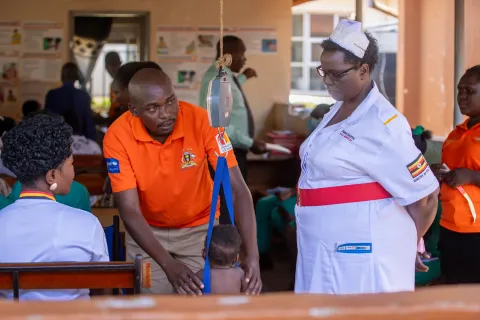
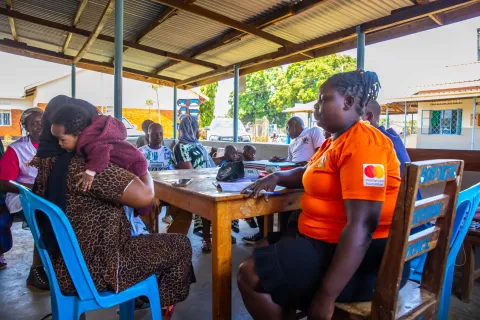
A quick count of the adults at a community health outreach in Butto Village, Koboko Parish, Wakiso District, reveals at least seven women in a queue. Every few minutes, more women arrive, children cradled in their arms or strapped to their backs, and still, no man. Until Emmanuel Osire, that is. He walks into the compound carrying a giggling young boy in his right arm, a white child health card in his left arm. Heading straight to the nurses’ table, Emmanuel says hello, hands over the health card, and takes a seat, the solitary male amidst tens of mothers at the home of the village health team member (VHT), which doubles as the community outreach centre.
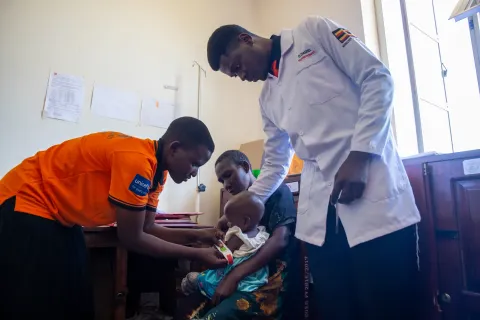
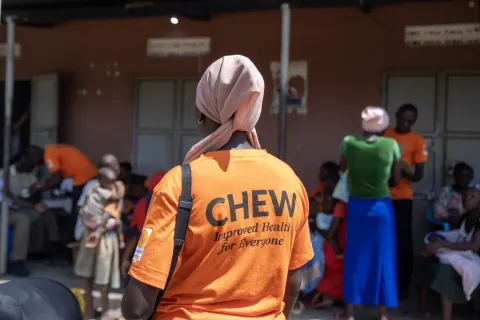
Once a month, a team of health workers from Bweyogerere Health Centre III pitches camp in a central location in the highly populated slums of Butto Village and provides immunization as well as other integrated services like HIV testing, family planning, nutrition and general health awareness. These community health outreaches are an initiative of UNICEF Uganda under the Access to COVID-19 Tools Accelerator (ACT-A) Programme. Funded by the Government of the Republic of Korea, ACT-A is a global effort in 34 countries that seeks to ensure healthy lives and end preventable deaths for all children, as encapsulated in Sustainable Development Goal 3 on Good Health and Well-being. Launched in Uganda in December 2024, ACT-A seeks to strengthen the health system, focusing on immunization, community health, and water, sanitation and hygiene (WASH) in Kampala, Mukono and Wakiso Districts.
In addition to integrated immunization outreaches, the ACT-A Programme is also strengthening urban immunization through mapping private providers and developing urban strategies. It also supports community health by enhancing surveillance systems and building the capacity of VHTs and health workers on the National Community Health Strategy and the electronic Community Health Information System (eCHIS). Furthermore, it improves primary health care WASH infrastructure by training health workers on the WASH Management Information System (WASH MIS) and providing WASH supplies to 10 health facilities.

Rose Birungi, 62, a VHT in Kanikwa Village, Bulijjo Parish, Mukono District, notes that the door-to-door awareness sessions before and during the outreaches are changing male attitudes towards participation in childcare, particularly immunization. She notes that in the past, no single man would visit the outreach centre and some men even forbade their wives from immunizing their children, believing that vaccination was harmful. “At the start of the outreaches in January, we would find closed doors, but now, after months of sharing accurate information and providing access to vaccines and other health services, we find people eagerly waiting for us, “Birungi says. “Even the men are changing,” she adds. Not only are men reminding their wives of the immunization schedules, but a few have gone one step further.
In Kanikwa, Brian Egesa, 26, takes his wife to the outreach centre for their daughter’s scheduled immunization, goes to work as a boda-boda rider, then returns to pick them one hour later. He carries his daughter while his wife finds a comfortable sitting position at the back of the motorbike. “I am glad I don’t have to walk back home,” Brian’s wife says with a wide smile.