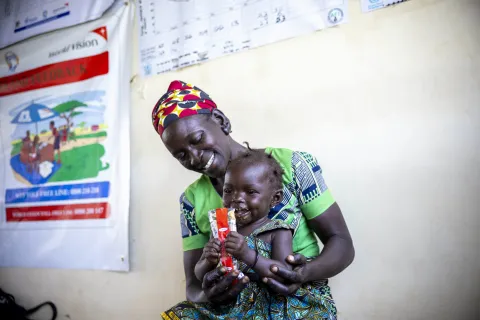
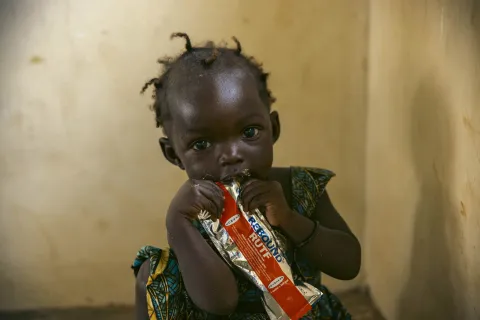
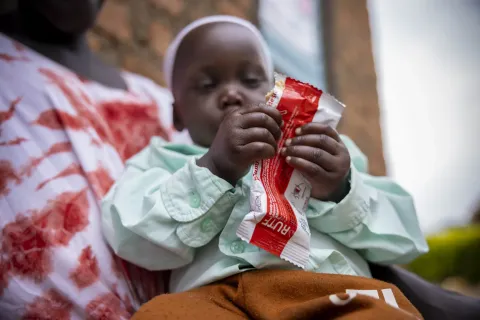
Provision of meals at school proves a significant change for school attendance in Karamoja.
UNICEF's nutrition program proves a game-changer in the region
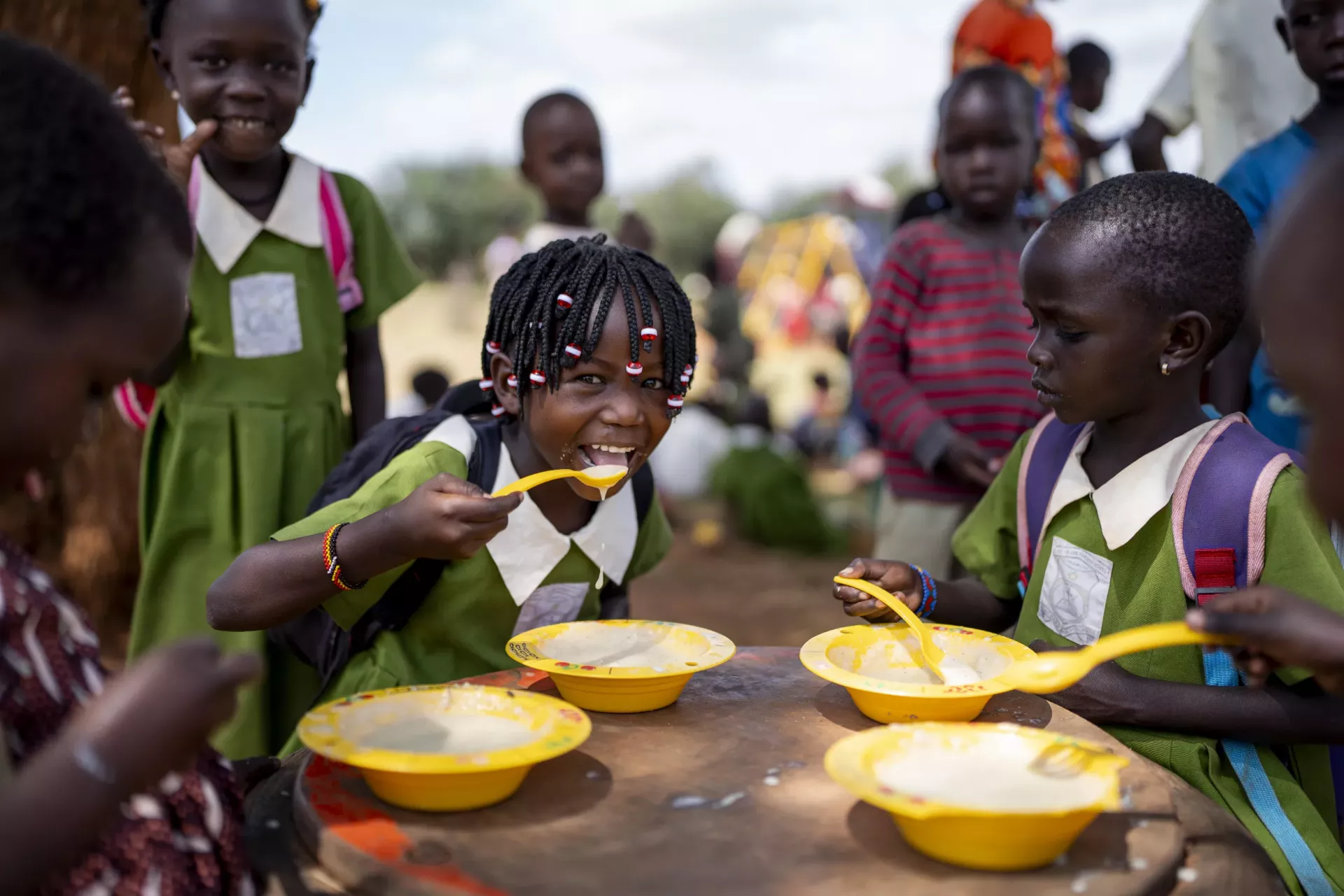
Amudat District in the Karamoja sub-region has often been plagued by poverty, malnutrition, and famine, affecting children’s growth and education. According to UNICEF’s Karamoja Nutrition Programme report, 84 per cent of households in the region cannot afford a nutritious diet.
As a result, most parents like Susan Mugide, a mother of three, have struggled to keep their children fed and in good shape to start and remain in school. This not only affects their school attendance, causing dropouts, but it significantly contributes to harmful practices such as early marriages and teenage pregnancies that are rampant in the region.
“At first, I had no interest in sending my children to school because I feared they would starve. Our community values economic activities such as cattle keeping and bride price over education. This situation worsens when schools also do not have food for the learners,” Mugide added.
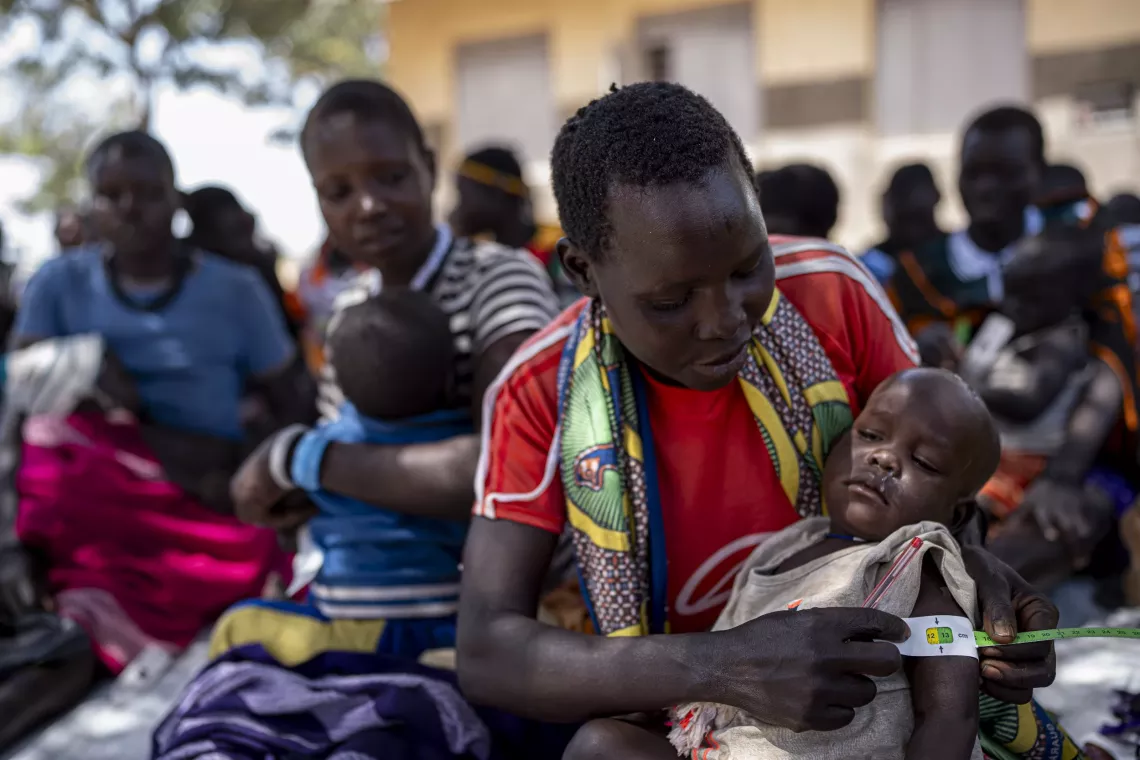
According to Agnes Acayo, the Headteacher of Loroo Primary School, pupils used to escape and go back home even before the closure of school time.
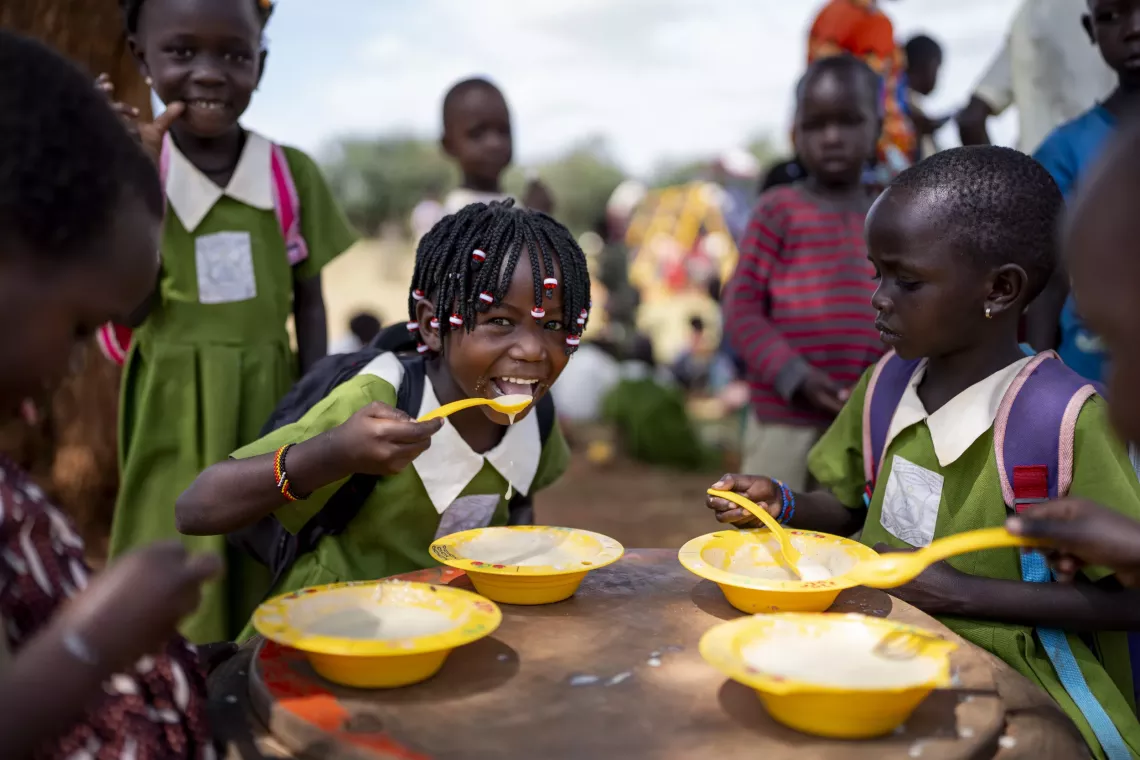
“Parents’ contribution towards their children’s feeding at school was minimal. Often, we would only boil water for them to drink during lunchtime,” Acayo noted.
The situation is not unique to Amudat District alone. Across the Karamoja sub-region, similar reports have been recorded over the last three years. UNICEF, with support from the Embassy of Ireland in December 2023, launched the Karamoja Early Childhood Nutrition (ECN) Response primarily to address the persistent nutrition crisis in the region and promote a healthy foundation for children’s growth and development.
The programme targets the districts of Kotido, Amudat, Moroto, Nabilatuk, and Kaabong, benefiting more than 20,000 children under five years across 201 Early Childhood Development (ECD) centres.
Significant change.
This unique intervention that infuses nutrition and education – two different yet co-dependent sectors- has proven to be a game-changer in the region, registering an increase in the learners’ school retention rates and improving their general health and well-being.
As Susan Mugide notes jubilantly, her children, who were previously reluctant about going to school every morning, are the first to rise at dawn to prepare for the day ahead.
“These last two terms, they are the ones who wake me up to help them prepare to come to school. Sometimes I have to remind them that school is closed over the weekend since it skips their mind considering that they are always eager to attend,” Mugide said.
At Nakoreto Primary School in Maaru Sub County in Kotido District, school enrolment has quadrupled since signing up for the ECN programme.
“At first, we had only 45 pupils attending consistently. When we started providing porridge and other nutritious foods, the number increased to 300-400 learners on regular attendance,” Secondina Akello, the Headteacher of Nakoreto Primary School in Kotido District.
The nutrition journey.
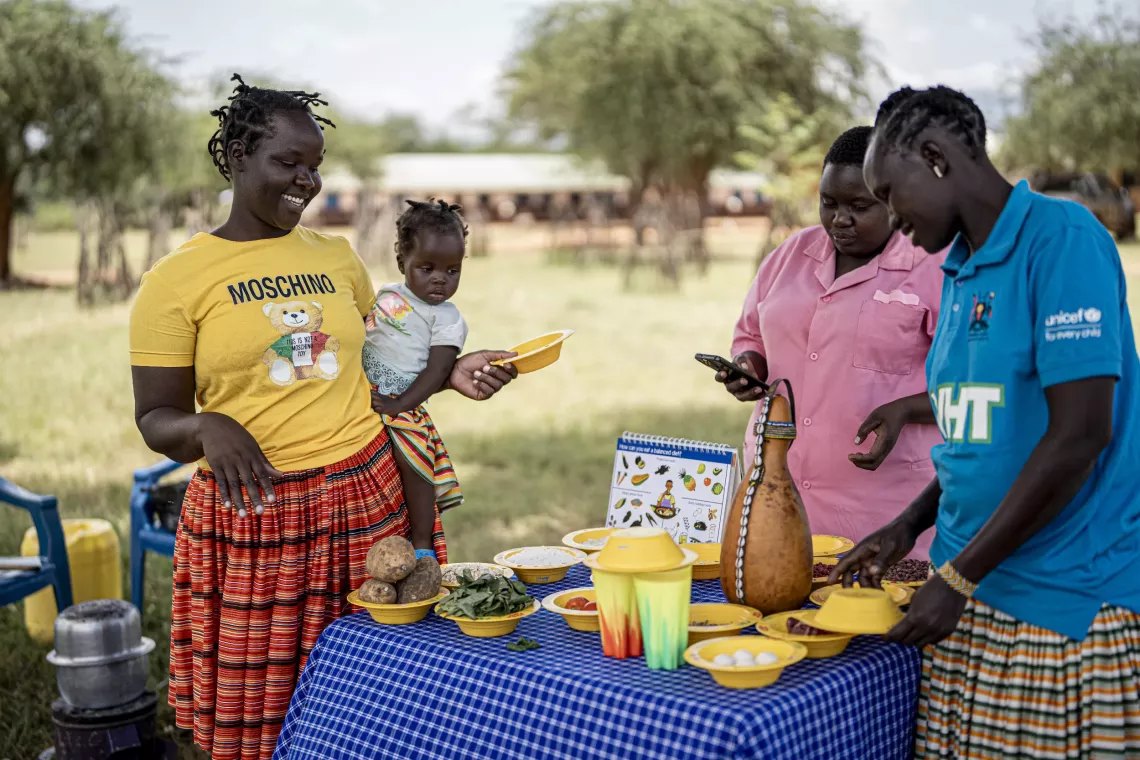
Across the 201 ECD centres in the five target districts, UNICEF, with funding from the Embassy of Ireland, identified and trained caregivers, mostly mothers with the support of Village Health Teams (VHTs) to identify malnourished children in their respective communities, perform triages which include taking their vitals such as weight and teaching fellow community members on the right foods to feed children.
Children who present with acute and severe malnutrition signs are onboarded in the ECN programme at the nearest ECD centre and monitored for progress until they are out of danger.
According to the UNICEF Nutrition Officer at the Moroto Zonal Office, Muzafaru Ssenyondo, training caregivers in communities, especially parents, gives the ECN programme a sustainability lifeline that will bear fruit even after the programme’s closure later next month.
“We have noticed tremendous progress during the food demonstrations that we conduct. Even fathers who were traditionally hands-off on nutrition and education issues in this community are now active players. Not only do they allow for the land where locally available foods can be grown, but they are also active advocates for children’s enrolment back in school,” he remarked.