National Medical Stores at the heart of Uganda’s vaccine success story
Over the last 14 years, NMS in collaboration with the Ministry of Health and partners like GAVI, the Global Vaccine Alliance and UNICEF, has registered critical strides in vaccine management in Uganda, ensuring vaccines reach the end-user.

Over the last four decades, the Government of Uganda has committed resources and initiated programmes that have contributed to a success story - one of commitment, innovation, and partnerships that have transformed the health and survival rates of children and the wellbeing of families and communities.
The 1980s, specifically, marked a vital turning point in Uganda with the launch of the Expanded Programme on Immunisation (UNEPI) in 1983. UNEPI was founded under the Ministry of Health to coordinate national immunization efforts. Uganda quickly began to realize significant gains, like kicking out polio (1996) and being declared polio-free in 2006. For these gains to be cemented, in 2012, the Government entrusted the National Medical Stores (NMS) with the logistical management of vaccines.
Over the last 14 years, NMS in collaboration with the Ministry of Health and partners like GAVI, the Global Vaccine Alliance and UNICEF, has registered critical strides in vaccine management in Uganda, ensuring vaccines reach the end-user.
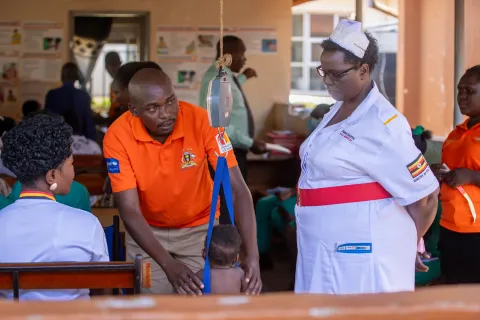
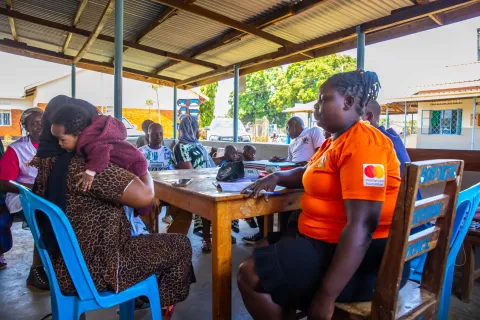
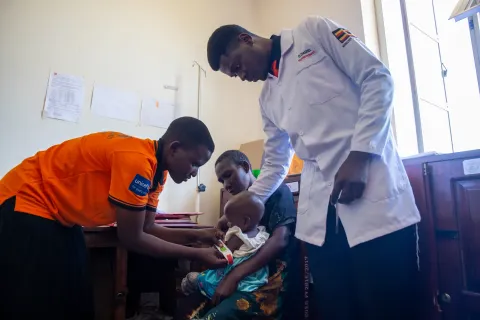
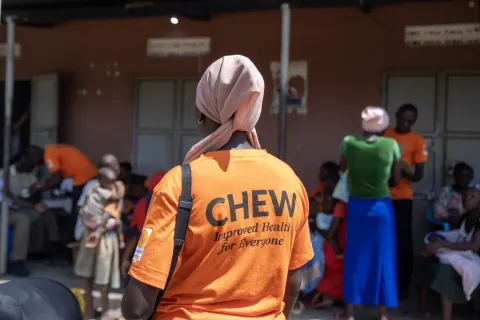
This partnership has enabled community health worker, Mariam Namanda, to reach children and their families with essential and routine vaccines.
“I once received an alert about 3 children who had missed their vaccines, within hours I was able to visit their home, understand the challenges the family faces and arrange for them to get their vaccinations. The data we collect through the digital tools also tells us about our community health journey.”

Namanda is one of the over 100 community health workers attached to Katoogo Health Centre II in Mukono, Uganda.
“One of our biggest achievements is finding zero-dose children and helping them access vaccines. This is a result of the entire village community working together, from the health workers to local leaders, to teachers who remind parents about vaccination days, as well as the religious leaders who promote health education while conducting religious services,” Namanda said.
Namanda’s story would not be possible without the intricate and thorough system of vaccine management at NMS, from procurement, storage and distribution to the District Vaccine Stores (DSV). These vaccines include those against major childhood diseases, to all public and private health facilities in the country, to achieve universal vaccine coverage, to every community within the country to continue to protect children’s health.
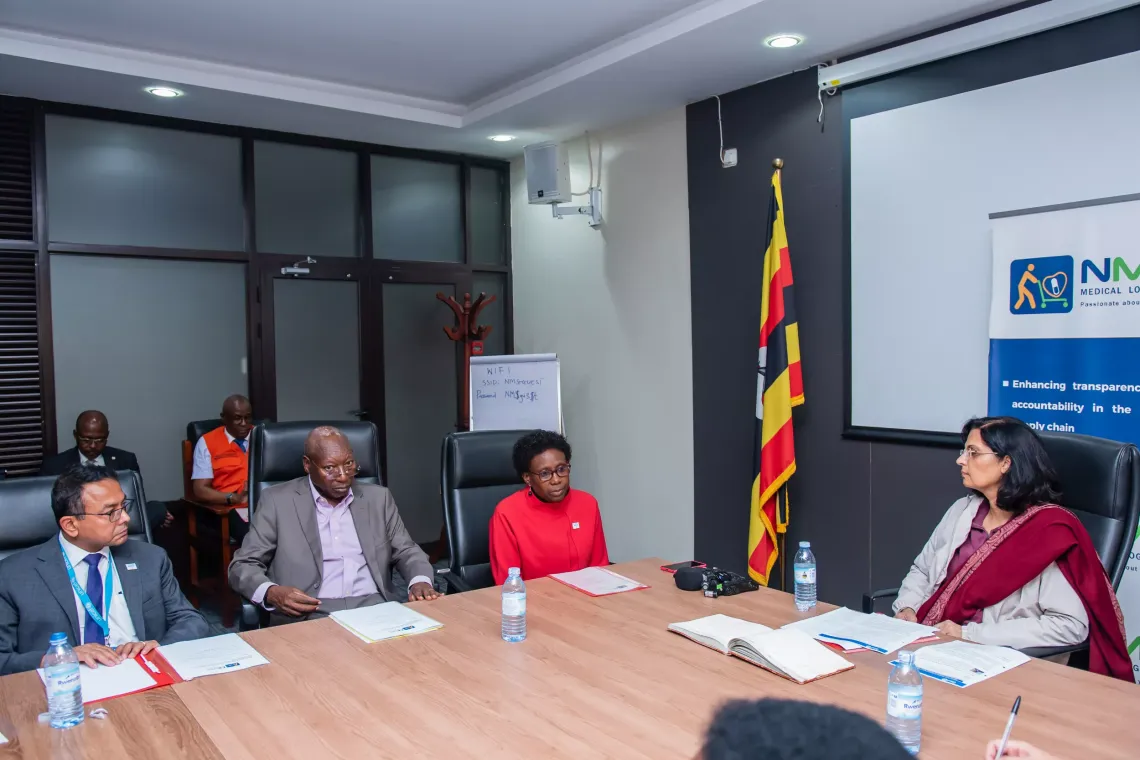
It is this management that prompted GAVI CEO, Dr. Sania Nishtar to say, “It is delightful to hear that Uganda rarely experiences stock-outs of vaccines. It is encouraging to see it up close.”
Dr. Nishtar was speaking during a tour of one of the branches of NMS in the country in November.
A vaccine stock-out occurs when there is complete absence of a particular vaccine or different vaccines; when a vaccine’s stock level reaches zero at the district level, including the recommended buffer stock of one month. A vaccine stockout indicates that the remaining safety stock for the vaccine is less than three months, and the vaccine’s supply may be at risk for the national immunization campaign.
Hosting the GAVI CEO, the Chairman Board of Directors of NMS, Dr. Jotham Musinguzi, said through NMS’s commitment, Uganda has experienced significant gains, especially in strengthening the last mile delivery.
GAVI, working through UNICEF’s Supply Division in Copenhagen, ensures a consistent supply of vaccines by managing the vaccine supply chain. Together with the Government, this partnership helps ensure the cold chain is effective and efficient. The cold chain includes equipment like cold rooms, refrigerators, freezers, cold boxes, and vaccine carriers. NMS has a capacity of 4 walk-in cold rooms totaling 160,000 liters and a state-of-the-art facility, all of which bolster Uganda’s national immunization efforts as well as prepare for future health emergencies.
Dr. Musinguzi highlighted that with effective vaccine management, Uganda has also seen an increase in life expectancy.
“In 1991, the life expectancy in Uganda was 43 years of age. Ten years later, in 2001, it was 63 and this year (2024), we registered a life expectancy of 68. The hope is that we shall reach a life expectancy of 73 by 2030, the global average,” said Dr. Musinguzi.
He thanked GAVI for the unwavering support in their commitment to the partnership with the Government of Uganda through the Minister of Health, to ensure that there is accessibility and availability of vaccines.
Dr. Nishtar pledged the Global Alliance’s continued support to Uganda. “We will continue to strengthen the forecast for immunization systems. In line with this, we plan to work with the Ministry of Health to move Uganda to a 4-tier system which will help close the gaps in vaccines reaching the last mile.”
This continued support through partnerships will continue to give community health workers like Namanda the zeal to continue to serve the community and be able to say, “The real power lies in the trust the communities place in us.”
She added, “When a mother smiles because her child is healthy; when a pregnant woman successfully delivers in a health facility; when a father brings his child for vaccination, these are the moments that make our work meaningful.”