Following the work of Community Health Extension Workers in Mbale City
Connecting mothers, children and families to essential health services

In Mbale City, Community Health Extension Workers (CHEWs) are becoming an important link between households and the formal health system. Moving from home to home, they share health information, identify families in need of health services, follow up on mothers and children, and refer patients to nearby health facilities for timely support.
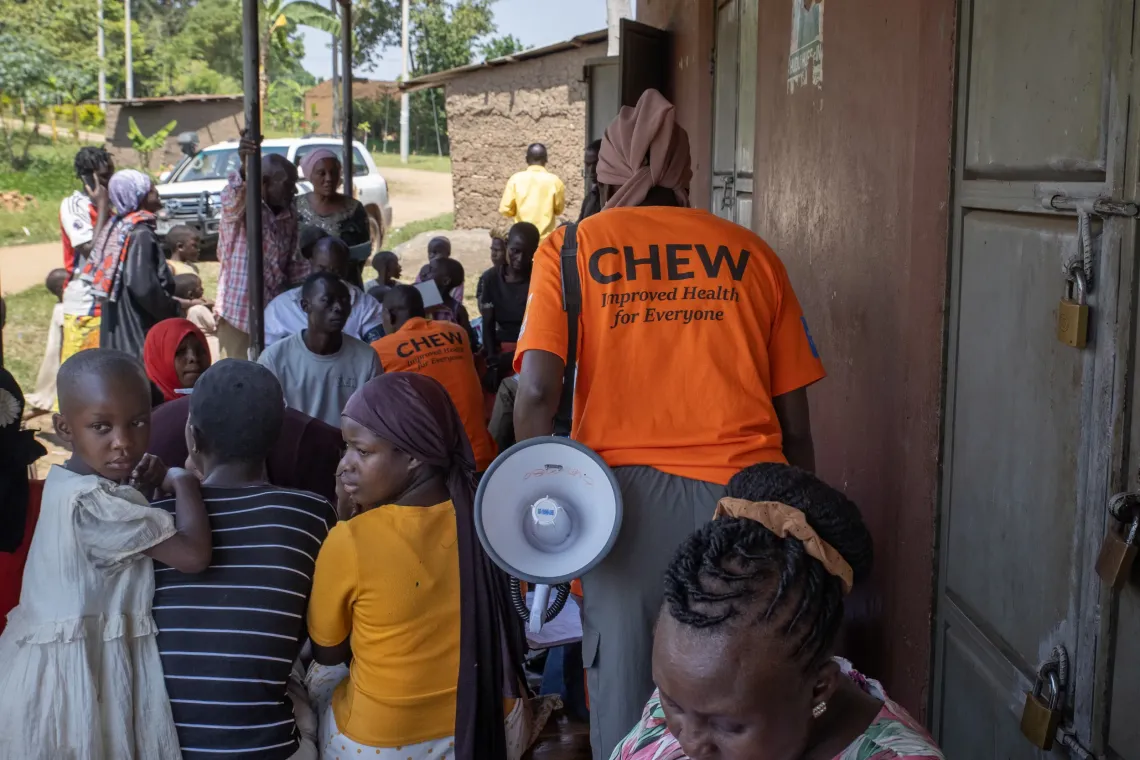
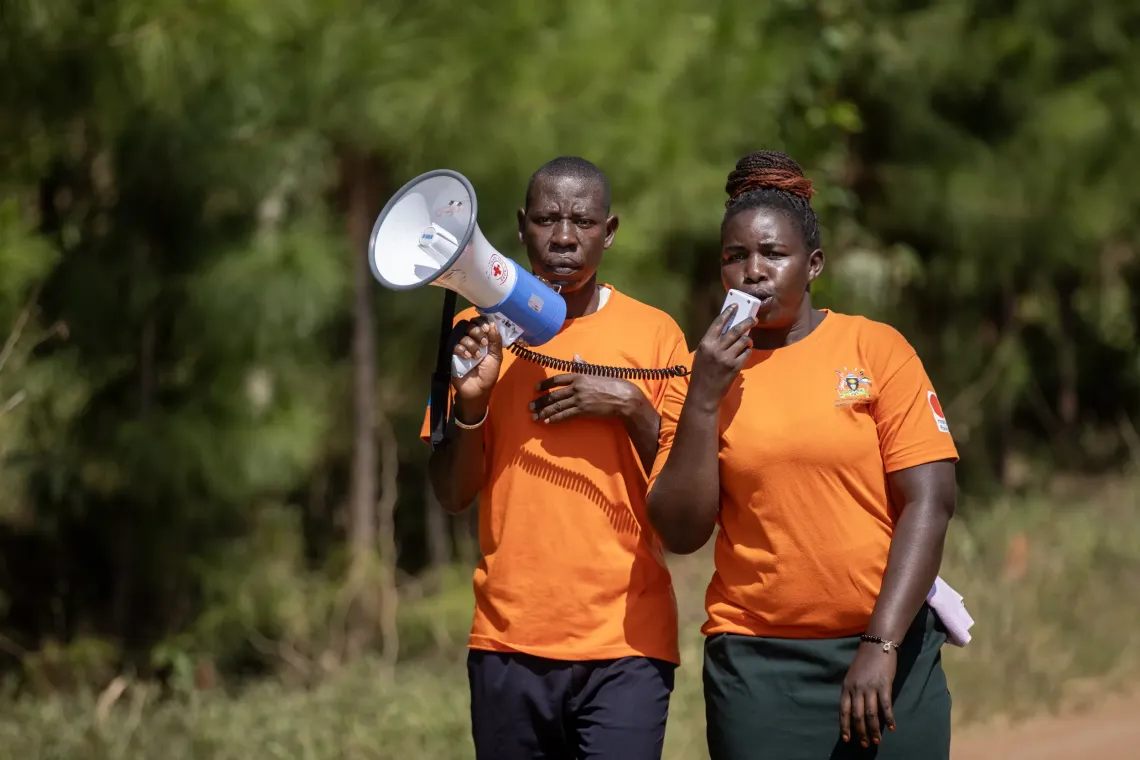
On 25 August 2026, a UNICEF team joined an integrated outreach in Webuta Cell, Bumuyaga Ward, Northern Division, Mbale City, where several CHEWs along Village Health Teams (VHTs) played a key role in mobilizing community members to take part.
The Ministry of Health introduced the CHEWs strategy to strengthen primary health care and expand access to essential community services. UNICEF in partnership with Mastercard Foundation is supporting the implementation of CHEWs in nine districts of Busia, Mbale City, Gomba, Sembabule, Kikuube, Terego, Nwoya, Otuke and Oyam.
Rolled out in phases across 69 districts, the programme equips CHEWs to deliver preventive, promotive and selected curative services while linking communities to health facilities. CHEWs are currently undergoing training before Ministry of Health deployment.
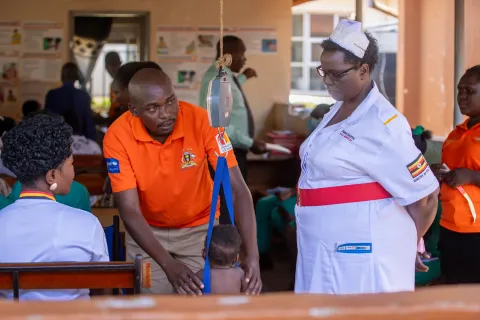
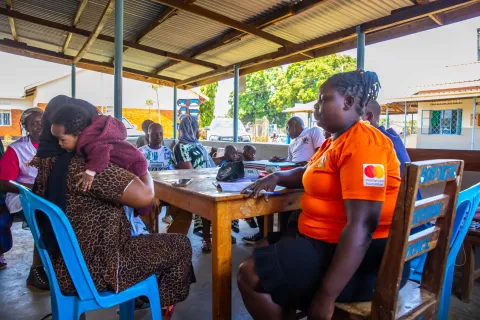
At the outreach in Webuta Cell, a health team from Bufumbo Health Centre IV—including a midwife, laboratory technician, clinical officer and enrolled nurse—set up on a verandah on a hot day to provide integrated health services to men, women, children and young people.
A trusted first contact
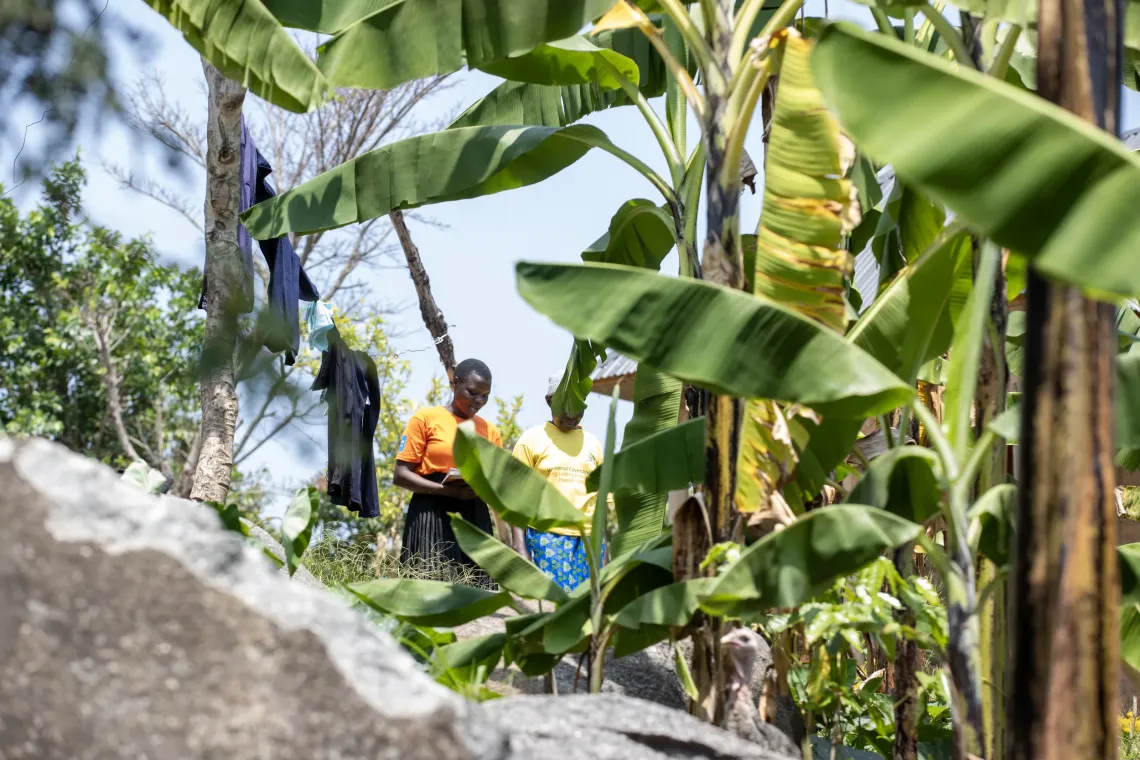
For many families, the first conversation about illness, pregnancy, nutrition or child health begins at home. CHEWs conduct home visits alongside VHTs where they listen, ask questions and guide caregivers when to seek care and educate them on key family care practices. Their presence helps families make informed decisions before a health concern becomes more serious.
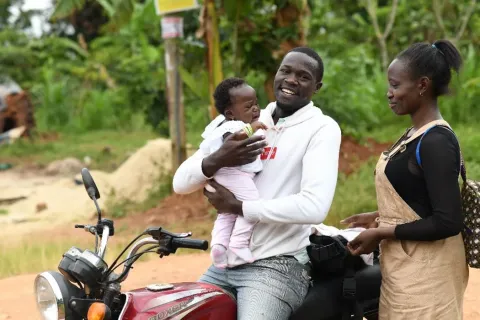
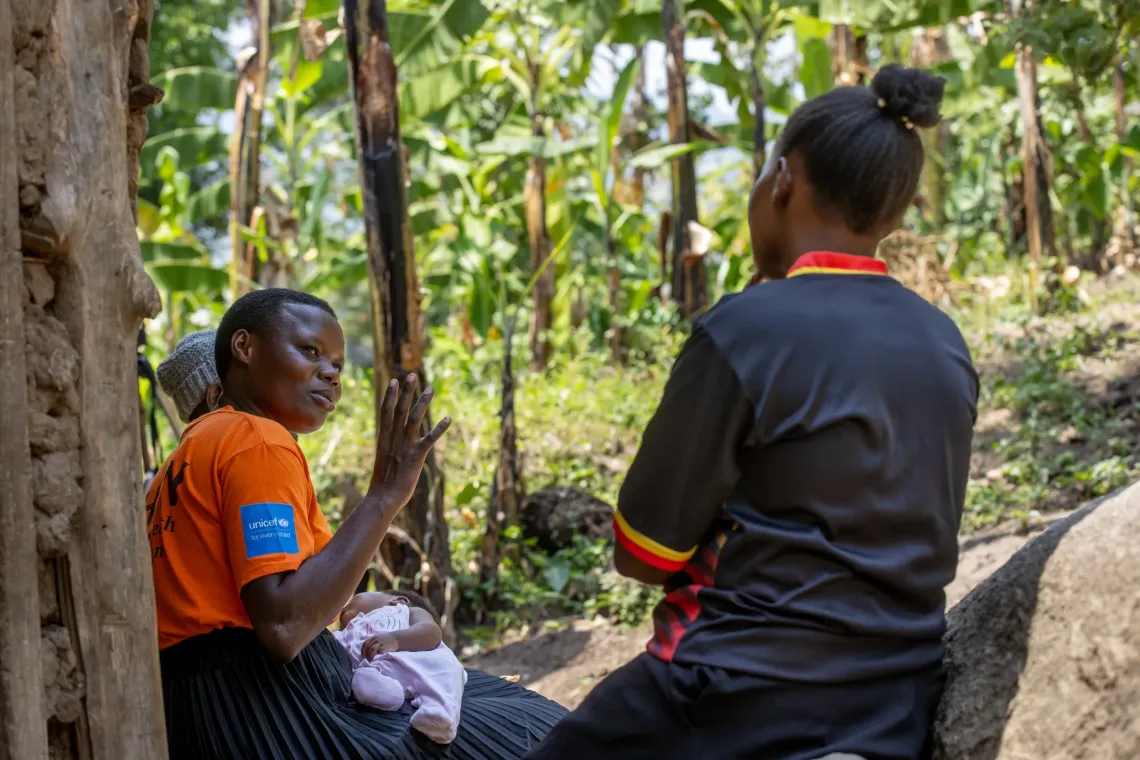
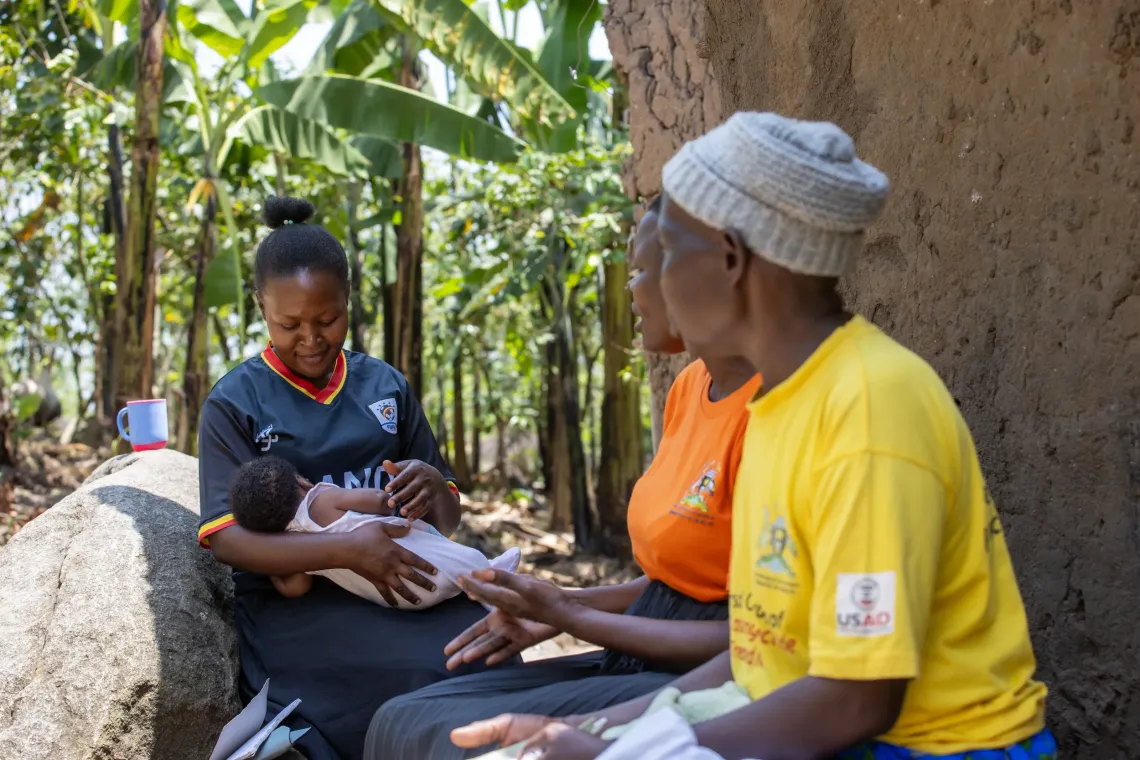
At Grace Namakambu’s home, a VHT member Agatha Wegosasa Muyagu and CHEW Yvonne Kakai spoke with her about key health issues while her husband listened attentively. Namakambu was then escorted to the outreach centre to have her one-month-old baby immunized and follow-on postnatal care with the midwife.
“When I was pregnant, the VHT and CHEWs regularly checked on me and encouraged me to attend antenatal care to monitor my pregnancy. At the hospital, I received a mosquito net to protect myself and my unborn baby from mosquitoes. I was also given Fansidar to prevent malaria, folic acid to support my baby’s development, Fefol to improve my blood levels, and a tetanus shot. They also checked my blood pressure and blood group,” she said.
Health information brought closer to families
During household visits and community interactions, CHEWs provide practical information on disease prevention, maternal health, newborn care, immunization, nutrition, sanitation and the importance of early care-seeking. They translate health messages into everyday language that families can understand and act on.
Supporting mothers and young children
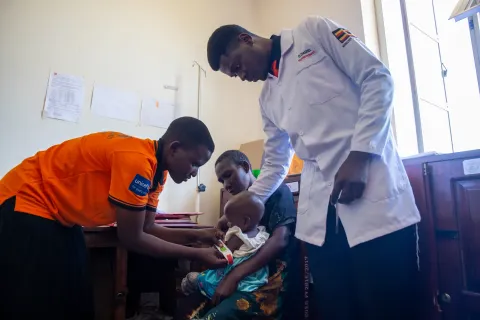
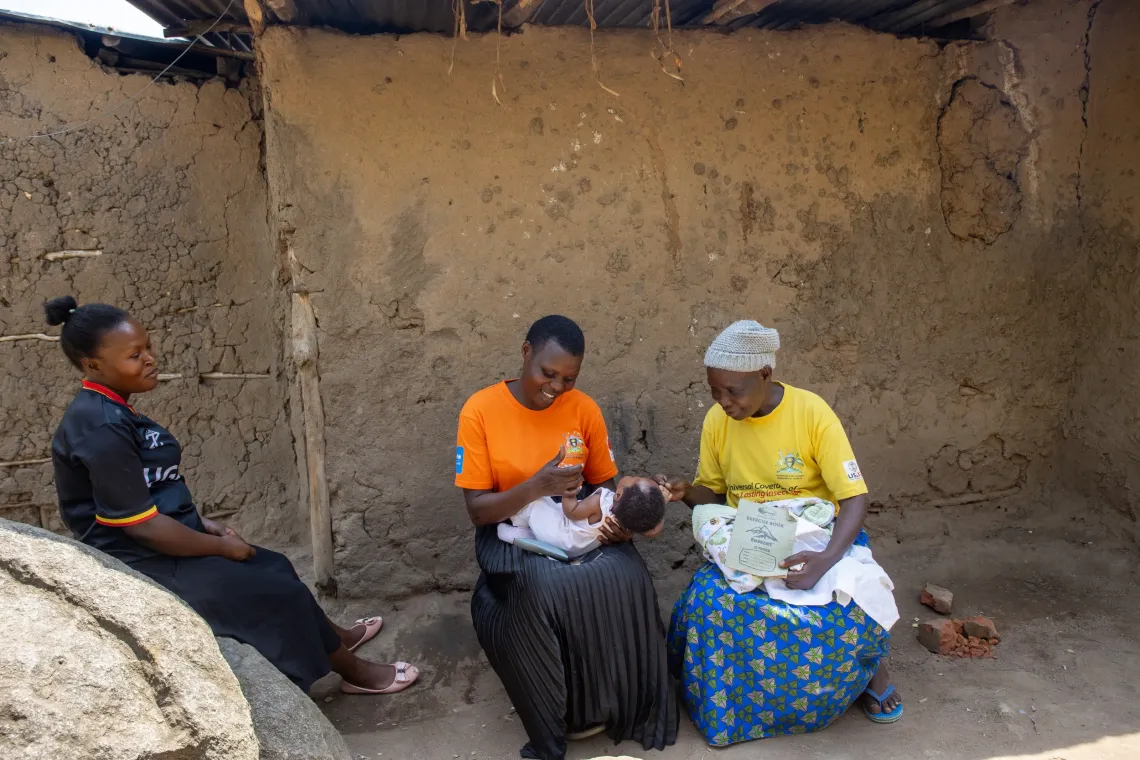
Mothers and young children are at the centre of the CHEWs’ daily work. They encourage pregnant women to attend antenatal care, remind caregivers about immunization appointments, support nutrition screening and counselling, and help families recognize danger signs that require urgent medical attention.
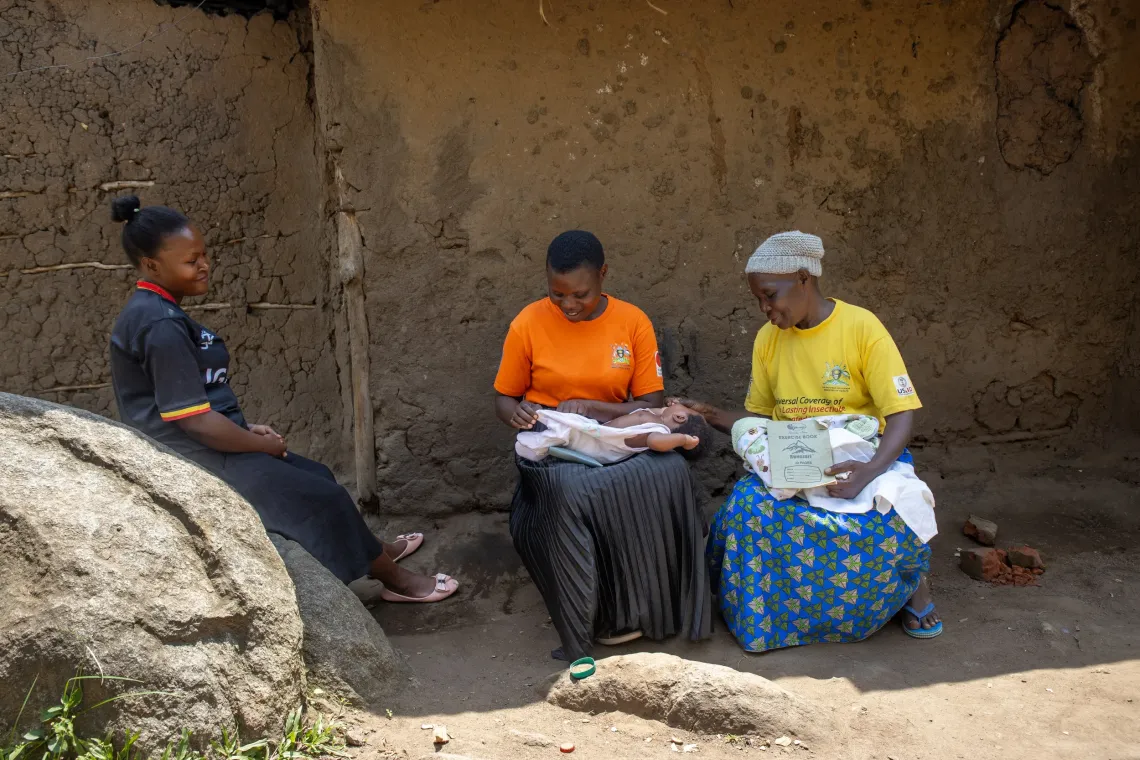
Rosemary Achieng, an Assistant Nursing Midwife at Bufumbo Health Centre IV, said the facility conducts five outreaches every month, mainly in cells and villages located far from the health centre. She notes that community participation is generally good and this has been attributed to the mobilization of the CHEWs.
Strengthening the link to health facilities
Beyond sharing information, CHEWs help families navigate the health system. They identify clients who need further assessment or urgent health care, make referrals, and follow up to ensure that mothers, children and other community members receive appropriate care from trained health workers.
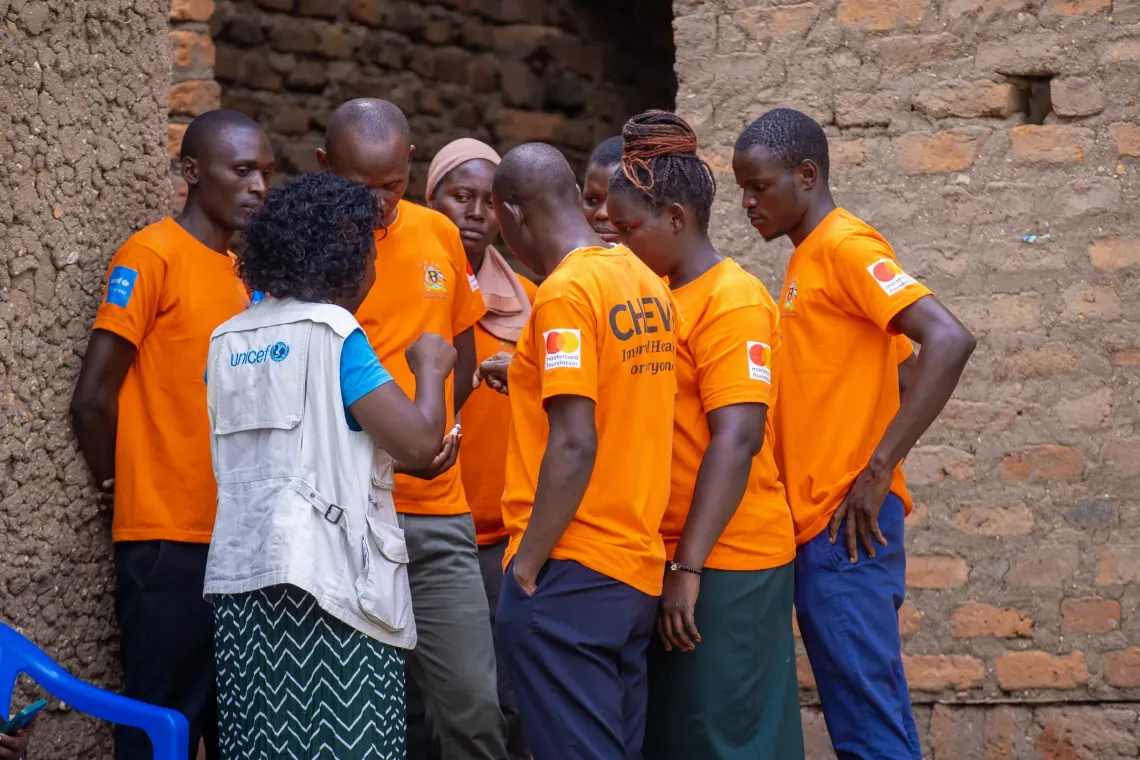
Yvonne Kakai, a CHEW from Luhobe Cell undergoing practical training at Bufumbo Health Centre IV, was among the eight CHEWs who participated in the integrated outreach.
In an interview, Kakai said she was grateful to have been selected as a CHEW. She explained that CHEWs work closely with VHTs and health facility workers to connect communities to services by supporting mobilization, public health education, data collection, and assessments to identify pregnant women and children under five in the community.
Building trust, one household at a time
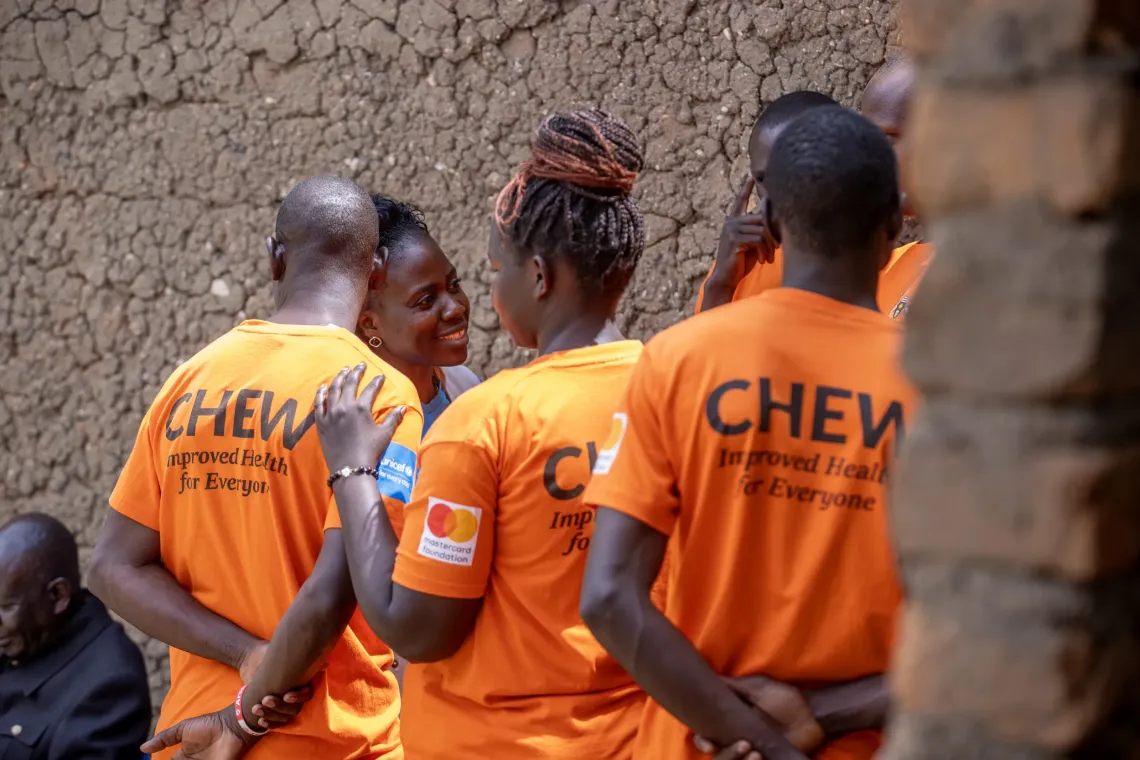
In Webuta Cell, the work of Community Health Extension Workers shows how health systems can become stronger when care begins closer to home. Their daily interactions with families are helping to build trust, improve knowledge and connect communities to the services they need.
Juliet Kituyi, the Health Inspector at Bufumbo Health Centre IV, thanked the Government of Uganda, UNICEF and the Mastercard Foundation for supporting the Community Health Extension Workers programme in Mbale City. She said the programme has improved health service delivery and strengthened the linkage between communities and health facilities.