CHEWS programme strengthening service delivery in Mbale City.
“We appreciate Mastercard Foundation’s timely support, which has already brought visible change.”
On a sunny Monday, 24 June 2026, at 12:30 p.m., we arrive at Namakwekwe Health Centre III in Mbale City and find a well-organized and neat facility.
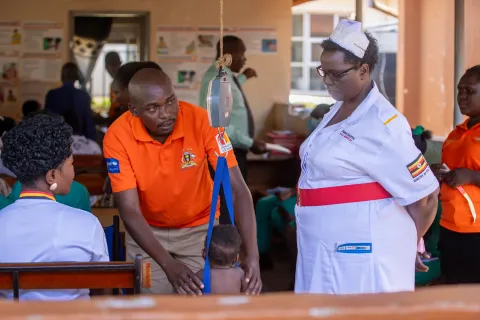
Mbale City Health Educator Zowena Nagudi welcomes us and leads us to the nearly empty triage area, where two women in orange Ministry of Health, UNICEF and Mastercard Foundation branded t-shirts work alongside the facility’s health workers to attend to patients.
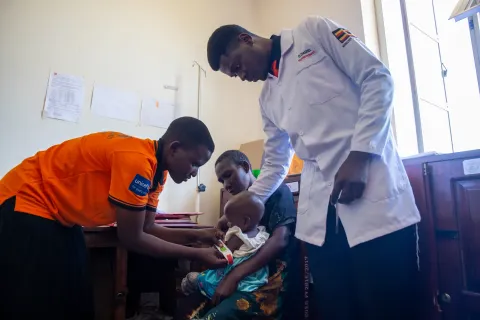
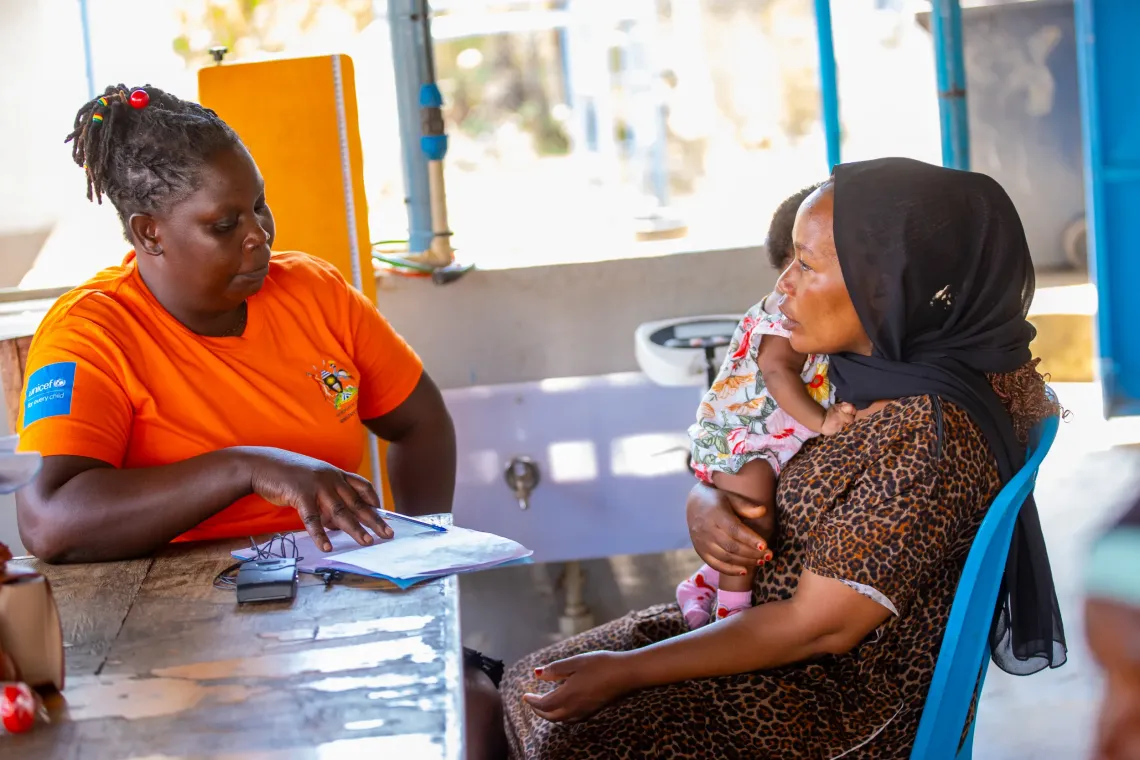
Annet and Chloe under the supervision of an enrolled nurse attend to separate patients as: a three-month-old baby is assessed for cough and possible exposure to tuberculosis, while a four-year-old boy is assessed for malnutrition. The enrolled nurse also demonstrates proper use of a Mid-Upper Arm Circumference tape.
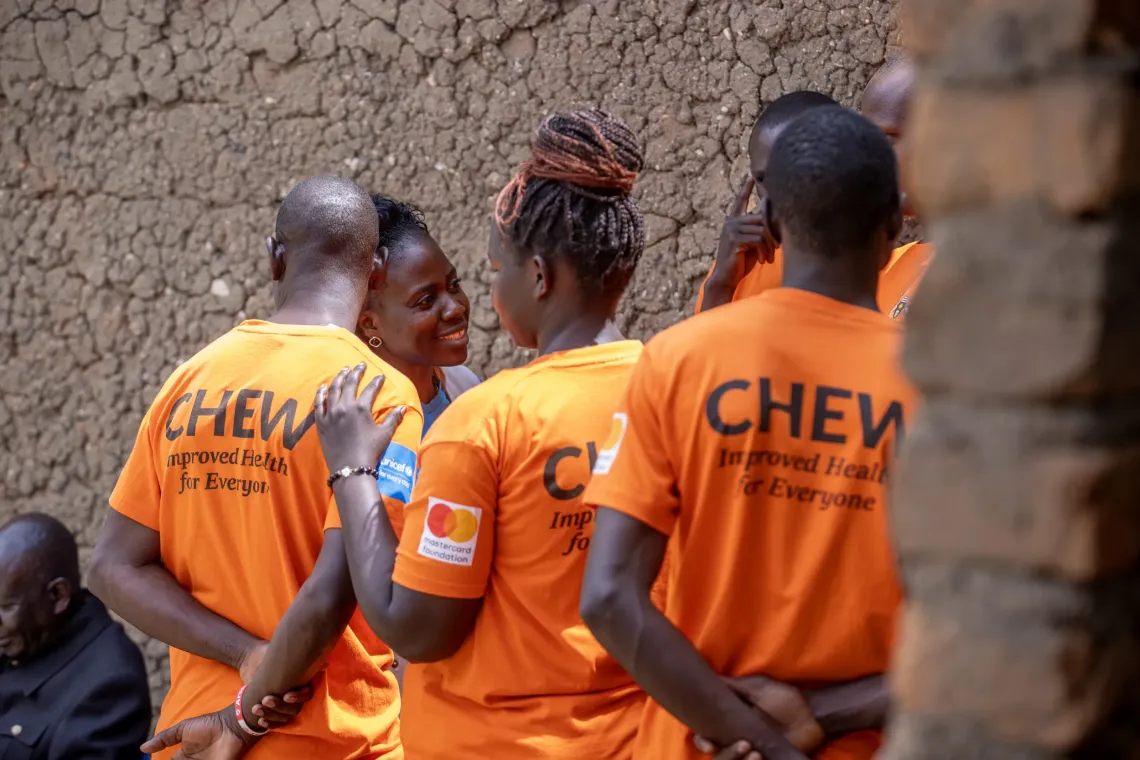
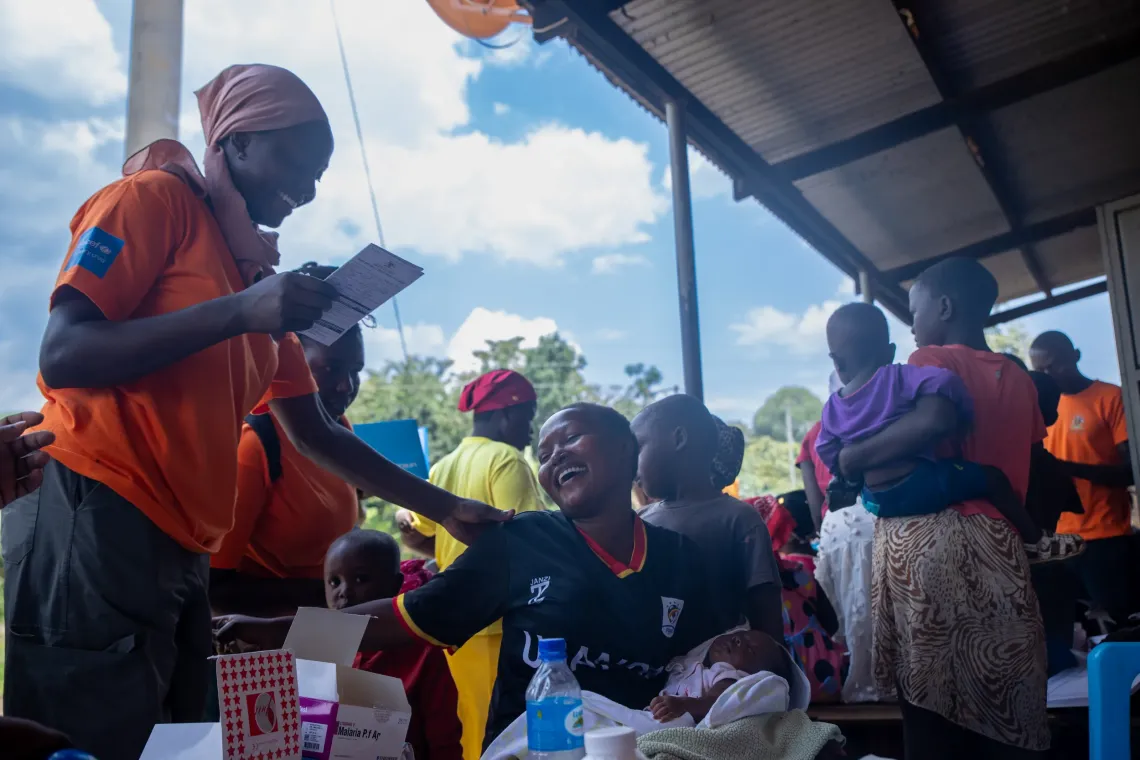
Several other young people also clad in orange t-shirts are seen supporting patients to go to the laboratory, accessing their medicines from the pharmacy, guided to see the doctor while others support expectant mothers into an Antenatal Care clinic while another is conducting public health education.
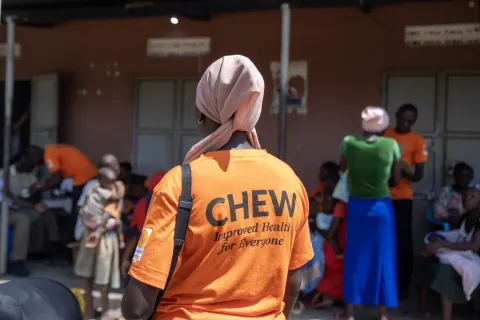
These young “health workers” are Community Health Extension Workers (CHEWs) undergoing two months of practical training alongside health workers and the facility in-charge. Eleven are based at Namakwekwe Health Centre III, part of 126 deployed across Mbale City.
CHEWs have improved patient flow and shortened waiting times at the health centre.
The facility in-charge, Senior Clinical Officer Rehema Wanjilo, confirms this observation. “There is a very big change. Even the flow of patients referred from the communities to the facility has increased. Even the way of triaging and health education, they have supported us a lot. They even can tell the very sick who need quick attention at the area. In all the departments they have been attached to. They have done a lot,” Wanjilo said.
To the Government, Wanjilo calls upon the leaders to continue implementing the CHEWs Programme and strengthen the community linkage including continued collaboration with the village health teams to sustain the gains.
To the partner, Mastercard Foundation, “We appreciate their support. This was long overdue. Their support should have started yesterday because we have witnessed so many changes in a short while,” she elaborated.
Patients appreciate the warm welcome and timely care. Nyamela Sumin brought her three-month-old baby for treatment after she remained weak despite administering flu syrup from a pharmacy. Annet, a CHEW at triage, assessed the baby and referred her to the doctor, When Nyamela was referred to the doctor, CHEW Chloe Kezabu Achieng, who was also supporting at the pharmacy, noticed the baby was uneasy and on feeling the high temperature. She quickly alerted the doctor and took the baby and mother inside the doctor’s room and explained the urgency, demonstrating the CHEWs’ training to identify danger signs in children and act promptly. The doctor conducted assessment of the child and recommended a malaria test.
Although Nyamela lives 10.4 km away and passed other providers, she chose Namakwekwe Health Centre. “I brought her here because I trust the doctors to assess her before treatment. I appreciate the care and attention given to us,” Nyamela says.
To sustain progress, Nyamela urges government to invest in lower health centres with medicines, diagnostic equipment and better pay for health workers.
The Ministry of Health introduced the CHEWs strategy to strengthen primary health care and expand access to essential community services. UNICEF in partnership with Mastercard Foundation is supporting the implementation of CHEWs in nine districts of Busia, Mbale City, Gomba, Sembabule, Kikuube, Terego, Nwoya, Otuke and Oyam.
Rolled out in phases across 69 districts, the programme equips CHEWs to deliver preventive, promotive and selected curative services while linking communities to health facilities.
CHEWs are undergoing training before Ministry of Health deployment, a long-held dream for many.
Annet Namutosi, who was triaging a baby, says she is grateful to the Government of Uganda, UNICEF and Mastercard Foundation for helping revive her dream of serving as a health worker.
I always wanted to become a nurse, but my parents pushed me into teaching which I also didn’t complete. I became a village health team member in College Save, Mbale City, for 15 years. When this opportunity came, I qualified, I have so far completed three months of theory training and am now doing two months’ practical field training at the health centre and in the community. I will do another one-month theory training.
She says the training has improved her knowledge and skills in assessments and referrals through rotations across health centre departments. “I have been trained to test for HB (hemoglobin), HCG (pregnancy test), HIV and RDT (Rapid Diagnostic Test for malaria). People now call me musawo to mean health worker,” she says, noting that she now serves 13 villages instead of two, previously as a VHT.
Wanjilo, the In-charge said that rotating CHEWs across departments strengthens their practical skills and attainment of knowledge.
Mbale City CHEWs President Walumi Abbas says the programme has improved service delivery and strengthened links between communities and health centres.
“CHEWs have closed the gap between communities and health centres. We provide daily reports, refer patients regularly and ensure they are quickly attended to,” Walumi says.
Walumi says challenges remain, including lack of community tools, weather constraints and limited communication channels.
Allen Nabanoba, UNICEF Consultant on the CHEWs programme, says Mastercard Foundation support is helping procure tools such as tablets, Bicycles, BP machines, glucometers, bags, medicine storage boxes, and gumboots, while improving stipend payments and providing identity wear. Which will be provided following their official launch. She commended the CHEWs’ commitment to serving the country.
After the UNICEF–Mastercard Foundation support ends, CHEWs will be integrated into the Government of Uganda health workforce and paid by government.
Zowena Nagudi, Mbale City District Health Educator, says the district is preparing for government facilitation of CHEWs, including bank account registration.