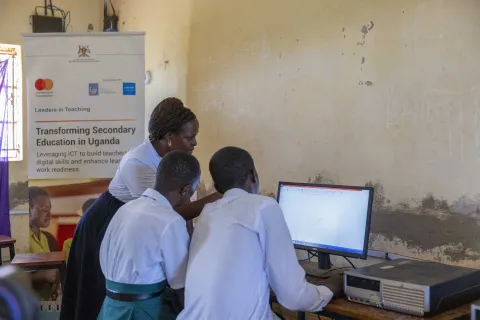
Moving keyboards from laps to desks
In Gulu, Uganda’s future teachers are building digital skills on too few computers, desks and connections, but a new partnership between the Mastercard Foundation and UNICEF aims to change that.

At the Uganda National Institute for Teacher Education (UNITE) Unyama Campus in Gulu District, Aber Nadia Keren balances a keyboard on her lap. The desks in the computer lab are so high that typing on them is awkward, so she has found her own way.
The 21-year-old is studying for a bachelor’s degree in education, specializing in mathematics and ICT. Slouched over the keyboard as she types, she is clear about why it matters. “ICT is no longer a basic requirement. It is a mandate,” she says. “Everyone needs ICT, and the more we practice, the more we learn.”
Compared with many education institutions in Uganda, UNITE Unyama is well equipped. It has 50 computers, an internet connection and a standby generator for the rare power fluctuations. A 2026 UNICEF assessment of over 3,000 secondary schools in Uganda found that only one in five is ‘ICT-ready’, with 16 or more hours of electricity a day, stable internet and better device ratios. Learners in these schools have regular chances to use digital tools.
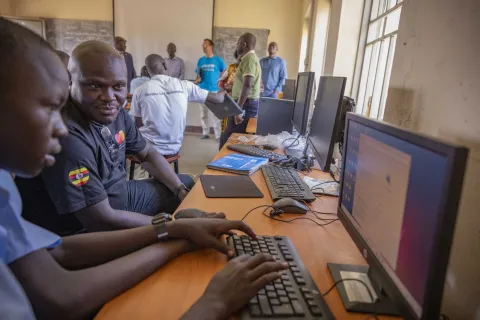
Yet even at UNITE, there is not enough for everyone. The 50 computers serve a campus community of 568, and the 20 megabits per second (Mbps) internet connection is too slow for their needs. So some students buy their own data to do research and attend online classes. Joseph Omedi, 23, a teacher trainee in physics and ICT, spends about 10,000 Uganda shillings (about US$3) a week on three to five gigabytes of data. When he doesn’t have the money, he copies notes from his friends.
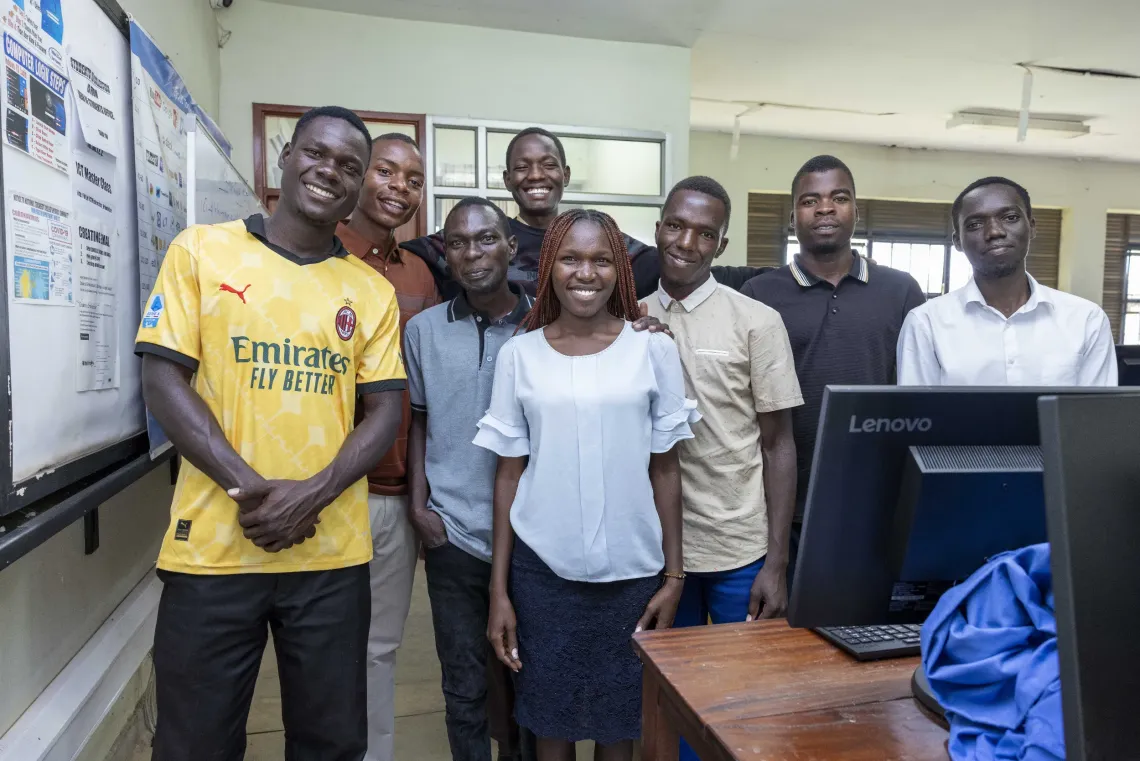
Isaiah Elijah Opio, 24, is one of the few who could find another way. During the last holidays, he used savings from a part-time job to buy a laptop for 800,000 shillings (just over US$200). He no longer waits in line to use a computer in the lab. Instead, he lends his laptop to colleagues. “My life is simpler these days,” he says. “I can do my work on time.”
Technology has brought steady change to UNITE. When Urbans Mujuni was recruited as ICT Officer five years ago, most lecturers had no email address and could not run online classes without support. Today, they confidently use ICT for teaching, assessment, research, lesson planning and communicating with students, albeit on the shared computers. The goal, Urbans explains, is digitally savvy teachers who can use ICT and pass those skills on to their learners: “a global teacher who can teach anywhere.”
The Dean of Unyama Campus, Pariyo Lot Ewaku, believes investment in teachers goes furthest, because training one teacher has a multiplier effect. “Improving technology does not impact only the teacher, but also all the students who go through their hands for years to come,” he says.
At Gulu University, home to 8,000 students, the need is even greater. ICT is critical for every faculty, but especially for Open, Distance and e-Learning, which relies on online and remote classes. However, only one of the university’s three computer labs works, with 39 computers, roughly one for every 205 students. The Wi-Fi runs at 500 Mbps, half the speed the university needs. The impact is visible. In one lab, 300 students pack into the room to learn basic computer skills while nearby, a young man copies notes from his phone into a notebook, saying it is easier to read that way.
“It is only through partnership that we can solve these kinds of problems,” says Associate Professor Collins Okello, the Acting Vice Chancellor.
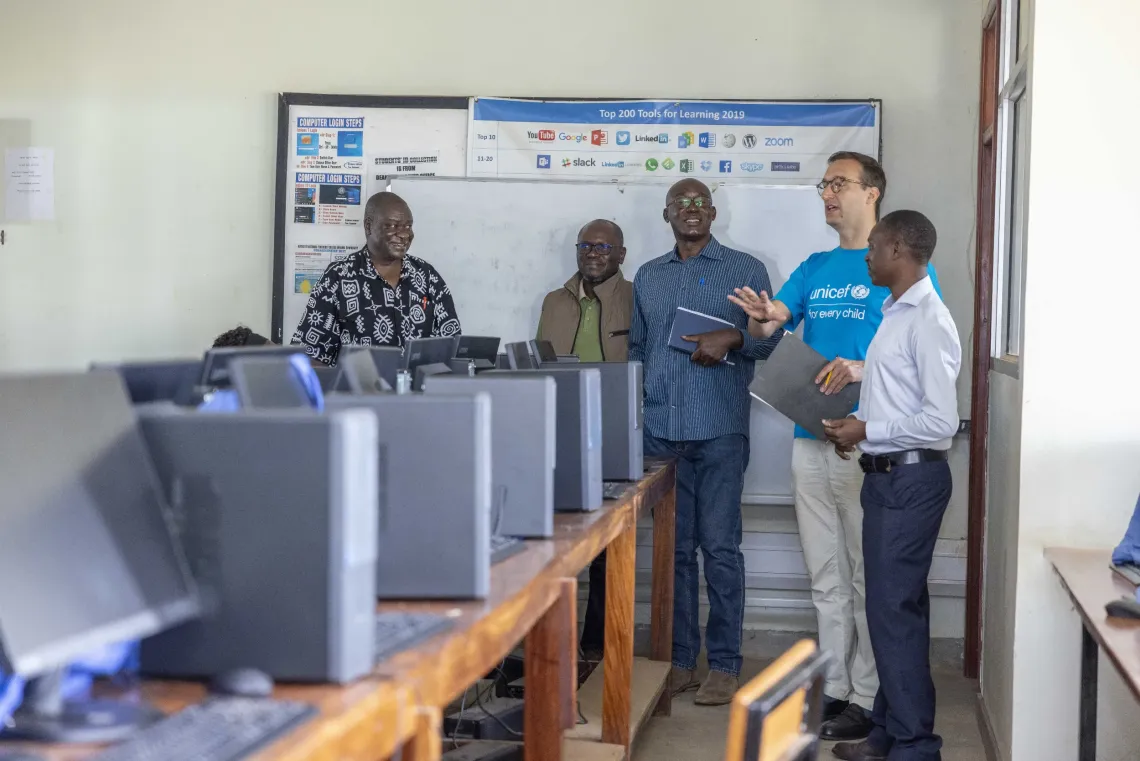
Partnership is at the heart of the Mastercard Foundation Leaders in Teaching Program, which targets system-wide education reform to strengthen teaching, leadership and digital learning. Implemented through a consortium of 10 partner organizations, the program is co-led by UNICEF and Luigi Giussani Foundation, with strategic guidance from the Ministry of Education and Sports. UNICEF also spearheads the program’s cross-cutting ICT component, supporting ICT infrastructure and teacher professional development across 10 universities, five teacher training institutes and 2,091 secondary schools. It serves an estimated 74,800 teachers and indirectly reaches 627,300 students.
Over the next five years, UNICEF will provide computers, desks and other ICT equipment to 100 education institutions in Uganda, with the goal of making ICT an everyday part of teaching and learning. For Aber, that means that she will be able to move the keyboard from her lap to a desk, and that the skills she is building will travel with her to every learner she teaches.