A mother's loss in the shadow of famine
For Veronica and Otoo, every MUAC screening, every outreach visits and every meal placed before their children is now deeply personal.
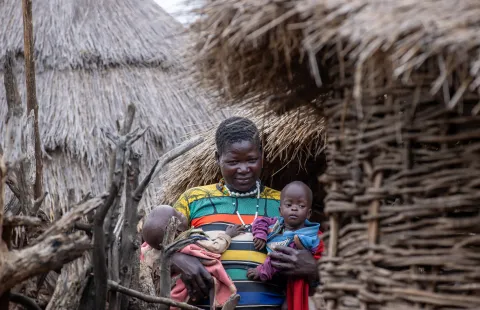
In Lookorok Village, Lokwakel Sub-county, about 6 kilometres from Kotido Town Council, 36-year-old Veronica Nachan lives with her husband, 42-year-old Otoo Okulani, 36-year-old Veronica Nachan lives with her husband, 42-year-old Otoo Okulani, and their seven children, aged between two and 15.
Before prolonged drought and food shortages gripped Karamoja, the Okulani family could still put food on the table. Life in their Manyatta (a traditional family homestead) was difficult, but they managed to feed their children and look to the future with hope.
That hope began to fade when their three-year-old son developed oedema, a severe form of acute malnutrition. He was enrolled in a UNICEF-supported treatment programme funded through the Uganda Humanitarian Fund and responded well.
“When my child was suffering from oedema, we started treatment in Inpatient Therapeutic Care at Kotido District Hospital and he began recovering. Then we moved to outpatient therapeutic care, and he was normal again,” Veronica recalls. “I thought my child would grow up healthy like the others.”
But hunger remained an ever-present threat.
A few weeks later, while walking to a community food distribution point, Veronica was carrying the child on her back when he suddenly convulsed. By the time she untied him, the little one had stopped responding. Health workers at the community outpost later confirmed that the child had died.
“I do not know exactly what caused my child’s death, but I suspect hunger played a part,” Veronica says softly. “The pain of losing a child never leaves a mother.”
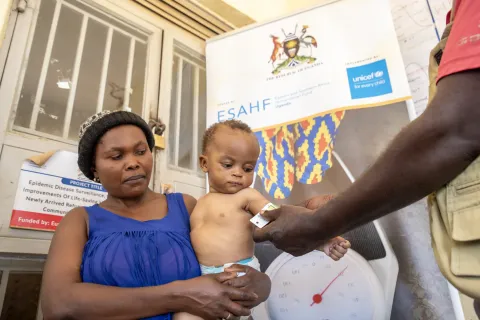
Today, grief continues to accompany the family, but so does determination. With support from Village Health Team (VHT) members trained and equipped through UNICEF and with funding from…, Veronica and Otoo are taking extra care to ensure their six remaining children stay healthy. Regular home visits and outreach screenings help monitor the children’s nutritional status.
Simon Peter Lochu a VHT member of Lokorok Village who follows up the family explains: "We regularly visit households like Veronica's to check children's growth, provide nutrition counselling, and offer referrals to any child showing signs of malnutrition for immediate care. Early action saves lives."
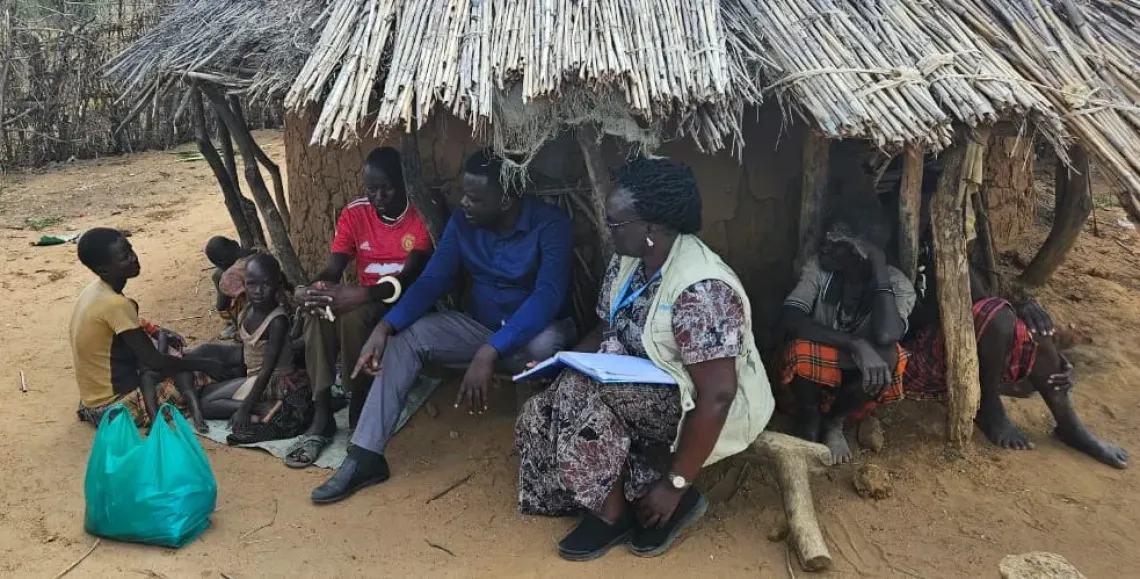
Despite these efforts, survival remains a struggle. The family sells firewood and gathers wild greens from distant areas to supplement the posho flour that Otoo buys whenever he can. Prolonged drought continues to limit food availability, making every meal uncertain.
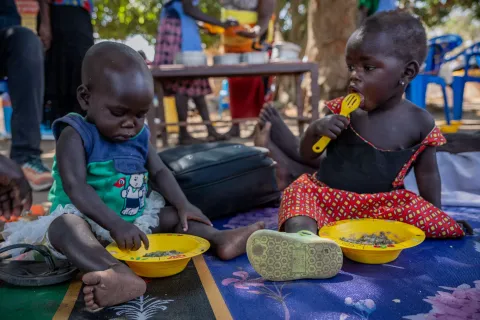
Beyond screening and referral, VHTs counsel caregivers on exclusive breastfeeding, complementary feeding, hygiene and preparing balanced meals from locally available foods. They also follow up children referred to Outpatient Therapeutic Care (OTC) and Inpatient Therapeutic Care (ITC) and show caregivers how to use Ready-to-Use Therapeutic Food (RUTF) correctly and consistently.
“Many families face long distances to health facilities. Combined with household responsibilities and food insecurity, most caregivers focus on survival rather than on the treatment schedules that would help a child recover,” says Simon Peter the VHT member.
For Mr Tonny Achoma, the Senior District Health Educator in Kotido, the family’s experience reflects the reality facing many households affected by food insecurity.
“Malnutrition weakens children’s immunity and increases their vulnerability to illness and death. Through UNICEF support, we can strengthen community awareness, improve caregiver practices, and bring life-saving information closer to families,” he says.
This community work is led by the Government of Uganda with support from UNICEF working with district health teams, and with funding from the Uganda Humanitarian Fund managed by OCHA. The support is strengthening Social and Behaviour Change interventions across Karamoja that address delayed health seeking, inadequate infant and young child feeding, and unequal household food distribution, while promoting MUAC screening and adherence to treatment.
The latest Integrated Food Security Phase Classification analysis, published in June 2026, places Kotido in Acute Malnutrition Phase 4, or Critical, alongside Kaabong. Across Karamoja, 122,100 children aged 6 to 59 months will need treatment for acute malnutrition between March 2026 and February 2027, including 30,600 with severe acute malnutrition. Kotido accounts for 22,820 of those cases, and its rate of global acute malnutrition, at 15.4 percent, sits above the emergency threshold.
For Veronica and Otoo, every MUAC screening, every outreach visits and every meal placed before their children is now deeply personal. The loss of their child can never be undone, but they remain determined to protect the lives of those who remain, one day at a time.