“It is just hunger!”
At Matanya Primary School, teacher Catherine Ibalasa has learned that a child’s readiness to learn begins long before the lesson. Support from the Government of Uganda and UNICEF, with funding from the Embassy of Ireland, is helping her reach her learners

When children at Matanya Primary School complained of stomach aches and headaches, Catherine Ibalasa did what a careful teacher would. She had them tested for malaria.
Often, the tests came back negative.
“When you test them, they do not have malaria. It is just hunger.”
Catherine has taught at Matanya, in Napak District, for four years. She grew up and went to school in Bukedea in eastern Uganda and trained at St. Mary’s Primary Teacher’s College. “It is a profession I enjoy,” she says.
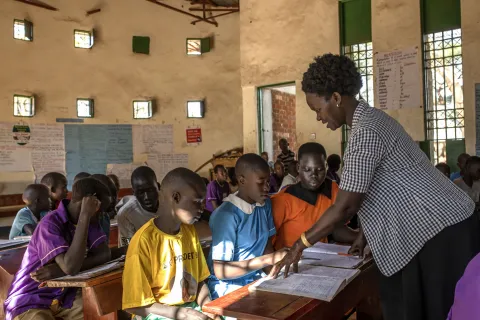
When she arrived, she found a school where learning came and went. Attendance was irregular. Many families, she says, held a negative attitude towards education, mostly shaped by culture and other circumstances. She was given a Primary Five class of about fifty learners, and Primary Five is still where she teaches today. There were textbooks, but pupils took them home and did not bring them back.
Absenteeism was her biggest challenge. Hunger came close behind.
The child she could not keep.
Some children slipped away. Last year, one of her learners, a child with no parents, drifted in and out of school. He would attend for a term and then miss the next. In the rainy season, children like him stay home to help with cultivation. In the end, he dropped out.
His story reflects a wider picture in Karamoja. The region’s gross enrolment rate is 67 per cent, against a national average of 84 per cent. Its literacy rate stands at 22 per cent, compared with 73 per cent nationally, with a primary- school completion rate of an 18 per cent against the national average of 61 per cent.
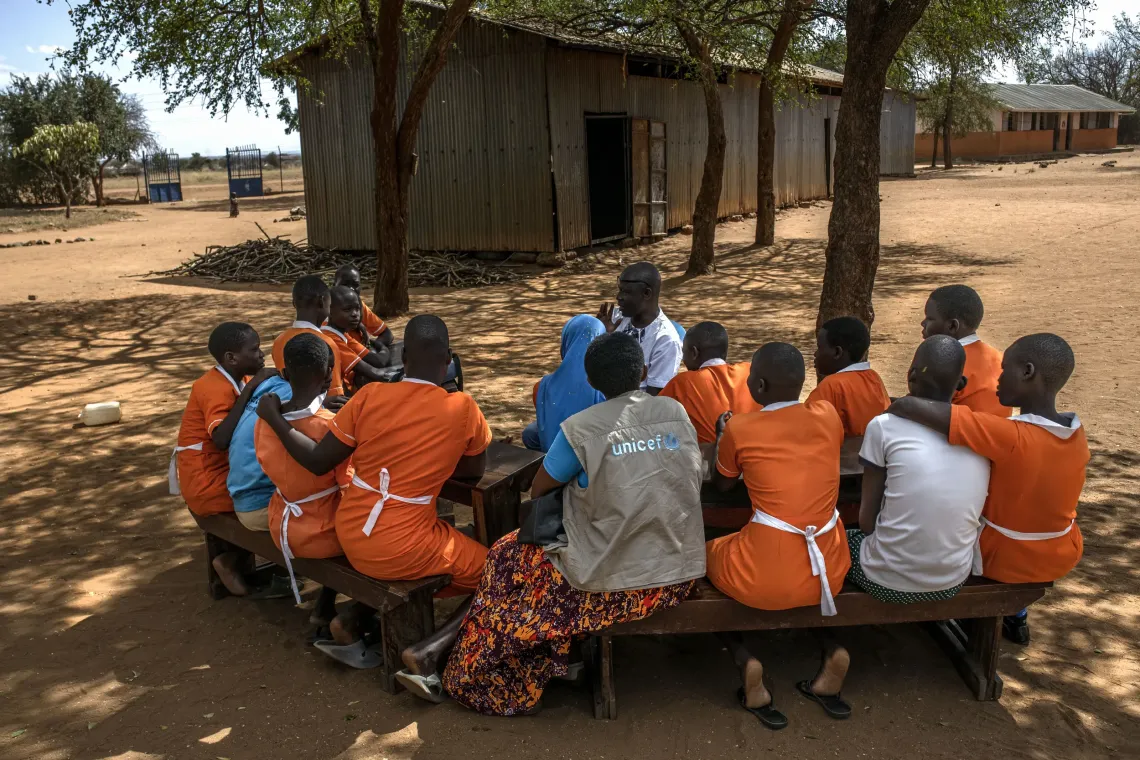
Teacher and parent
Through the programme Improving Quality and Inclusive Education for Girls and Boys in Karamoja, Catherine received training in life skills and in parenting. The parenting training also equipped her to bring parents together and talk with them about how to care for their children.
It changed how she sees the children in front of her. When she notices a learner who is weak from hunger, she gives them something small to eat. When a child misbehaves or struggles, she responds differently too.
“I guide them as a parent, as well as a teacher.”
The school has also started a kitchen garden. Teachers and learners plant, water and weed it together, and the greens it produces supplement what the children eat. The difference was visible. “The children studied better,” Catherine says. “They were more vibrant.”
The current dry spell has hit the garden hard, a reminder of how closely learning in Karamoja is tied to the weather and the harvest.
Reading together
Catherine has seen her learners’ reading improve. She points to one child she identified as struggling to read, whose progress she has followed closely. The school now runs a reading club, where learners practise reading together alongside their teachers. The headteacher, Apeot Faustas, says the club has helped children improve their reading.
Some of her learners live with disabilities, most commonly physical and hearing impairments. For one learner who is hard of hearing, a simple change makes a difference. Catherine seats her at the front of the class so she can hear what is being taught.
Her learners notice the care.
“I like English, and teacher Catherine helps us understand the words and how to use them,” says Lucy, 14. “I also want to become a teacher.”
Moses, 15, wants to become a doctor. “I enjoy reading, and our teachers show us how to read well and effectively to understand,” he says.
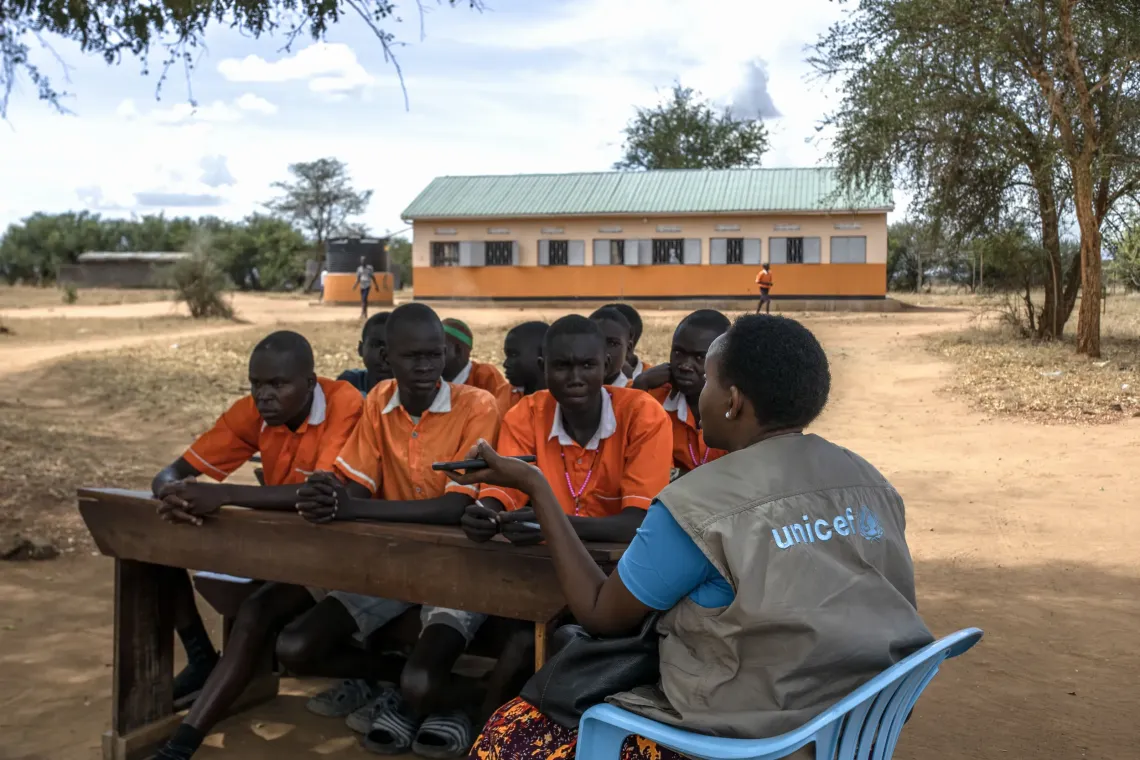
Parents on board
The biggest shift has happened outside the classroom. Using what they learned in the parenting training, Catherine and her colleagues have reached out to families. “Parents,” she says, “now encourage their children to come to school.”
The school has turned its learners into messengers too. “We talk to the parents, and we also tell the children to talk to fellow children and fellow parents,” says Apeot. Parents who once kept their children at home are now sending them to school.
Matanya Primary School now has 689 learners. Apeot is clear about what has made the difference.
“The inclusive programme has improved our education, enrolment and disability inclusion.”
It is one reason she stays in Napak, where many hard-to-reach schools struggle to keep teachers. She likes the place. There is water, the environment is welcoming and, in her words, “the school is promising.”
Her message to those who support the programme is simple.
“Thank you for the programme. It has helped a child, and children, because UNICEF is for every child.”