The impact of collective and social protection on ending child poverty in Uganda: Joan’s story
“Missing school due to high costs of education…is worse for children with disability who face added roadblocks such as lack of learning aids like braille and sign language interpreters.”
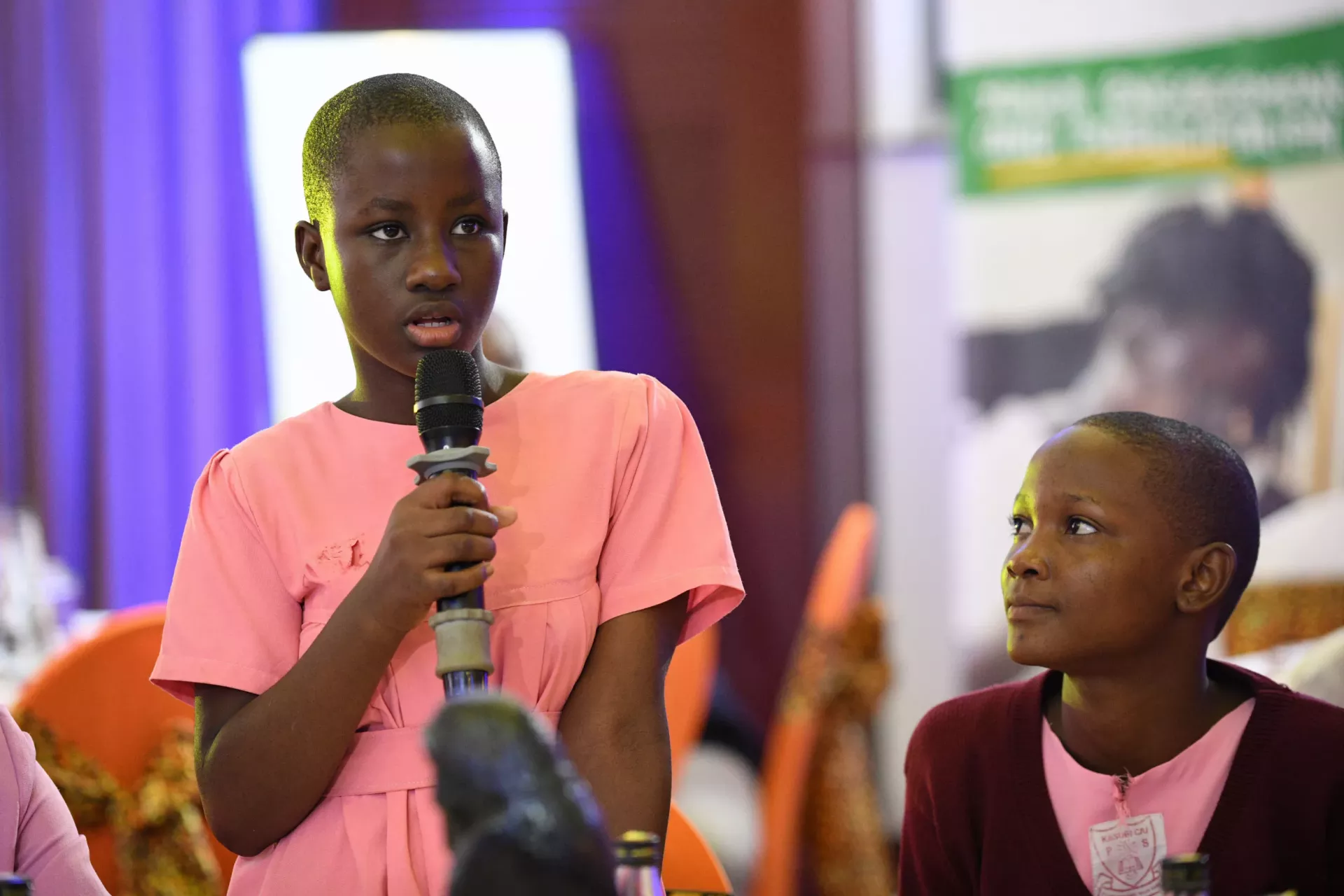
“What does poverty mean to you?” the moderator asks a panel of children during a gathering of government officials, policy makers, civil society actors and humanitarian organizations.
A young girl with brown braided hair, her dark green shirt tucked into grey jean pants, topped with a black leather jacket, looks straight into the camera and starts moving her hands in short rapid motions. A sign language interpreter relays her message;
“Missing school due to high costs of education…is worse for children with disability who face added roadblocks such as lack of learning aids like braille and sign language interpreters.”
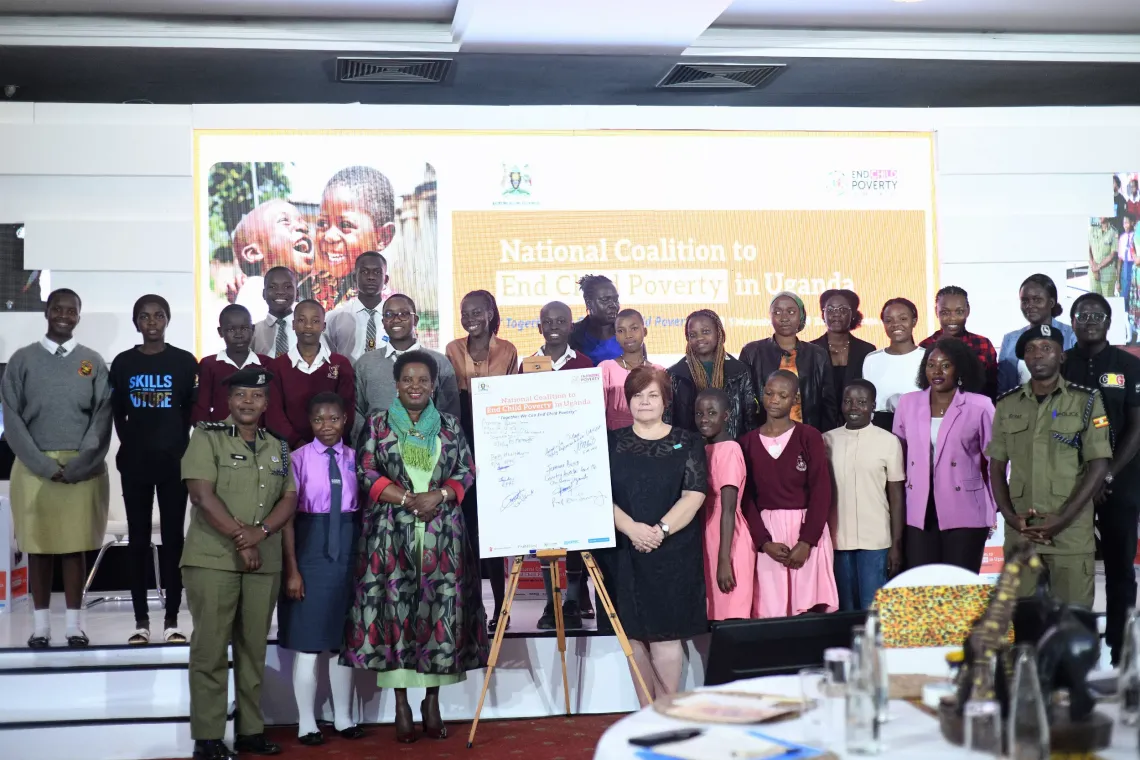
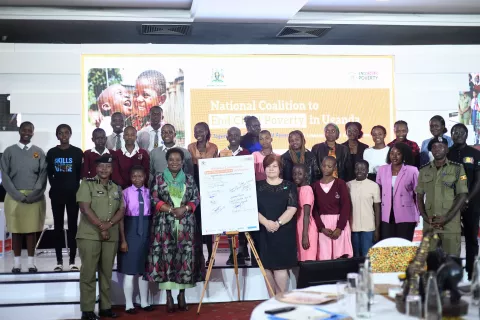
The 17-year-old Joan Babirye was one of the child representatives at the launch of a national coalition to end child poverty in Uganda, on 5 November 2025 in Kampala, the country’s capital city.
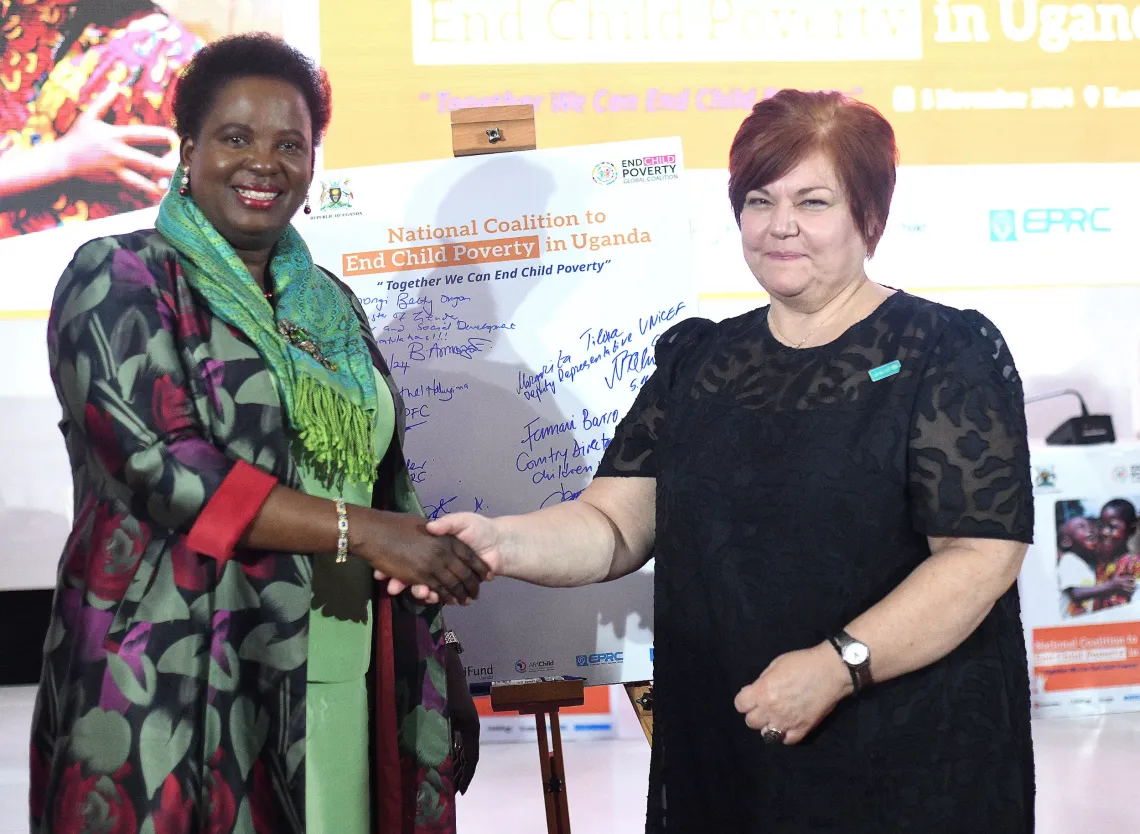
Uganda is the first country to have such a national coalition. Coordinated by the Ministry of Gender, Labour and Social Development in partnership with UNICEF, the Economic Policy Research Centre, Child Fund, AfriChild and Save the Children, the coalition seeks to join efforts to end child poverty in all its forms.
The need for concerted effort is evident. A 2024 Uganda Bureau of Statistics report on Multidimensional Child Poverty indicates that 44 per cent of Uganda’s children suffer multidimensional poverty. Children are said to be multidimensionally poor when they live in households whose expenditure is less than US$41.5 (UGX 152,065) per month and are deprived of seven or more necessities that society deems important, due to lack of money. These include three meals a day, two sets of clothing and own bed, among others. Child poverty is reported to be worse among the disabled, like Joan, whose family struggled to find a school to take her to.
Born deaf, Joan was raised in a family where everyone else could hear and speak. When it was time for school, the special needs schools were few, far from home and expensive. Joan herself preferred to stay in the house, was very timid and didn’t want to venture out even to the neighbourhood shops.
“I was treated like a tourist attraction,” she signs. “People kept pointing at me.”
When she made it past primary school, Joan was enrolled on to Girls Empowering Girls (GEG), a UNICEF and Kampala Capital City Authority social protection programme for urban adolescent girls funded by the Belgium Government, through which she received a quarterly cash transfer, mentorship and skills training. Upon completing Senior Four, Joan enrolled for a short course in fashion and design and purchased a sewing machine with a GEG capital grant. She now tailor makes clothes, using a small space at her mother’s hair salon.
At first people stayed away, until word spread of the quality of her work.
“She cannot speak like the rest of us but she sews better than many,” Joan’s sister says as she displays pictures of clothes she has tailored, with well aligned seams and no visible hanging threads.
Diana Biribawa, 25, is Joan’s sister and would accompany her for the GEG mentorship sessions, to provide interpretation. She then decided to become a mentor after witnessing the impact of the social protection programme on her sister.
“A lot has changed, she is very confident, and her business is growing steadily, we no longer worry about her wellbeing,” says Diana, recounting how her sister recently left home in Bwaise, a city slum, for a birthday party in Bweyogerere, about 17 kms away, all by herself. Armed with a pen and notebook that she would use to communicate with those who didn’t know sign language, Joan spent about two hours on public transport, another two hours at the party, and returned safely home.
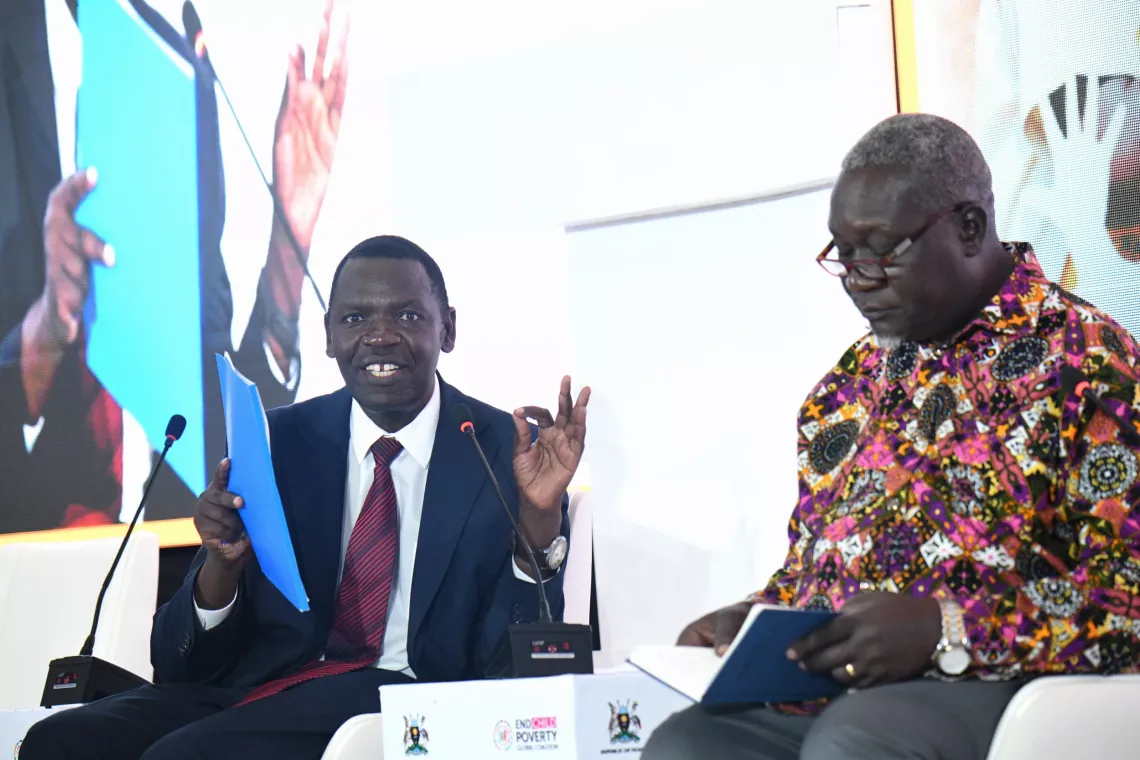
Diana attributes the change in her sister to the collective efforts of their family, community, and the GEG social protection programme, echoing the sentiments shared by the commissioner of children and youth at Ministry of Gender during the launch of the national coalition to end child poverty in Uganda: “If not together, then how?”