GAVI CEO lauds Uganda for successful vaccination programme
“My baby does not get sick, he is growing very well and so far, has hit all the milestones on the growth chart,” Nakasi said.

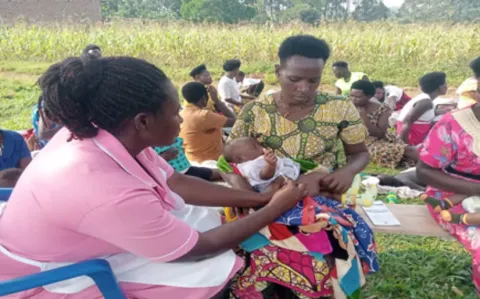
Violet Nakasi, 24, cradles her 3-month-old baby in her arms. This is the first and currently only child, but her confidence about the benefits of vaccination is evident.
“My baby does not get sick, he is growing very well and so far, has hit all the milestones on the growth chart,” Nakasi said.
Nakasi has come to Katoogo Health Centre III for routine vaccination. She also had her antenatal care and delivery here.
Next to her, Jane Nankya, 39, holds a sleeping 14-week-old infant. She reiterates Nakasi’s confidence.
“All my children have been immunized, they don’t suffer frequent illnesses, and they are growing well,” said Nankya.
Nankya and Nakasi are two of the millions of people - over 90 per cent of the population of Uganda - that have received essential vaccines. The two mothers are beneficiaries of the vaccine programme at Katoogo Health Centre III in Mukono District, Central Uganda, where celebrations to mark 50 years of the Uganda National Expanded Programme on Immunization (UNEPI) were held.
To grace the occasion was the Chief Executive Officer of GAVI, the Vaccine Alliance, Dr. Sania Nishtar.
Addressing the mothers in particular, Dr. Nishtar thanked them for their commitment to join the celebrations despite the pouring rain. “This rain is a blessing for the people of Uganda and the people of Katoogo, Mukono as you celebrate 50 years of immunization.”


She congratulated Uganda for having one of the highest coverages of immunization, adding that the country would be rolling out the malaria vaccine in 2026, the largest vaccine roll-out in the world.
“I have seen innovations in Uganda which I have not seen anywhere else in the world, including digital health learning for community health workers,” Dr. Nishtar said.
In light of this, she was privy to a demonstration by one of the Village Health Team members attached to Katoogo Health Centre III on how children who need immunization are registered and tracked.
“But more than anything else, I want to recognize the faith of mothers and communities throughout Uganda who bring their children for immunization and who understand the value of protecting the future of their children and protecting their generations,” Dr. Nishtar said.
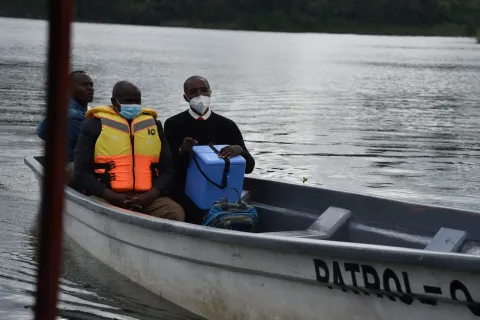
The CEO of GAVI was on a visit to understand the vaccine rollout chain in Uganda, from procurement to storage to the beneficiary at the last mile. She also held high-level talks with the President of Uganda, His Excellency Yoweri Kaguta Museveni and congratulated him on his commitment to the health of the people of Uganda.
Hosting Dr. Nishtar at a meeting on November 19, Uganda’s Minister of Health, Dr. Ruth Achieng, pledged the Government’s continued commitment to prioritizing immunization, adding that there is now a law to support immunization.


“One of the policies is that immunization is now mandatory for all children under 5 years of age. It is also mandatory during outbreaks that require immunization,” Dr. Achieng said.
She thanked Dr. Nishtar and her team at GAVI for partnering with the Government to ensure that vaccines are free and available.
Dr. Achieng attributed Uganda’s success story to the mass sensitization that has been done over the years, from the grassroots, through community health teams, and cultural leaders, including religious leaders, who are all engaged to teach the people the value of immunization.
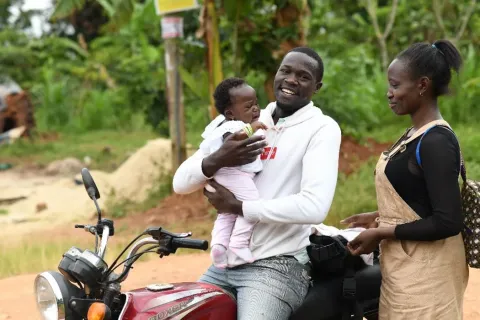
She added that even with all the gains, there remains a lot to be done, especially in the rural areas which are hard to reach, as well pockets of communities that still resist immunization programmes.
Addressing concerns on sustainability, Dr. Achieng said there are talks to implement a National Insurance Scheme to help buffer some of the costs that come with accessibility to vaccines.
Reiterating the concerns on sustainability, the UNICEF Country Representative, Dr. Robin Nandy, said it is important to focus immunization initiatives on the pressing needs of the day.
“UNICEF and WHO were co-creators of the Immunization Agenda 2020 and developed guidelines on reaching every district and community. Zero-dose children is a priority for us as UNICEF,” Dr. Nandy added.
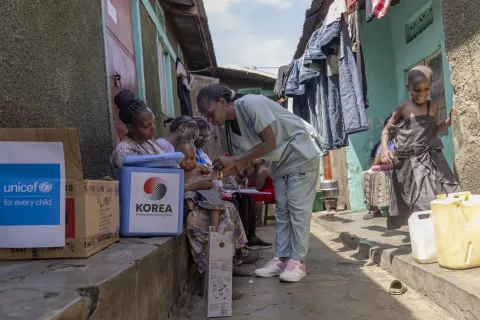
He argued that it would be a fair assumption to say that a child with zero dose of immunization has not been reached with any other health, nutrition, WASH or other social services. This is a strong indicator of deprivation. Innovations, therefore, are critical in reaching the zero-dose children in rural, hard-to-reach areas, urban slums, and conflict areas. With all the successes that Uganda has had, it is now time to think about the very difficult challenges ahead. The programmes must go beyond reaching 90 per cent of the population but must also be resilient to shocks like epidemics or pandemics.

“We will continue to see outbreaks, but we must use the unfortunate events of outbreaks. They reveal the weaknesses in our health systems. If we broaden our outlook to understand why an outbreak happened in a particular place, we will health systems across the world a great service,” Dr. Nandy said.
Dr. Achieng thanked the partners that have worked with the Government, including but not limited to GAVI, UNICEF and WHO, asking for their continued support to keep the gains realized over the last four decades.
“The Government is committed to supporting immunization at all costs and will not waiver on its commitment,” Dr. Achieng said, adding that President Museveni is a champion of immunization and understands its critical importance.
Dr. Achieng led Dr. Nishtar on a guided tour of the National Medical Stores (NMS) to give her a first-hand look at the country’s vaccine management, from procurement to distribution, to the end user. This intricate system at NMS ensures improved vaccine accessibility and reliability to even remote areas, thus achieving the country’s plans of universal health coverage for many more mothers like Nankya and Nakasi.
“Every vaccination is a step to a brighter and healthier future. With commitment, we can save many more lives and save many more children from death and disease. With humility and respect, my colleagues and I at GAVI will continue to support your country-led plans,” said Dr. Nishtar.