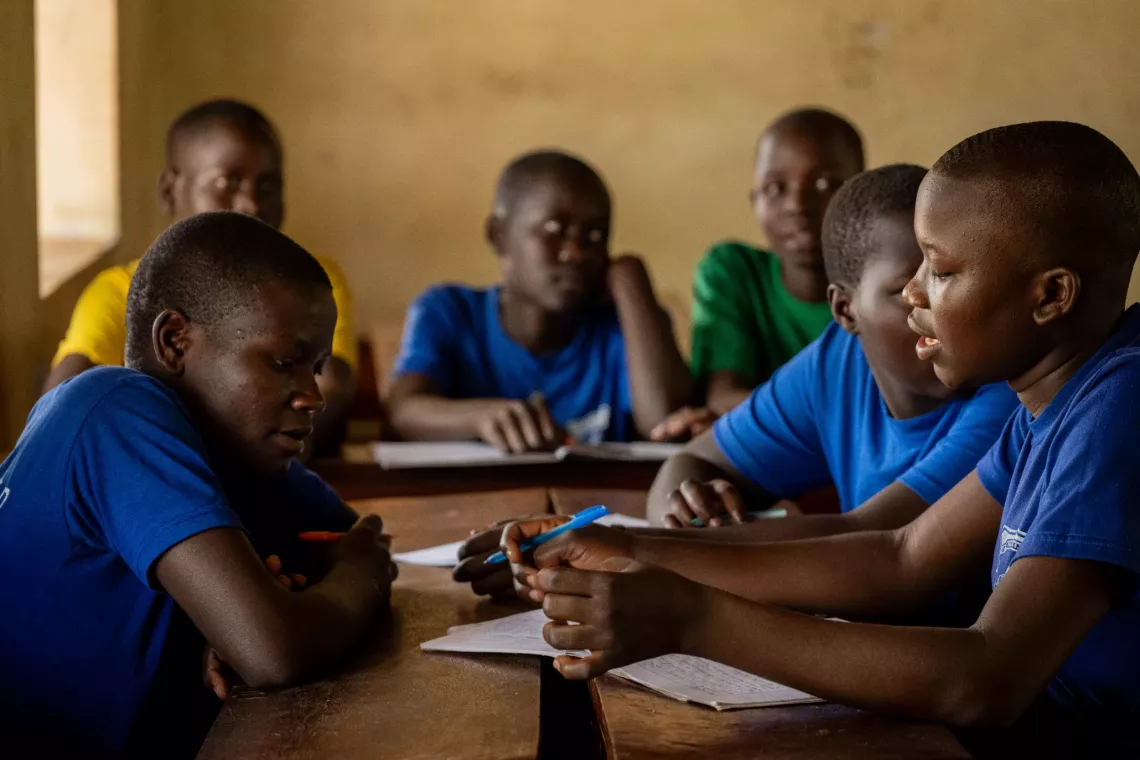
Catchup programme helping learners improve their foundational literacy and numeracy competences
The programme targets 111,240 stakeholders among them 108,000 learners, 1,440 teachers, 1,080 school managers, and 720 parents in seven districts of Kyegegwa, Kikuube, Mubende, Kasese, Ntungamo, Kamwenge and Isingiro.

School going children in Uganda face several challenges that hinder their progress with many struggling to meet foundational literacy and numeracy standards.
To bridge this gap, an accelerated, inclusive, and child centred approach was designed. Codenamed UCatchUp, the programme, through a baseline study, identified learning levels across key competences and schools where teachers would be trained to implement an accelerated inclusive learning programme.
Funded by the French National Committee for UNICEF, the aim of the programme “is to ensure recovery of lost learning by giving learners an opportunity of extra time to cover up lost time caused by the COVID-19 pandemic and other education related challenges,” explains James Robert Ojilong, the Voluntary Service Overseas (VSO) Project Officer for Southwestern Uganda.
The programme targets 111,240 stakeholders among them 108,000 learners, 1,440 teachers, 1,080 school managers, and 720 parents in seven districts of Kyegegwa, Kikuube, Mubende, Kasese, Ntungamo, Kamwenge and Isingiro.
The programme identified teachers that were trained in order to enhance their teaching skills so that they could help the learners improve their foundational literacy and numeracy competences. The training, conducted over a three-week period, covered several critical areas such as the interpretation and adaptation of the thematic curriculum, effective lesson preparation, child-centred methodologies, inclusive and gender-responsive pedagogy, as well as inclusive education practices.
Targeting 12 core primary teacher colleges, the training saw 54 teacher educators trained who will in turn train teachers from at least 210 schools. This is expected to have a cascading effect that will see thousands of learners receive knowledge that will lead to improved foundational literacy and numeracy competences.

To ensure sustainability, the programme also targeted other stakeholders by conducting workshops that strengthened their ability to identify challenges, track progress, provide local solutions and influence educational outcomes for 58 stakeholders who included Chief Administration Officers (CAOs), District Education Officers (DEOs), headteachers, school management committees and learners. These workshops were held in Kasese and Mubende districts.
Through the programme’s continuous professional development initiatives, a total of 189 model primary teachers undertook training in competence-based assessments. These focused on strengthening teachers' ability to assess learners' achievements based on competencies in early grade reading, early grade mathematics and writing.
This is said to have led to improvements in curriculum interpretation skills as well as the application and development of school test items to assess learners on the content taught.
Additionally, the trainings also improved teachers’ learning assessment practices and remedial lessons that enhanced learning achievements, particularly at foundational levels.
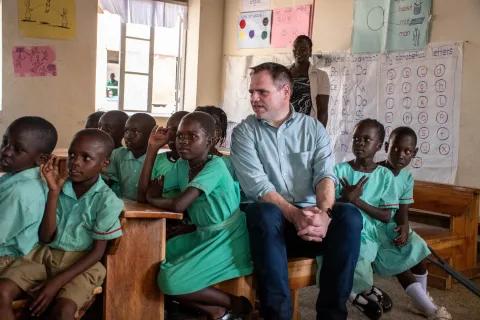
Justine Nakafeero, a teacher educator in Kyegegwa District, says that the programme’s design that leads to the use of games and fun activities “ensures that what learners don’t get in their regular classes, they can do so through catchup learning.”
To ensure that the programme is disability inclusive, UNICEF Uganda is working with VSO, Ministry of Education and Sports and district local government leadership to train teachers on skills in child-centred lesson preparation, transition management, language orthography, and the use of techniques that enhance inclusive teaching for learners with disabilities.
“Disability is a taboo in many parts of Uganda where you find children are hidden instead of ensuring that they not left behind,” Ojilong reveals. Therefore, there was a need to ensure that “disability inclusion is well understood by the school management committees so that they can put inclusive policies in place that are then structured down by the educator creating classrooms that are disability inclusive,” adds Fred Adriko, the VSO Disability Inclusion Advisor for Southwestern Uganda.
Therefore, this comprehensive capacity building initiative has significantly strengthened the ability of teachers to meet diverse learner needs and promote equity in the classroom.
Mental health is another aspect that the programme addresses. In this regard, 300 senior female and male teachers, headteachers, and deputies with 171 being female and 129 males, participated in peer-to-peer psychosocial support sessions on mental health. The trained teachers are now offering peer to peer support to fellow teachers who did not attend the training.
Due to this engagement, schools have responded by designating safe spaces for teachers to share experiences and support for one another thereby contributing to a more child-friendly learning environment. Teachers have also continued to adopt positive approaches aimed at improving learners' wellbeing, which has led to improved school attendance.
As the world continues to experience changes in the climate, the programme also focused on climate change adaptation to improve teachers' knowledge and skills in enforcing positive actions among teachers and learners. This is envisaged to address climatic challenges in schools and the surrounding communities.
The climate change component has led to schools adopting appropriate waste disposal, improved management of plastic waste as well as planting of trees in and around their school communities thereby contributing to a positive change in the environment.
Child protection is critical and reinforcing its advocacy had to be included in the programme. To that extent, 68 stakeholders among them district, sub-county, parish, school, and village-level actors and health workers had increased knowledge on child protection structures and reporting mechanisms after participating in an advocacy and communication skills training. This intervention has enabled them to engage more effectively, improve reporting in their communities and relevant institutions, to drive forward the agenda for child-friendly and safe learning environments.
With programmes such as UCatchUp, more learners will be able to improve their foundational literacy and numeracy competences and set themselves up on a pathway that enables them to reach their full potential.