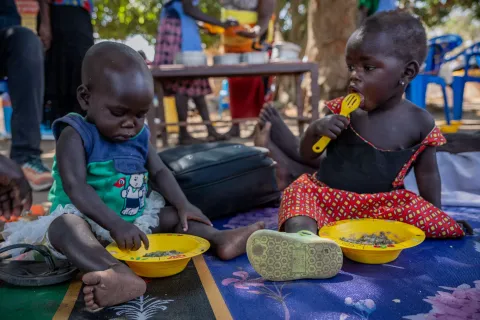
Atoch Riak beams with joy as her son is saved from malnutrition
Thanks to UKAID for supporting the UNICEF-led Care group nutrition programme
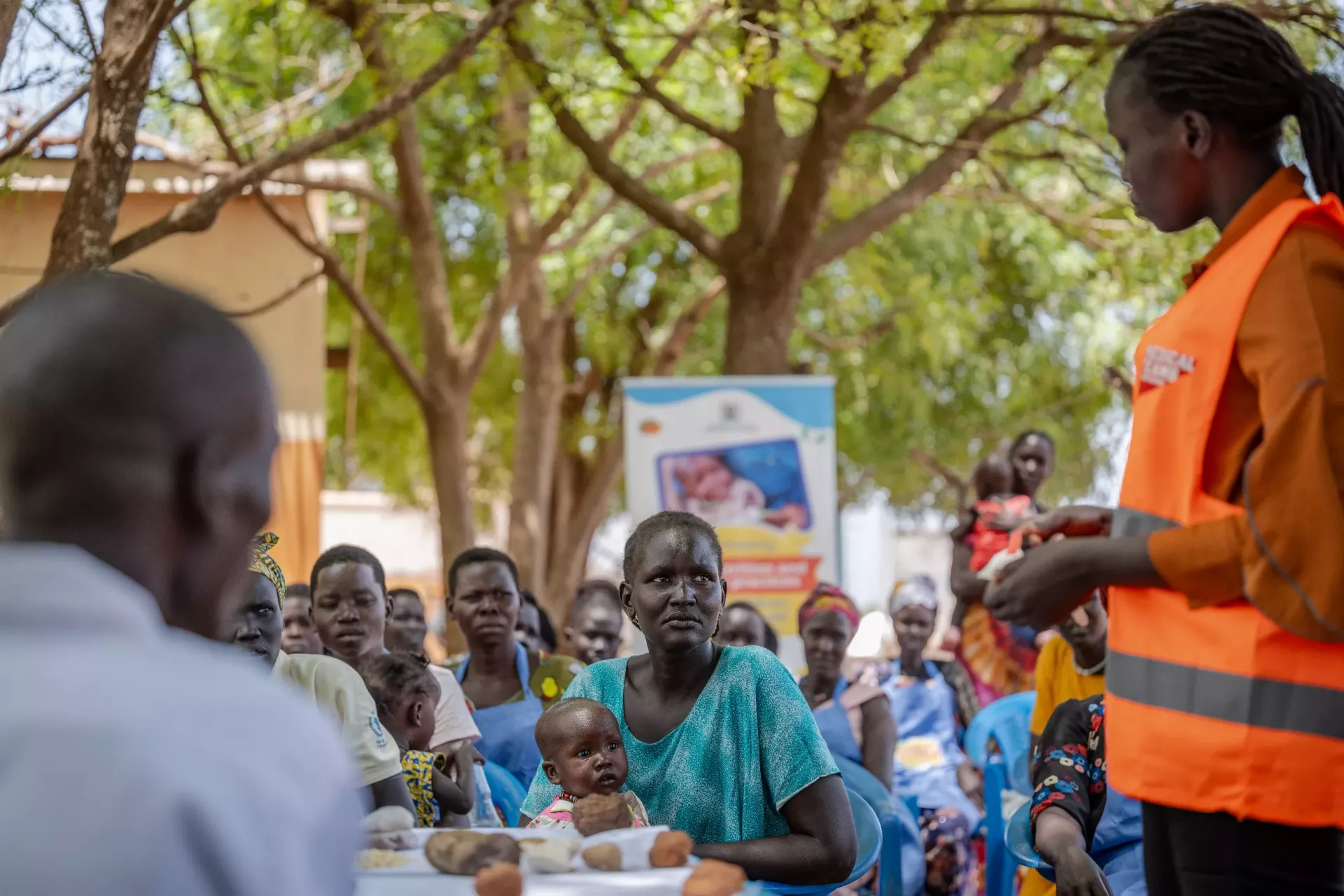
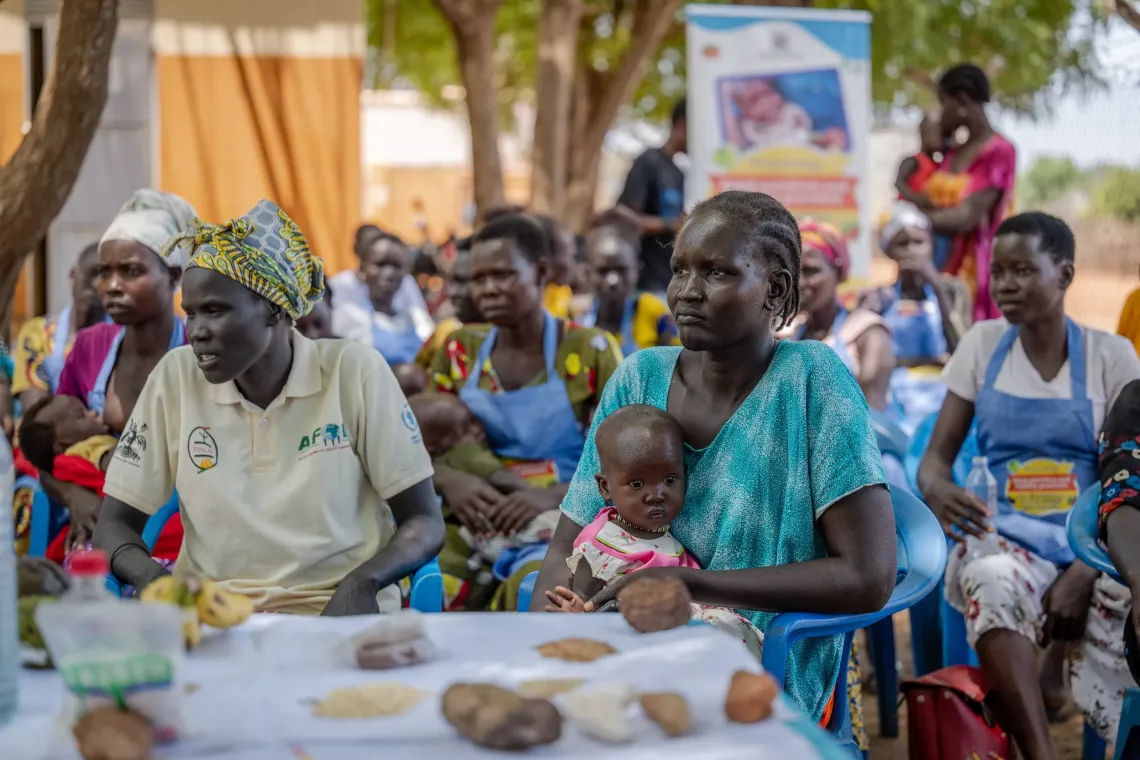
In Block A of Nyumanzi refugee settlement, Atoch Riak became a care group member after receiving training from an organization on how to care for children and pregnant mothers in her community. As a lead mother, she learned to use a Mid-Upper Arm Circumference (MUAC) tape to screen children between six months and five years old for malnutrition.
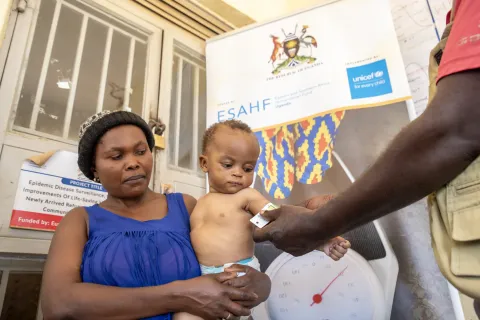
One day, Atoch used her skills to screen her own child, Aguer Deng. She was shocked to discover a reading of 13.0 - indicating the child was "almost to yellow," a warning sign for potential malnutrition. Before her training, she hadn't recognized the signs that her child was at risk.

"I'm a lead mother here and I lead on screening children," Atoch explains. "Your child is not yet malnourished, but I will take you to the Village Health Team (VHT) to confirm." Although she was referring to herself and her own child, she approached the situation with the same care and protocol she would use with any family in her community.
The VHT then referred her to the health facility, where they confirmed Deng was indeed suffering from malnutrition. The health workers instructed her on proper feeding practices, emphasizing the importance of hand washing and providing diverse foods to improve her child's nutrition status.
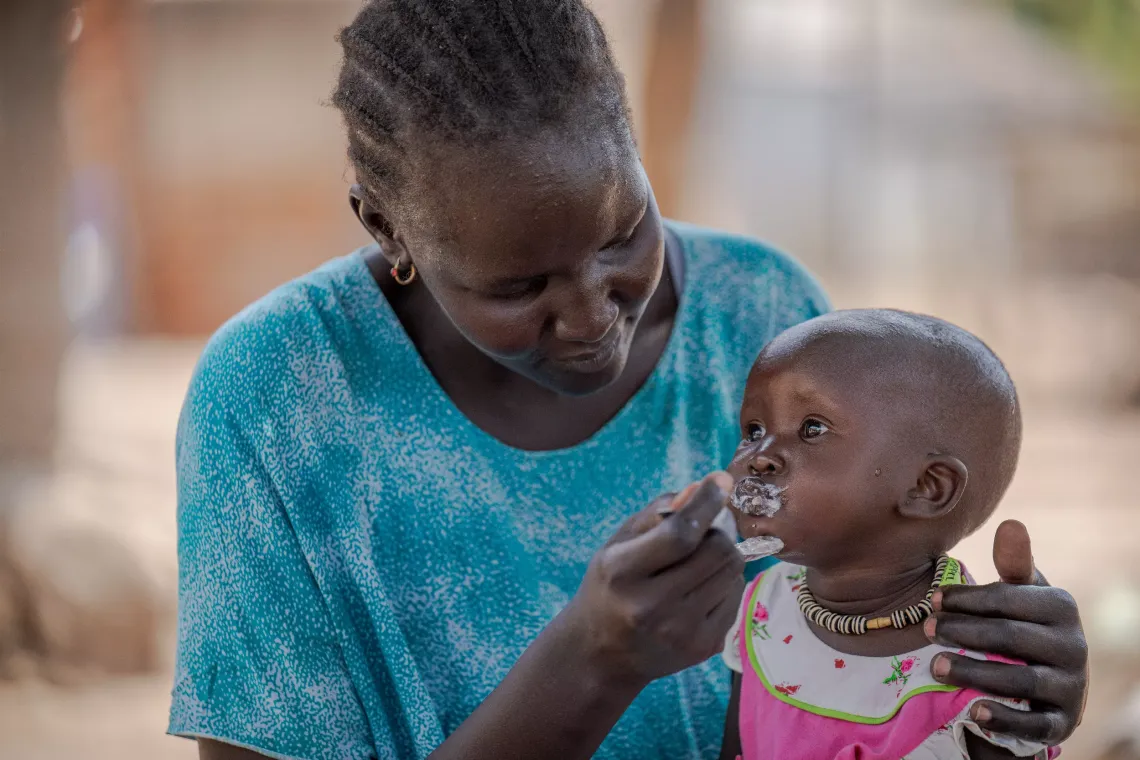
Following the guidance she received; Atoch diligently implemented the recommended feeding practices at home. She began washing her hands before preparing meals and offering Deng different types of nutritious foods. With consistent application of these practices, her child's health began to improve.
Today, Atoch proudly reports that her child is stronger and healthier. Her experience has motivated her to seek more knowledge about child nutrition and care. "The child is now strong," she shares, "but I need more knowledge. I need to be trained again to know more."

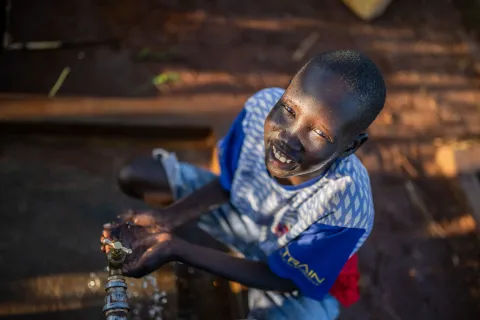
Despite her success, Atoch faces ongoing challenges in maintaining good nutrition practices in the refugee settlement. During the dry season, it becomes difficult to plant and maintain kitchen gardens that would provide fresh vegetables for children in the community. Access to water remains a significant obstacle.
"The problem of water is another problem," Atoch explains. She and other care group members need support with water access, farming tools, and seeds to continue their work effectively. Despite these challenges, Atoch remains grateful to the Government of Uganda, UNICEF and UKAID that have provided training and hopes they will continue to listen to the community's needs.
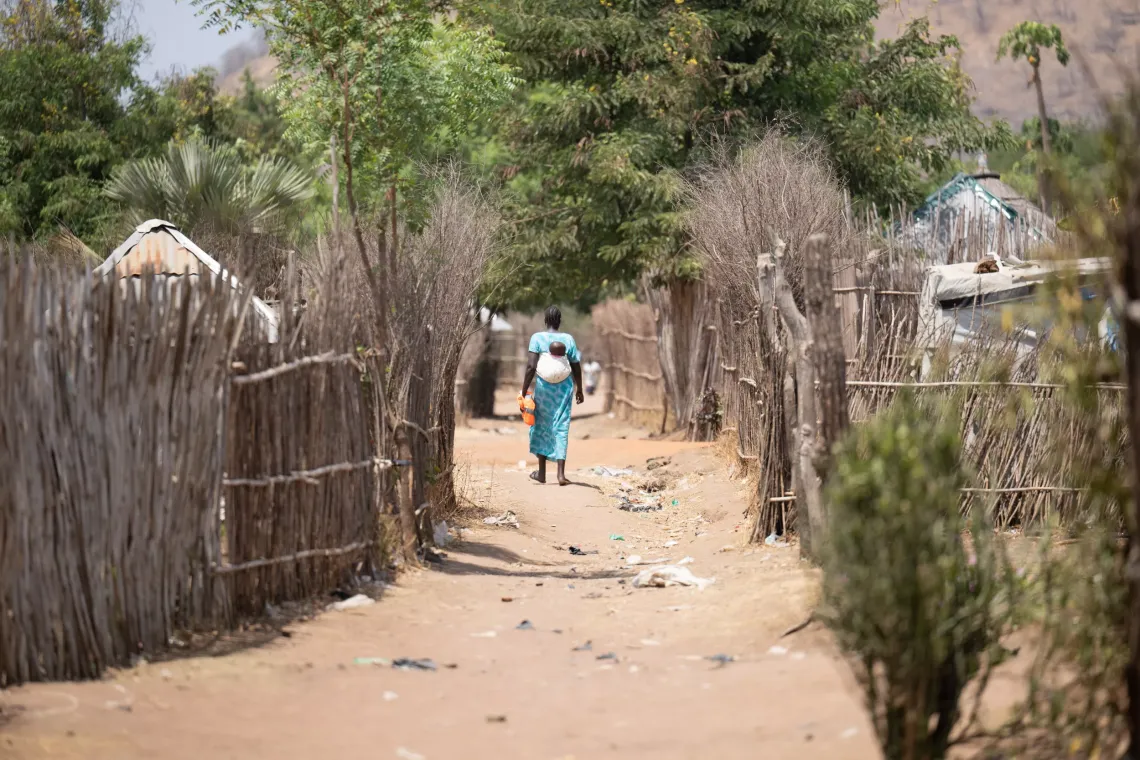
Atoch 's story exemplifies how the care group model creates a powerful ripple effect in refugee communities. What begins as training for one mother becomes life-saving knowledge that benefits an entire household and spreads throughout the settlement. By equipping refugee women like Atoch with skills to identify and address malnutrition, these programs build community resilience from within.
Even with limited resources, the knowledge gained becomes a sustainable tool that improves the livelihood of mothers and their children. As more mothers gain these skills and support each other, Nyumanzi settlement moves closer to a future where preventable malnutrition no longer threatens their children's health and potential.