Adjumani District slowly triumphs over malnutrition
"These women are a force to be reckoned with. We call them our nutrition doctors in the community…"

In the far north of Uganda, in Adjumani District, the community and leadership of the district are slowly reversing the nutrition situation that previously worried the communities.
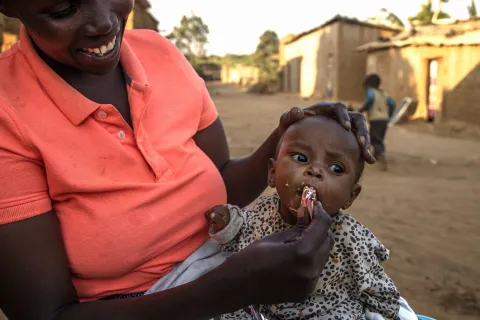
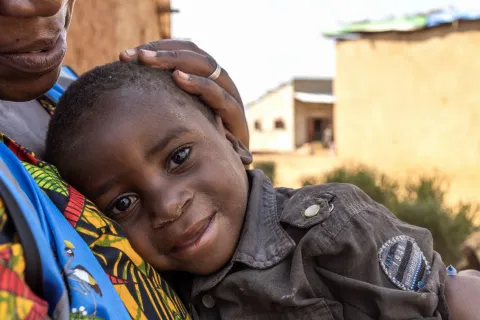
Adjumani, like many parts of Uganda, grapples with the pervasive problem of malnutrition. The presence of hunger and undernourishment looms large, particularly among its vulnerable children and pregnant women. However, amidst these adversities, the will to make a change and give mothers and children a lifeline and a bright future is evident.
The Government of Uganda, in partnership with UNICEF and with funding from UKAID, embarked on a mission to combat malnutrition in refugee and host communities in Adjumani District. This collaborative effort united a diverse group of stakeholders, including healthcare professionals, community leaders, and passionate volunteers, all driven by a shared vision of a nourished and thriving community.
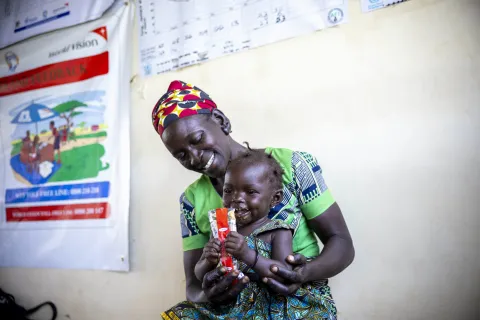
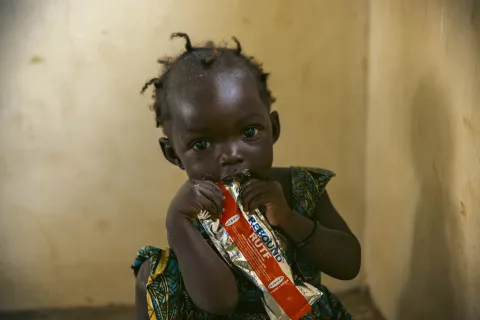
A series of carefully designed high-impact nutrition interventions, each aimed at addressing the multifaceted nature of malnutrition were implemented. These include provision of essential micronutrient supplements and treatment for acute malnutrition, strengthening capacity of nutrition service providers to provide appropriate nutritional care, identifying children who may be at risk of malnutrition, to the implementation of social behaviour change in community-based nutrition programs were implemented. In addition, UNICEF supported these communities to identify nutritious local foods for children and promoted diversified diets for children aged 6-23 months.

One of the key pillars of this approach was the empowerment of communities. Through education and awareness campaigns, families were equipped with the knowledge and tools necessary to make informed decisions about their nutritional needs. Local health workers, the unsung heroes of this story, worked tirelessly to provide guidance and support, ensuring that no one was left behind.
According to the district’s nutrition data, in the financial year 2023-2024, a training of district and sub county trainers on community maternal infant young child and adolescent nutrition (MIYCAN) was conducted other integrated interventions.
Furthermore, 186 care groups were formed (comprising of over 2,790 care group volunteers), who conducted community mobilization for nutrition action through health and nutrition dialogues and cooking demonstrations.
In the financial year 2024-2025, 60 care group promoters were trained and 100 parish coordinators oriented on nutritional best practices. Additionally, 204 new care groups (with over 3,000 care group volunteers) were formed, and 80 lead mothers were oriented. House-to-house mass mid-upper arm circumference (MUAC) screening was conducted by Village Health Teams (VHTs) and further more District Nutrition Coordination Committees (DNCC) monitoring was carried out in 8 sub counties. Moreover, integrated health and nutrition outreaches were supported, and Integrated Management of Acute Malnutrition (IMAM) mentorship provided in 18 health centers.

The results of these concerted efforts were remarkable. Malnutrition rates fell, and the overall health and well-being of the community witnessed a significant improvement. Children, once weakened by hunger, now radiated with energy.
The impact of these interventions was evident in the tangible outcomes achieved. For instance, there was a significant increase in the percentage of adolescents, children, and pregnant/lactating women who were assessed for nutritional status.
The training of nutrition focal persons and health information assistants in all facilities led to improved nutrition health information. Furthermore, the care group approach facilitated increased nutrition screening at the community level and fostered positive behaviour change for health and knowledge on good nutrition practices in areas where care groups were implemented.
Behind all this were dedicated individuals who worked tirelessly to make a difference. District Health Teams, Health workers, community volunteers, and local leaders, often working behind the scenes, were the driving force behind this nutritional turnaround.
Among these unsung heroes is Stephen Aliga, the Adjumani District nutrition focal person. His unwavering commitment and tireless efforts played a pivotal role in the district's nutritional improvement.

"We have always aspired for a district where every child has the opportunity to grow to their full potential, free from the shackles of malnutrition. Today, we stand proud, witnessing the fruits of our collective labour. However, we also recognize that our journey is far from over. We remain committed to building upon this foundation, ensuring that every resident of Adjumani has access to the nourishment they need to thrive," says Stephen Aliga, the Adjumani District nutrition focal person
This Care Group approach has empowered women to become the stronghold of the communities in partnership with community members and VHTs to promote nutrition, maternal and newborn health. As Stephen noted,” these women are a force to be reckoned with. We call them our nutrition doctors in the community. They have changed the landscape of nutrition at household level.”
One of the care group mothers, Susan Raleo testifies, "before these nutrition lessons, we used to take our children weekly to the health centre. Now we understand how to prevent illness through proper feeding and hygiene practices."
According to Stephen, in January and February 2025, over 96 per cent of mothers initiated breastfeeding within one hour of delivery, a critical practice for infant health. Additionally, over 75 per cent of pregnant women received at least 30 tablets of Folic Acid and Iron Sulphate at their first antenatal care visit, demonstrating a commitment to maternal nutrition.
A mass MUAC screening in 2024 reached 7,209 households and screened 8,795 children. Among those screened, 89 children were identified with moderate acute malnutrition (MAM) and 20 with severe acute malnutrition (SAM). Out of 2,794 pregnant and lactating women screened, 105 were identified with MAM and 28 with SAM. These screenings and subsequent referrals for treatment showed the proactive approach taken to identify and address malnutrition in the community.