UN Allocates US$2.5 million in emergency funding to support surging refugee influx in Uganda
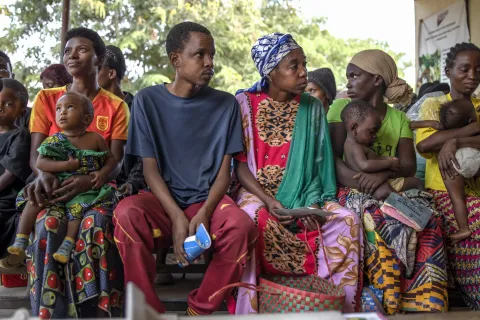
Many refugees, mainly from Democratic Republic of Congo, South Sudan and Sudan, are arriving traumatized, malnourished, and in urgent need of care after harrowing journeys.
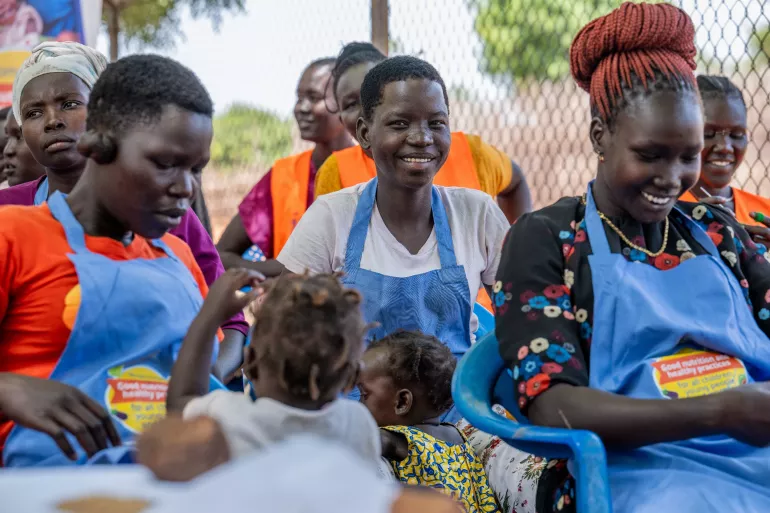
The United Nations has released US$2.5 million in emergency funding to scale up life-saving humanitarian assistance for thousands of refugees fleeing violence in eastern Democratic Republic of Congo (DRC) to Uganda.
The funds, provided through the UN Central Emergency Response Fund (CERF), will enable three UN Agencies – United Nations High Commissioner for Refugees (UNHCR), UN World Food Programme (WFP) and United Nations Children’s Fund (UNICEF) continue to deliver critical services such as food, nutrition, water, medical care, and protection for refugees in their first two weeks of arrival. The response will focus on Uganda’s overstretched transit and reception centres in Kabazana, Nyakabande, and Matanda, in the Southwest sub-region.
Uganda, already Africa’s largest refugee-hosting country, has seen a dramatic increase in new arrivals—more than 65,000 Congolese refugees from January to May 2025—pushing the total number of refugees in the country to nearly 1,900,000.
“We are grateful for this timely and urgently needed contribution from the United Nations Central Emergency Response Fund. It comes at a moment when our capacities are severely stretched and will be a step in the right direction to help us provide urgent support to the thousands of people arriving in search of international protection and assistance. Emergency response funding and strong partnerships like this are critical to sustaining Uganda’s progressive refugee policy and continuing dignified support for all refugees,” said Leonard Zulu, UN Resident Coordinator in Uganda
The sharp spike in displacement—a 600 per cent increase from the same period last year—has pushed Uganda’s reception system to a breaking point. Many refugees, mainly from Democratic Republic of Congo, South Sudan and Sudan, are arriving traumatized, malnourished, and in urgent need of care after harrowing journeys.
Matthew Crentsil, UNHCR Representative in Uganda, said, “This CERF allocation will enable us to provide immediate and essential services—clean water, health care, and protection—at reception centres operating far beyond capacity. Timely and targeted support like this is critical to sustaining a coordinated emergency response.” With food pipelines under threat, the UN World Food Programme (WFP) warned of serious consequences without swift support.
“This CERF funding is a lifeline—it helps us prevent a full-blown food crisis within an already dire humanitarian emergency,” said Marcus Prior, WFP Country Director. “It enables us to deliver immediate food and nutrition support when refugees need it most—right at the point of arrival.” UNICEF is focusing on child health, as malnutrition rates soar among new arrivals.
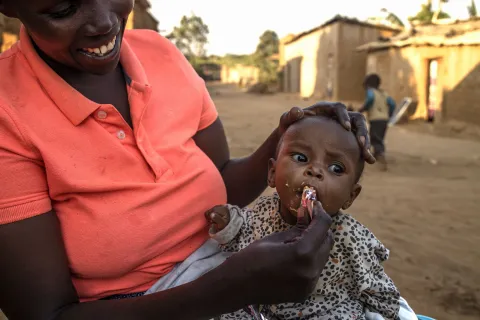
“We are seeing children arrive in extremely weakened states, many suffering from malaria and severe malnutrition,” said Robin Nandy, the UNICEF Representative in Uganda. “This funding will allow us to scale up emergency nutrition services by continuing to screen and treat malnourished children and provide life-saving health interventions for those most in need.”.”
The Government of Uganda welcomed the support, calling it a timely boost as the country struggles to manage an escalating humanitarian emergency amid dwindling donor resources.
Media contacts
About UNICEF
UNICEF promotes the rights and wellbeing of every child, in everything we do. Together with our partners, we work in 190 countries and territories to translate that commitment into practical action, focusing special effort on reaching the most vulnerable and excluded children, to the benefit of all children, everywhere.
For more information about UNICEF and its work for children, visit www.unicef.org/uganda