Learning beyond the mountains: how tablets are transforming education in Darulete
Children and teachers in Escola Básica Central (EBC) 1.2.3 Darulete embrace ICT to strengthen learning and prepare for a brighter future

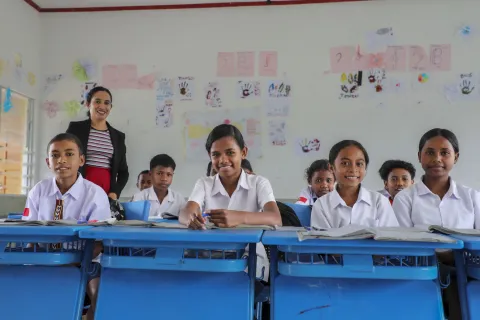
Darolete, 15 November 2025 - High in the mountains of Darulete, where the cold morning dew rests on the land like a soft layer of ash, stands Escola Básica Central (EBC) 1.2.3 Darolete, a small school determined to bring brighter opportunities for its students. For many children here, the long walk to school, the weather, and the scarcity of learning resources have always been part of the journey. But today, something new is changing how they learn, dream, and see the world.
Etelvina, 12 years old, now in Grade 6, smiles shyly as she holds the school tablet close to her chest. “I like natural science because I can learn about animals, plants, the environment,” she says. “Before we only had a manual with pictures, but with the tablet, we can watch videos. I can see real animals and how climate change affects them. This makes me very happy because I learn more.”
Sitting beside her, was Ericson, 14 years old, and in Grade 7, says the Eskola ba Uma/EbU (Learning Passport) has opened new doors. His favorite subject is Civic Education and Citizenship.
“In the platform, we have many subjects, summaries, proverbs, exercises. When emergencies happen and we cannot come to school, we can still study. There are even videos and materials about 21st-century skills like STEAM, multimedia technology, and financial literacy,” he explains with confidence.
For students in remote areas like Darulete, this digital access is more than modern technology, it is a lifeline for learning continuity.
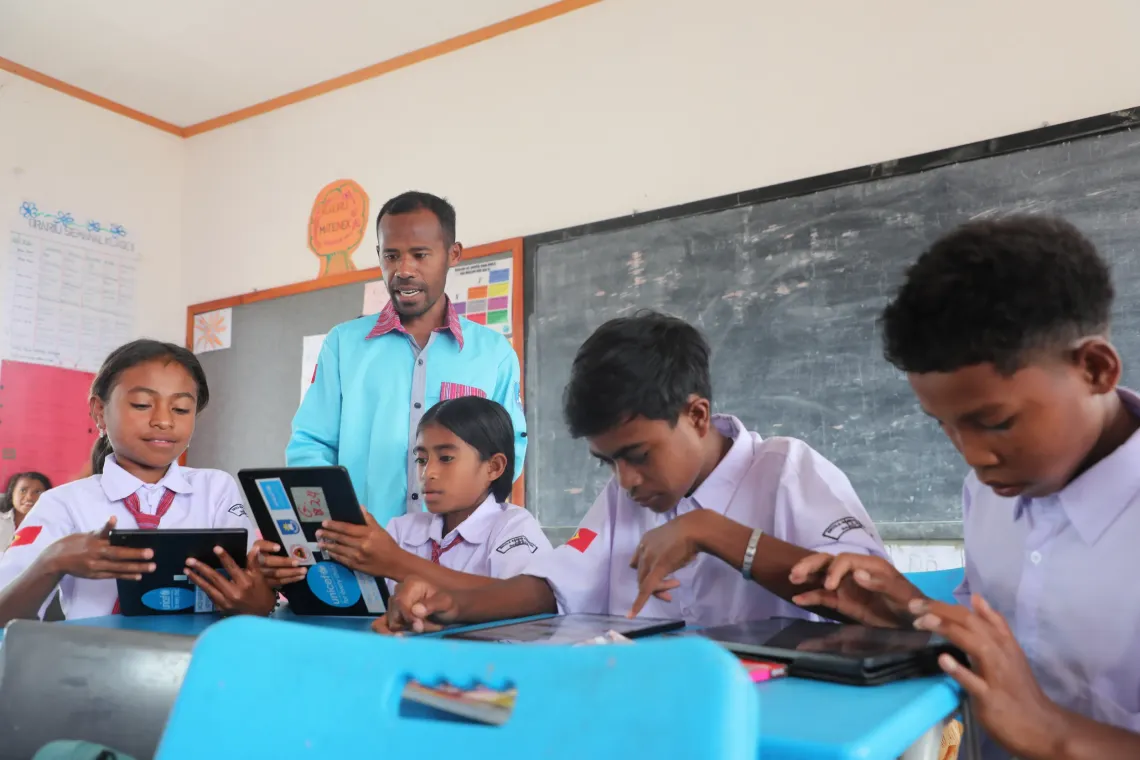
As part of the programme, 172 teachers from Ainaro, Ermera and Liquica municipalities received Information, and Communication, Technology (ICT) training to strengthen their digital skills and prepare them to integrate technology into classroom learning.
Following the teacher training, students were also introduced to ICT. The introduction of tablets did not happen overnight. Students first received ICT training. The topics covered basic ICT hardware and software, how to create Gmail, and register, access to Eskola Ba Uma/EbU (Learning Passport), and how to open the tablet. The Ministry’s National Directorate of Basic Education (DNEB) and National Directorate of Information System and Technology (DNSIT), facilitated hands-on sessions where children learned how to use a tablet, create an email account, and navigate the Eskola ba Uma Platform for the first time. In total, 10 schools and 2,239 students across the country have benefited from this support.
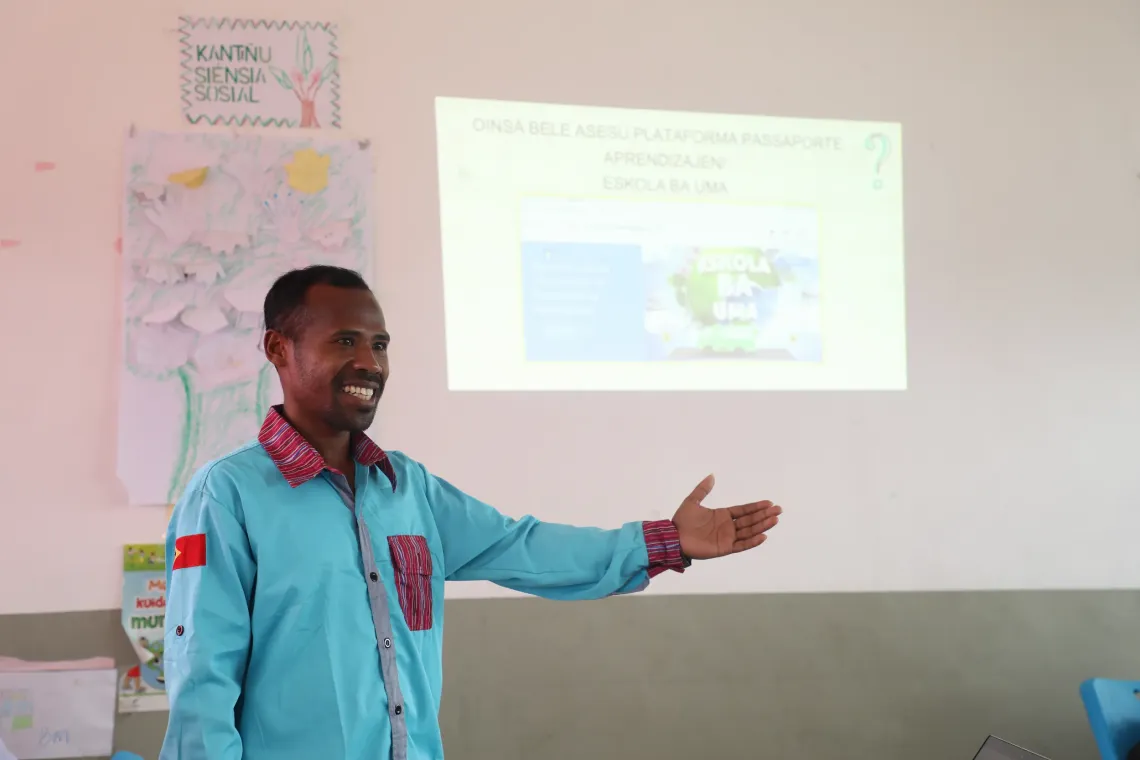
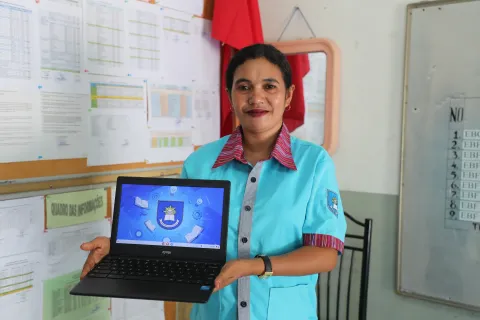
Teacher Marcelino, who also leads the school’s technical support office, says the integration of ICT is becoming essential. “Technology helps teachers prepare better lesson plans. And it is important to introduce ICT to students early, so they grow confident using digital tools,” he says.
He shared that the Eskola ba Uma Platform has become especially valuable for students.
“Now they can read and learn anytime. Every new student is supported to register an email account. This way they can access the platform easily,” he adds.
Teachers who attend ICT trainings also return to their schools as mentors, supporting colleagues in learning how to use tablets, platforms, and digital learning tools. This growing peer-to-peer support system is strengthening schools from within.
To ensure the learning does not stop, the Ministry of Education has also provided School grants (Konsensoens Eskolár) for operational expenditure including maintenance and internet data. This allows teachers and students to use the tablets more effectively, access learning materials, and contribute to a stronger digital culture in classrooms which eventually will yield quality teaching and learning for better learning outcomes.
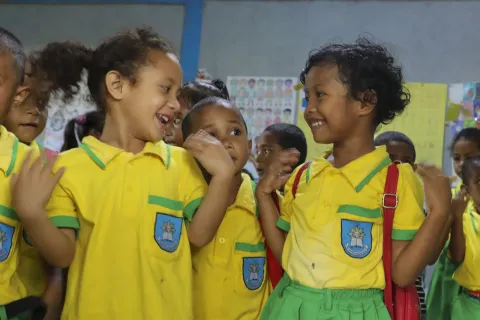
At EBC 1.2.3 Darolete, the future of learning glows from the screens of small tablets held by eager hands. Students like Etelvina and Ericson remind us that when technology reaches even the most remote communities, it does more than support education, it unlocks curiosity, builds confidence, and offers children the freedom to dream bigger.
This initiative is made possible through the generous support from VINCI Energies working together with French National Committee for UNICEF, UNICEF Timor-Leste and Ministry of Education to enable improvement of quality education using ICT in Timor-Leste.
//Ends