Preparing Timor-Leste’s children for the future
How a new curriculum is transforming learning and bringing climate action into the classroom
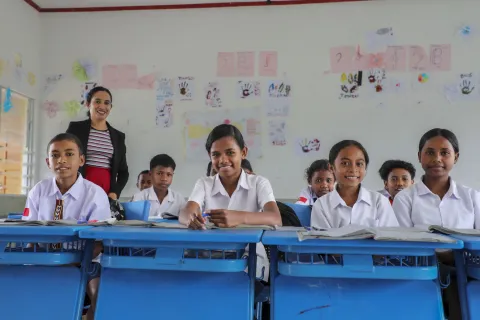
In a world shaped by rapid technological change, environmental challenges, and new opportunities, the skills children learn today will determine how they thrive tomorrow. Across Timor-Leste, a new national Basic Education Curriculum for Grades 7–9 is helping students move beyond memorization and theory toward practical learning, critical thinking, digital skills, and a deeper understanding of the world around them.
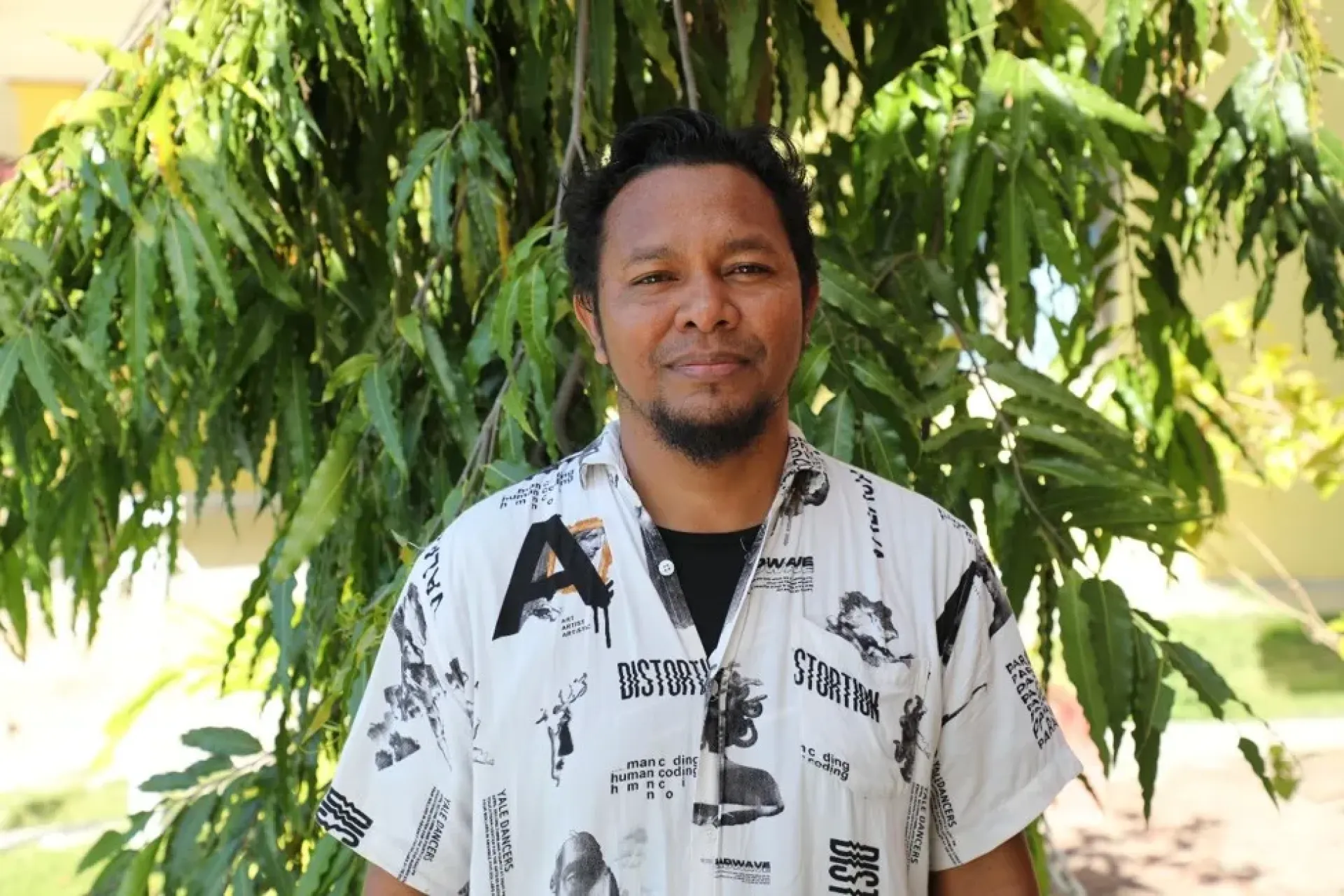
For teachers like Costantino Soares and Adriana Rodrigues, the curriculum reform is already transforming classrooms and preparing students for the future.
“The new curriculum is helping students build practical skills, critical thinking, and knowledge for a changing world,” says Costantino Soares, a teacher at Central Basic Education School (EBC) 30 de Agosto, Dili. “We are living in the era of globalization, and curriculum reform is essential for education today.”
For many years, teaching and learning were heavily focused on theory. Teachers spent significant time preparing lesson plans and summarizing lessons, while students often learned by copying notes from the board and memorizing content.
“The old curriculum focused too much on theory,” Costantino explains. “It did not give enough space for students to practice and apply what they learned.”
The Ministry of Education, with support from UNICEF, introduced the new curriculum to make learning more relevant, practical, inclusive, and student-centred. Each subject now includes a teacher’s guide that helps educators organize lessons more effectively and spend more time supporting student learning.
“This makes teaching easier and learning better,” says Costantino. “Students are no longer only listening and writing. They are also practicing.”
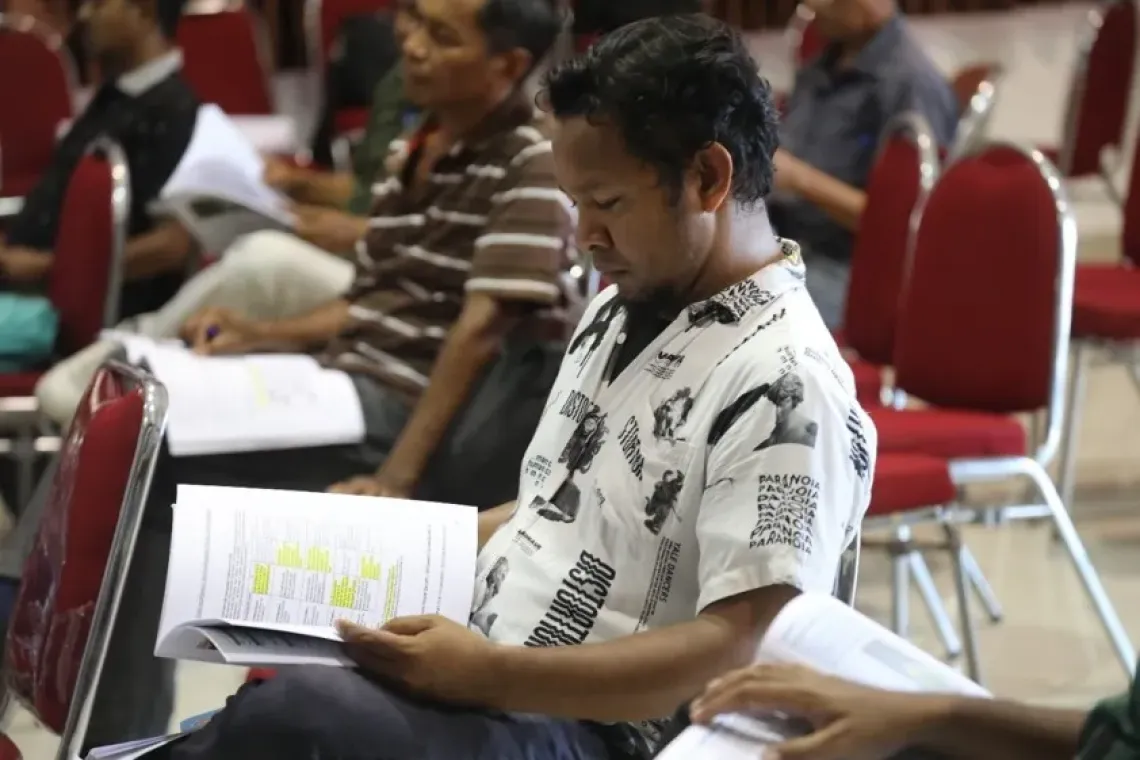
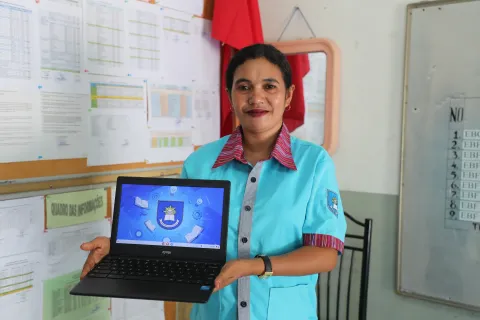
A key feature of the curriculum is its focus on 21st-century competencies. Students are now learning skills such as information and communication technology (ICT), digital literacy, financial literacy, and other practical competencies that can help them succeed in a rapidly changing world.
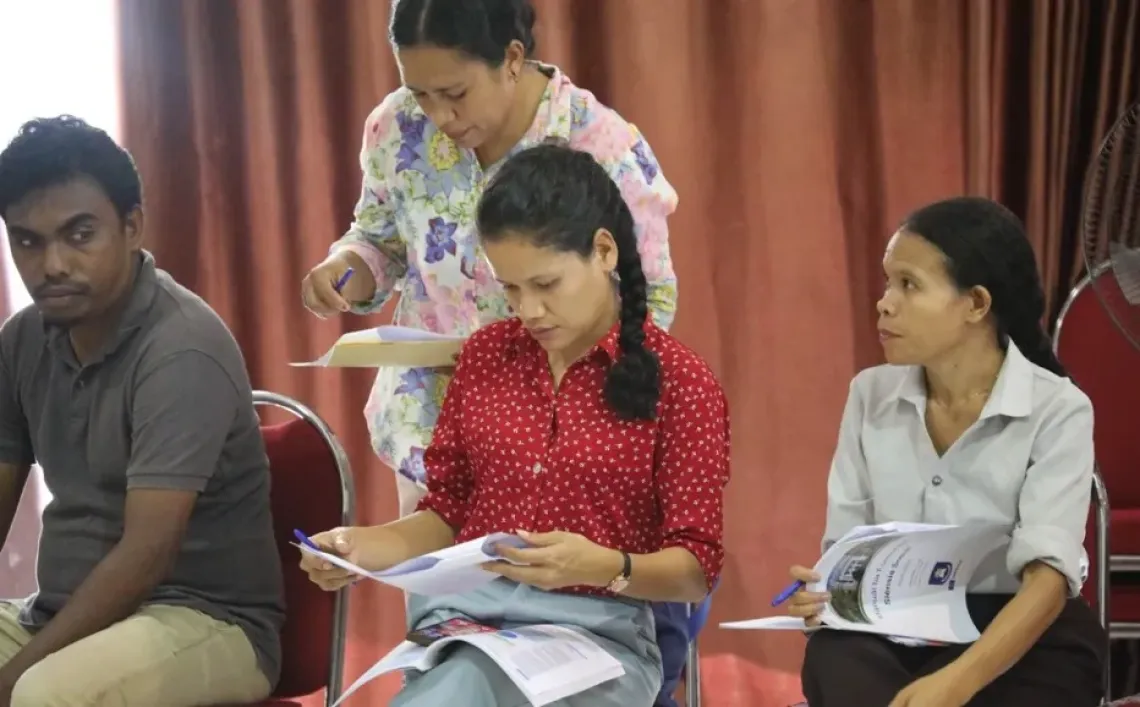
The reform began in 2025 with Grade 7 and expanded to Grade 8 in 2026, with plans to continue across additional grades in the coming years. To support the transition, the Ministry of Education has organized nationwide teacher trainings that have already benefited 600 teachers in 76 schools across the country.
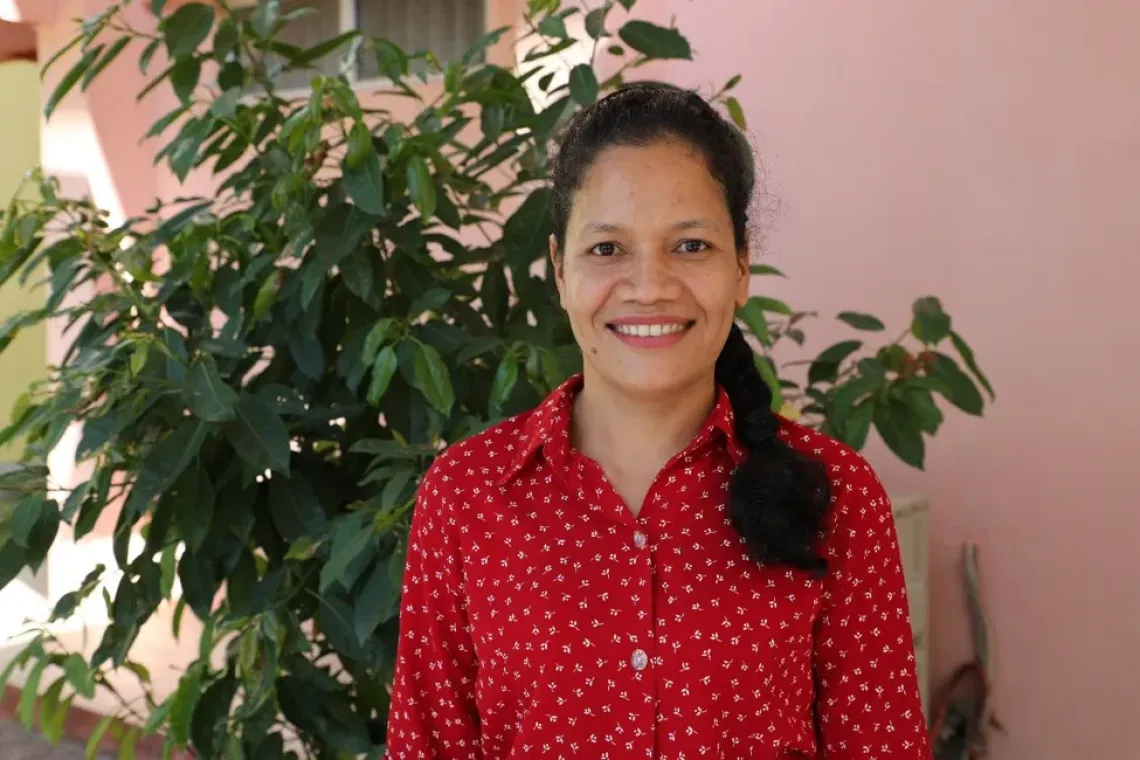
Among those participating in the training is Adriana Rodrigues, a Social Sciences teacher at Central Basic Education School (EBC) Fleixa, in Ainaro, who has seen firsthand how the curriculum is connecting classroom learning to real-life challenges.
Under the previous curriculum, Social Sciences combined Geography and History in a dense textbook that required extensive preparation. Climate change was not included in the subject content, limiting students’ understanding of one of the most pressing issues facing their communities and the world.
“Teachers had to work twice as hard to simplify the lessons,” Adriana recalls. “Learning was mostly theoretical, with very little practice.” Adriana was among the teachers trained by INFORDEPE in 2025 and now serves as a Trainer of Trainers (ToT), helping other educators apply the new curriculum in their classrooms.
“The training is very important,” she says. “It helps us understand the curriculum better and use the teacher’s guide effectively in the classroom.” The training programme and curriculum rollout have been made possible through the generous support of the Global Partnership for Education (GPE) and the Korea International Cooperation Agency (KOICA) Timor-Leste, helping teachers across the country strengthen their skills and deliver quality learning experiences.
“Climate change is not only an issue for Timor-Leste, but for the whole world,” she explains. “Now we teach students how to protect the environment, such as avoiding deforestation and reducing waste.”
The curriculum encourages experiential learning, helping students connect lessons to their everyday lives. Adriana often takes her students outside the classroom to observe environmental issues such as soil erosion and landslides in areas near the school.
“Students understand better when they see it directly,” she says. “They connect what they learn with real life.” Students are sharing what they learn with their families and communities, promoting messages about environmental protection, water conservation, and reducing pollution.
While challenges remain, including improving some translated materials and explaining technical climate concepts in simple language, both teachers believe the benefits far outweigh the difficulties. “What is important is that we are moving forward,” says Costantino. “This curriculum helps students learn better and prepares them for the world they are growing into.”
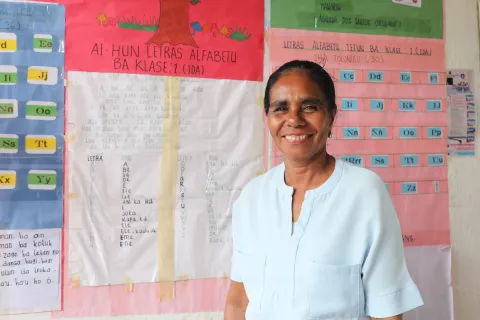
“The new books have many activities and pictures, which make learning easier and more interesting for students,” says Adriana.
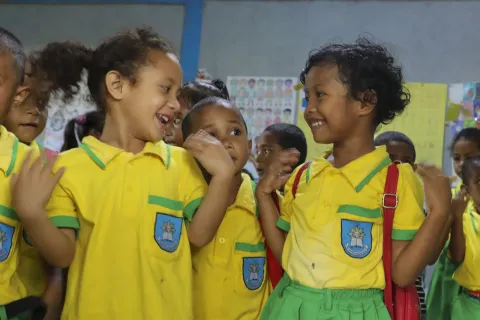
By combining practical skills, digital competencies, and climate awareness, Timor-Leste’s new curriculum is doing more than changing how subjects are taught. It is equipping children and young people with the knowledge, skills, and confidence they need to shape a more sustainable, resilient, and prosperous future for themselves and their country.