How inclusive education is transforming classrooms in Timor-Leste
Teachers like Aguida are helping children with disabilities learn, participate and thrive

"The training taught us that children with disabilities should be treated like any other child," says Aguida. "We learned how to include them in classroom activities, group work and daily lessons without discrimination."
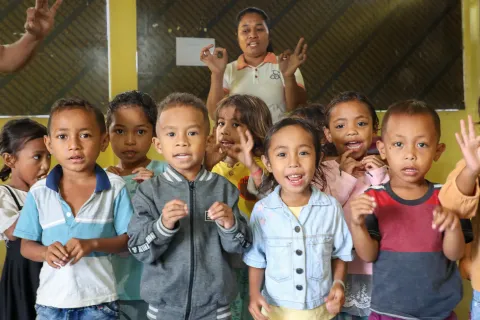
In the rural community of Searema, Manufahi Municipality, the sound of children singing fills the Grade 1 classroom of teacher Aguida dos Santos Orleans. Some students are learning to write their first letters, others are counting numbers aloud, while a few need extra support to follow the lesson. For Aguida, every child deserves the opportunity to learn.
With over 16 years of her teaching career, Aguida has taught Grade 1, welcoming hundreds of children into their first year of school. Since 2022, she has been teaching at Branch Basic Education School Searema, where she continues to help young learners build foundational skills that shape their future.
"Teaching young children requires a lot of patience," Aguida says. "Every child is different. Some cry when they first come to school, some need time to adapt, and others are very active. We need to understand each child and help them learn in ways that work best for them."
To make learning engaging, Aguida often goes beyond textbooks and teacher manuals. She uses games, songs, practical activities and group exercises to help children develop essential literacy and numeracy skills. "In Grade 1, we focus heavily on reading, writing and counting because these are the foundations for all future learning," she explains.
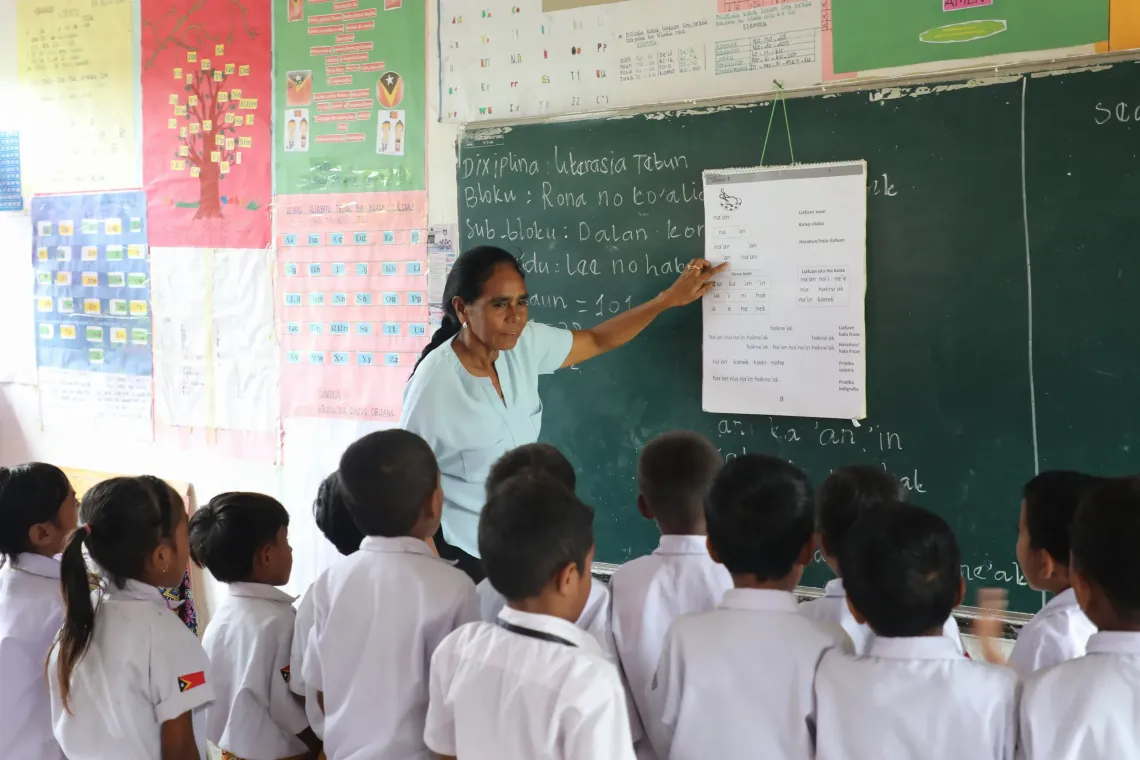
Yet teaching young learners is not without challenges. Children learn at different paces, and some require additional support to fully participate in class. For years, teachers like Aguida had limited guidance on how to effectively include children with disabilities in the learning process.
"Some children understand lessons very quickly, while others need more time and individual attention," she says. "For children with disabilities, we often had to find our own ways to support them because the old teacher guides did not provide clear guidance on inclusive education."
To address these challenges, the Ministry of Education, with support from UNICEF, and the Global Partnership for Education, has been supporting efforts to strengthen inclusive education through teacher training aimed to enhance school leaders’ and teachers’ understanding of inclusive education principles, functional difficulties, and their leadership role in guiding proper identification and responses for learners with diverse needs. These initiatives have benefited 236 school leaders and teachers across Covalima, Liquica and Manufahi.
Aguida participated in two inclusive education training sessions in 2025 and early 2026. The experience changed how she approaches teaching.
The new teacher guides have also provided practical strategies that Aguida and all the teachers like her to use every day. In her classroom, she also teaches children with visual impairments and intellectual disabilities.
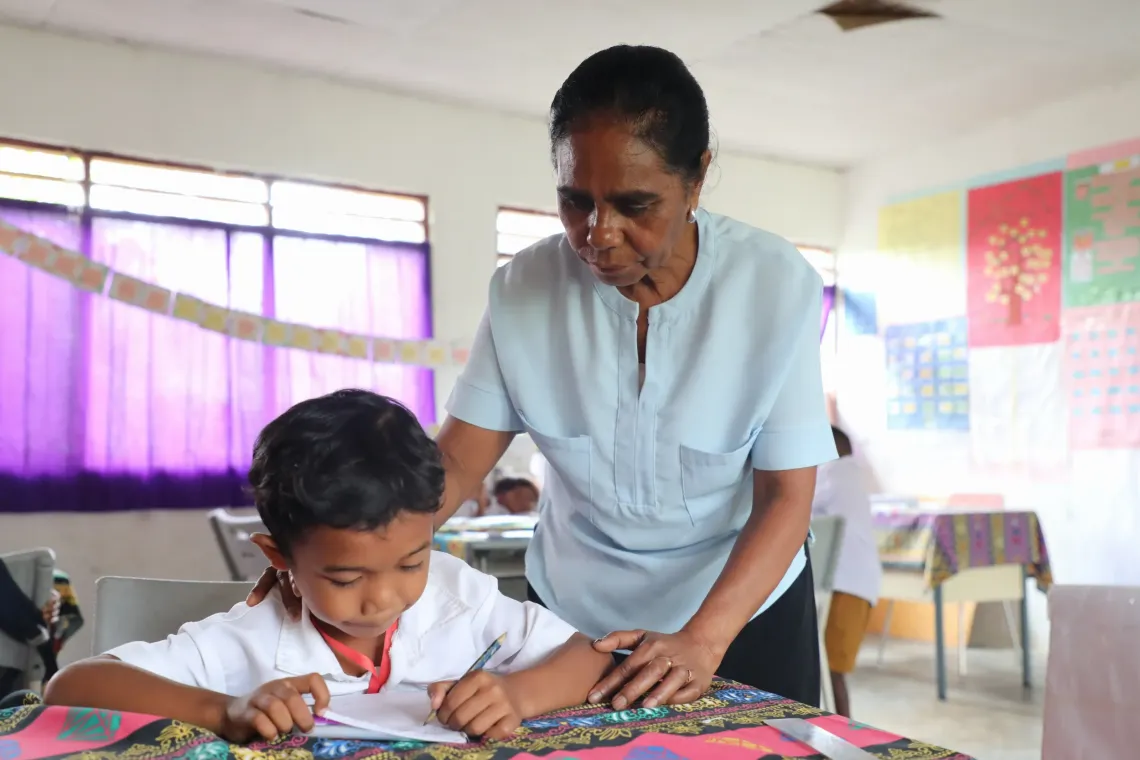
"For children with visual impairments, I often ask them to sit closer to the front of the classroom and regularly check their learning materials," she explains. "For children with intellectual disabilities, I provide extra support and spend more time helping them understand lessons. The important thing is that they learn together with their classmates and are not left behind."
According to Carmelita dos Reis, the school coordinator of Branch Basic Education School Searema, inclusive education training has helped teachers better understand how to support all learners with dignity, respect and non-discrimination.

"The training provides teachers with clear guidance on how to use appropriate language to promote inclusion and create positive learning environments for every child," the coordinator says.
The school has made inclusive education a priority. Teachers actively encourage children with disabilities to participate in extracurricular activities and school events alongside their peers. They also work closely with parents, providing storybooks, alphabet materials, and guidance to support learning at home.
"We cannot do this work alone," the coordinator explains. "Parents, teachers, communities and education partners all have an important role in helping children learn and thrive."
While progress has been made, school leaders believe more support is needed. The provision of accessible learning materials and continued professional development would further strengthen inclusive education across the country. It will be also critical to create awareness among parents and caregivers about functional difficulties and how children can be supported at home.

"Every child has the right to learn," Aguida says. "When teachers have the right knowledge, materials and support, we can help all children reach their potential, regardless of whether they are a person with or without disabilities."
Through dedicated teachers, supportive families and continued investment in inclusive education, more children in Timor-Leste are gaining not only access to school, but also the opportunity to learn, thrive and dream alongside their peers.