Early childhood education: overcoming challenges in rural Viqueque
Two communities follow one technique of teaching that has a huge impact
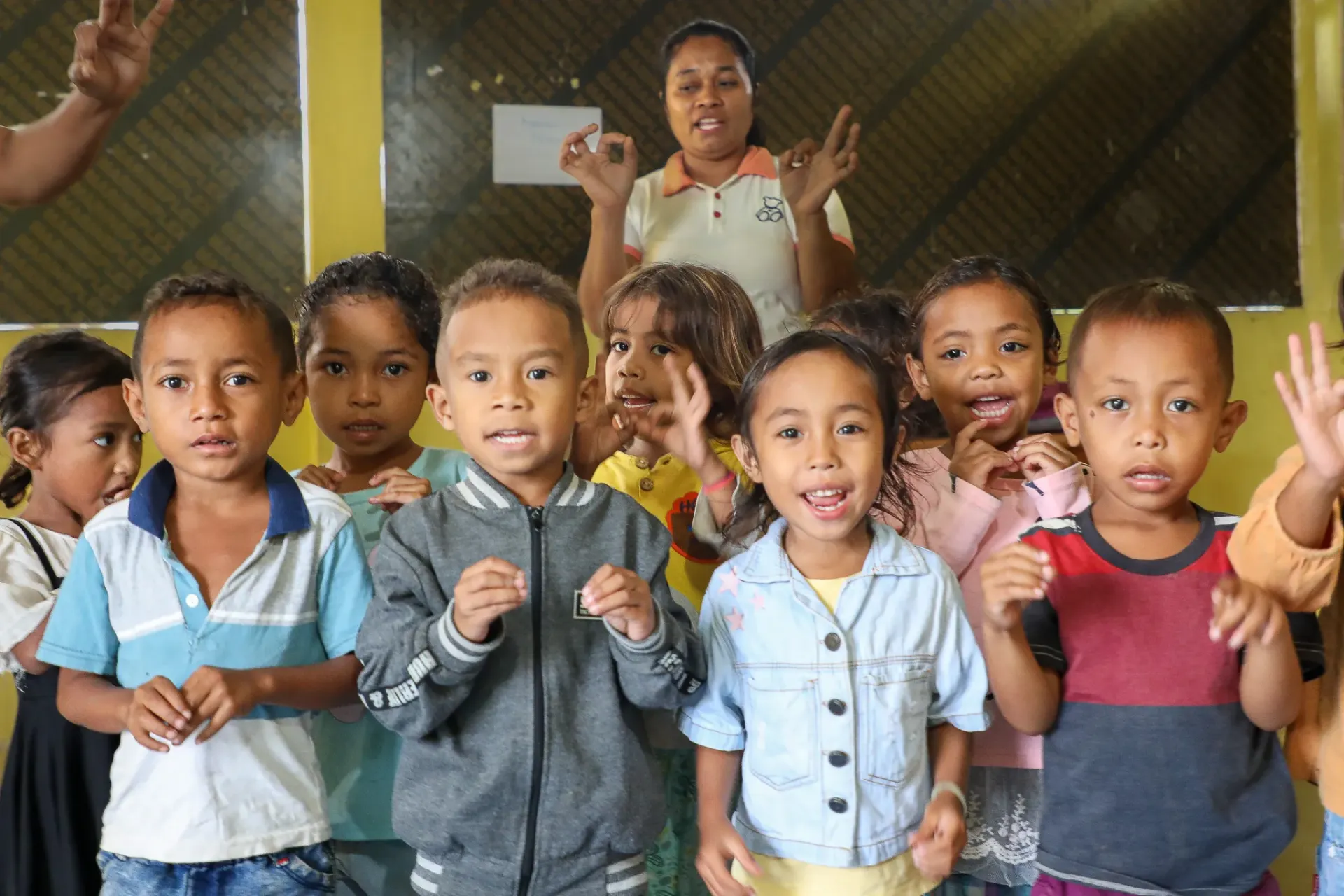
In the two small, remote communities of Uaguia and Ossu de Sima, tucked within Viqueque Municipality, learning begins with laughter.
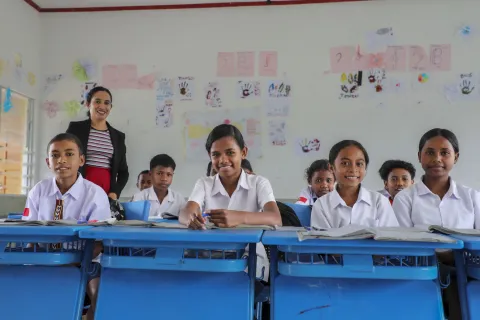
Each morning, Juanita de Sousa gathers her students under a simple preschool structure in Uaguia village, where brightly coloured mats, picture books, and learning blocks transform the space into a place of discovery. For many of the 28 children, this is their first experience with structured learning.
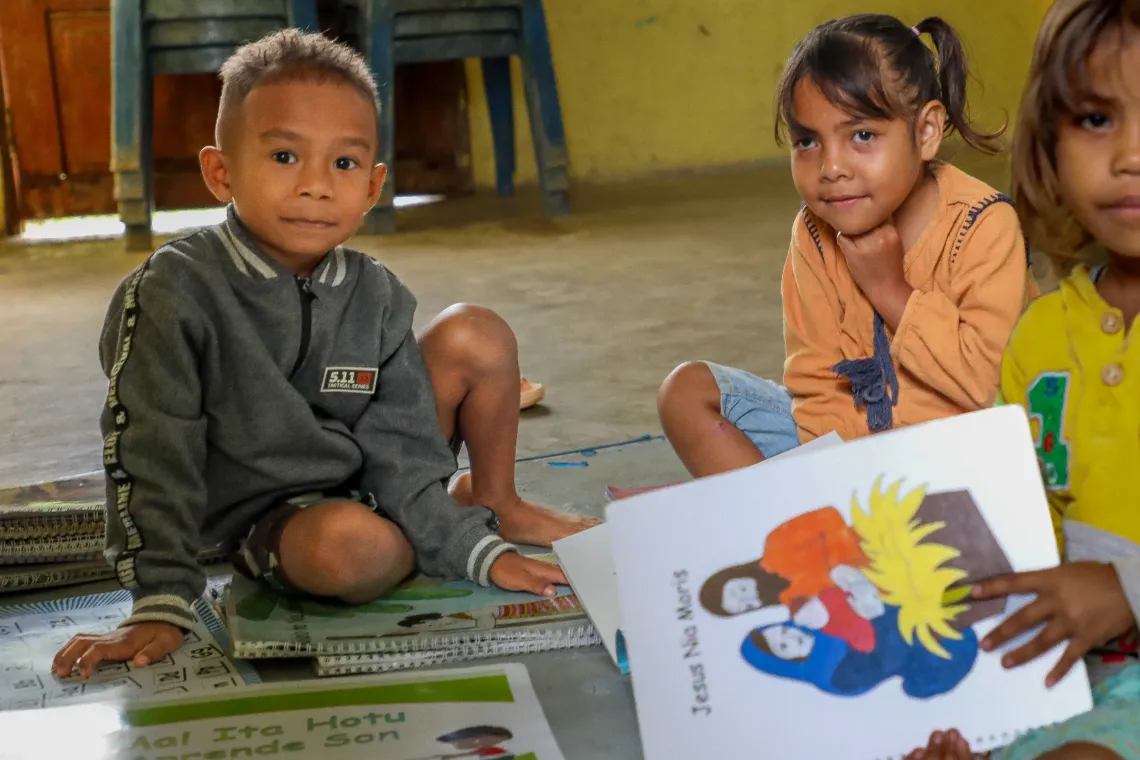
But it was not always this way. The preschool once sat on the same grounds as the nearby primary school. After a year of heavy rain, the building began to deteriorate. Water leaked through the roof, soaking learning materials, and the wooden doors swelled in the moisture and could no longer be locked properly. Over time, books and supplies began to disappear.
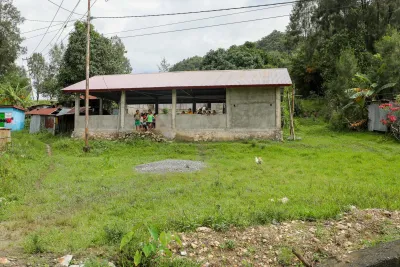
“They are children of the village. We must watch after them and feed them,” says the Dolibuti School Coordinator, Domingos G. Pereira. He and the Ministry of Education coordinated the preschool’s relocation to a new building, giving children a safe place to learn again. He also ensured that the preschool children continued to receive meals through the primary school feeding programme, protecting a vital link between nutrition and learning.
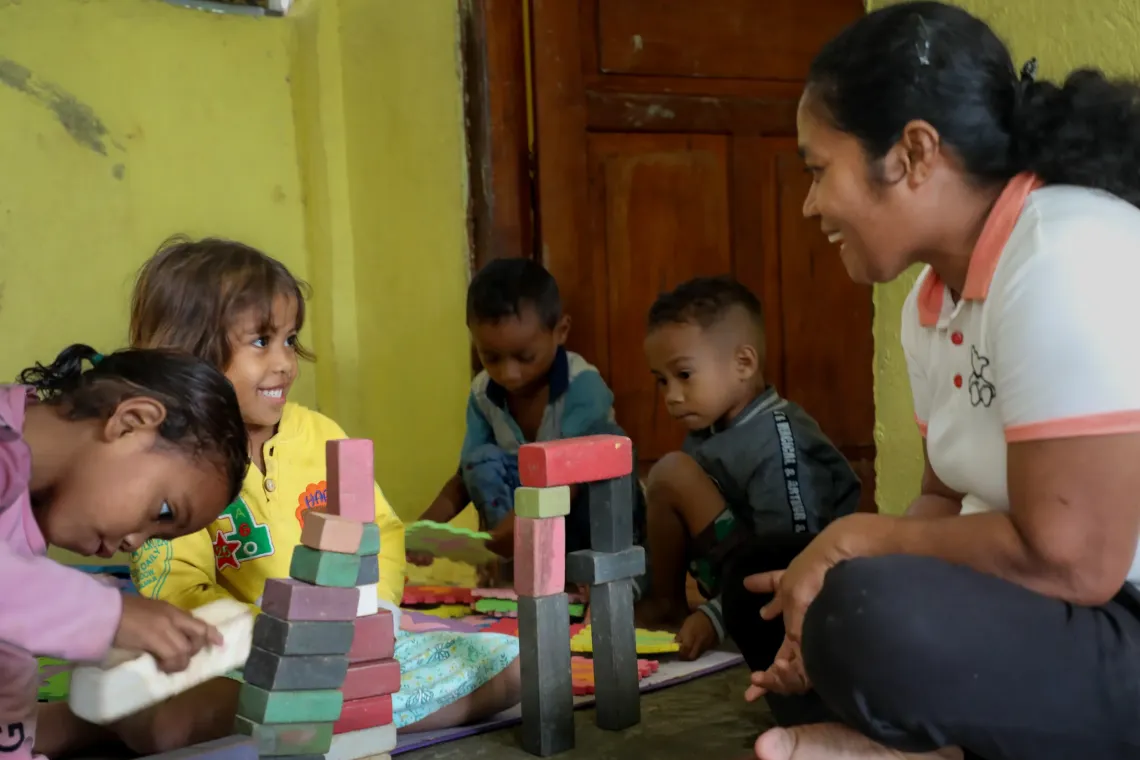
Today inside the new space, Juanita’s classroom is full of energy. “Play-based learning is central to my teaching,” she says, watching as children build towers with blocks and sing alphabet songs.
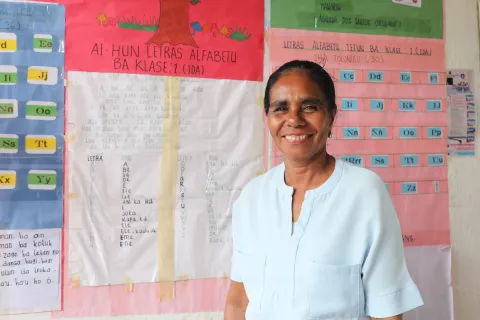
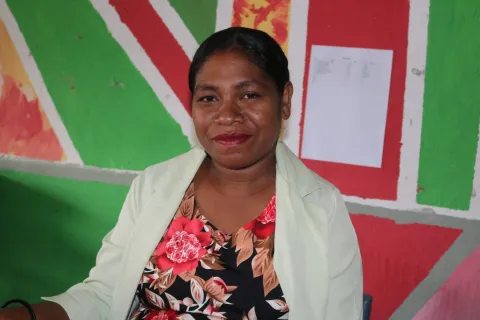
Joana da Silva teaches 15 young children in a community-based preschool supported through the same UNICEF programme, funded by the UNICEF New Zealand National Committee. The classroom did not always look like this.
“For me, it is a privilege to teach these children. They need to be ready for when they go to primary school,” she explains. Joana first began teaching in 2016, in her own home. The space was small, limiting what children could do and how they could learn. Over time, as more children began attending, the preschool grew. Today, it has moved into a larger community space within the village, giving children the room they need to play and learn.
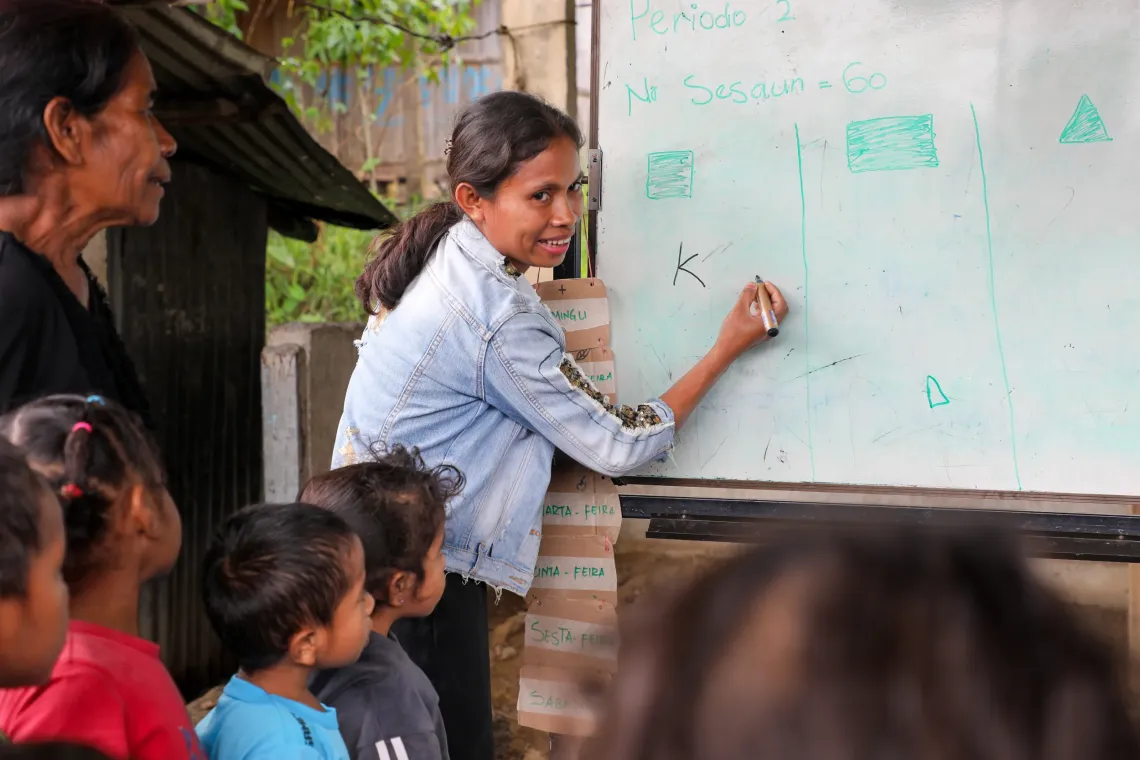
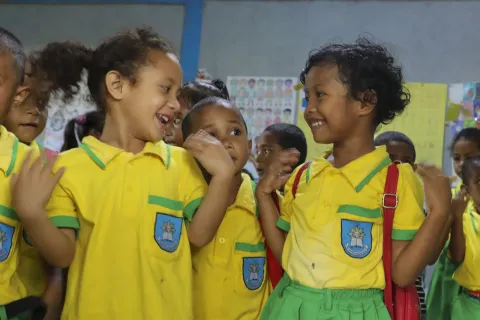
Children now sing together, build with blocks, and practice early skills such as shapes, phonics, writing, and basic math through play. Their laughter fills the space, just as it does in Juanita’s classroom.
For Joana, when children sing, she knows they are engaged. When they begin to recognize letters or shapes, she knows they are learning. And when they are ready to move on to primary school, she knows the effort has made a difference.
Like Juanita, Joana has been supported through training and mentoring provided by the Ministry of Education, Volunteer Services Abroad (VSA), New Zealand and ongoing support by UNICEF. The training includes how to use play-based learning and develop teaching materials using available resources.
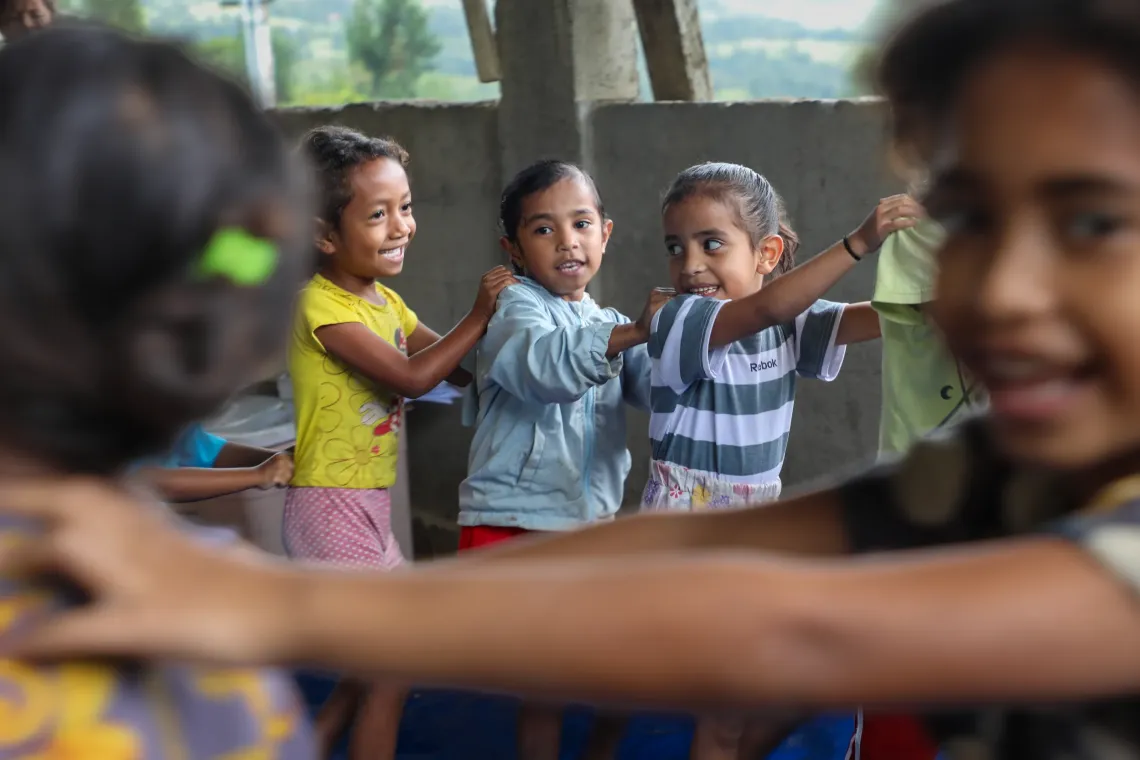
In both classrooms, this support is visible everywhere. Storybooks, puzzles, blocks, crayons, and learning materials fill the environment, turning simple spaces into places of possibility. Both preschools are part of a broader effort to expand early childhood education in rural Timor-Leste, where access remains limited, and many children start school without the skills they need.
With support from the UNICEF New Zealand National Committee, these community-based models are helping to close that gap by bringing education closer to where children live.
The impact goes far beyond the classroom. Children who attend these preschools develop stronger foundations in language, literacy, and social skills, helping them transition more smoothly into primary school. For families, it brings new opportunities. For communities, it strengthens shared responsibility for children’s futures.
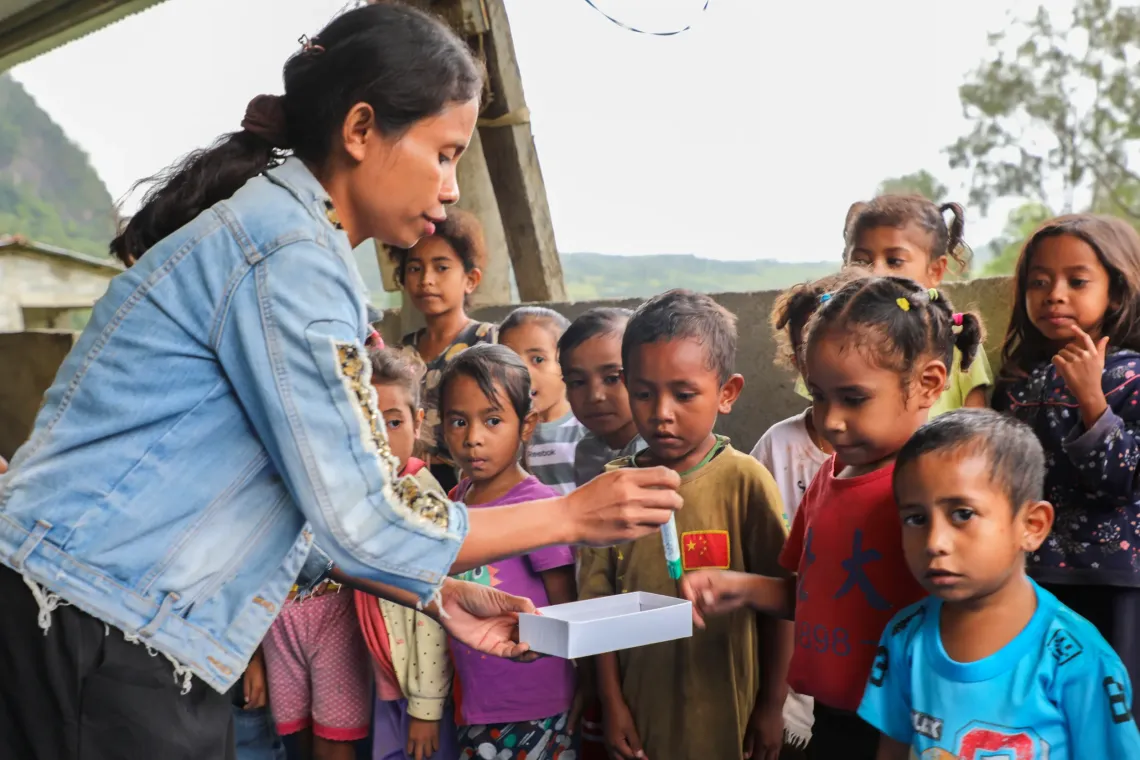
At the heart of it all are teachers. Juanita rebuilt her classroom after it was damaged by rain. Joana opened her own home to ensure children could learn at all. Both continue to show up each day, creating spaces where children feel safe, supported, and ready to grow.
Two classrooms, one shared purpose. And many small moments of learning that will last a lifetime.