A pen, a book and a story of friendship
How two boys found friendship and support in Nyarugusu Refugee Camp

When Lukaba joined Sifa Primary School in Grade 4, he had a pen but no book. Wabu, who was already a student at the school since Grade 1, had a book but no pen.
The two boys, both 12-year-old Congolese refugees, decided to share what they had. “He gave me his book and I gave him my pen and we've been best friends ever since,” says Wabu.
In a place where both boys had already experienced what it meant to leave things behind; their friendship began with what they could share with one other.
Between them, they had enough.
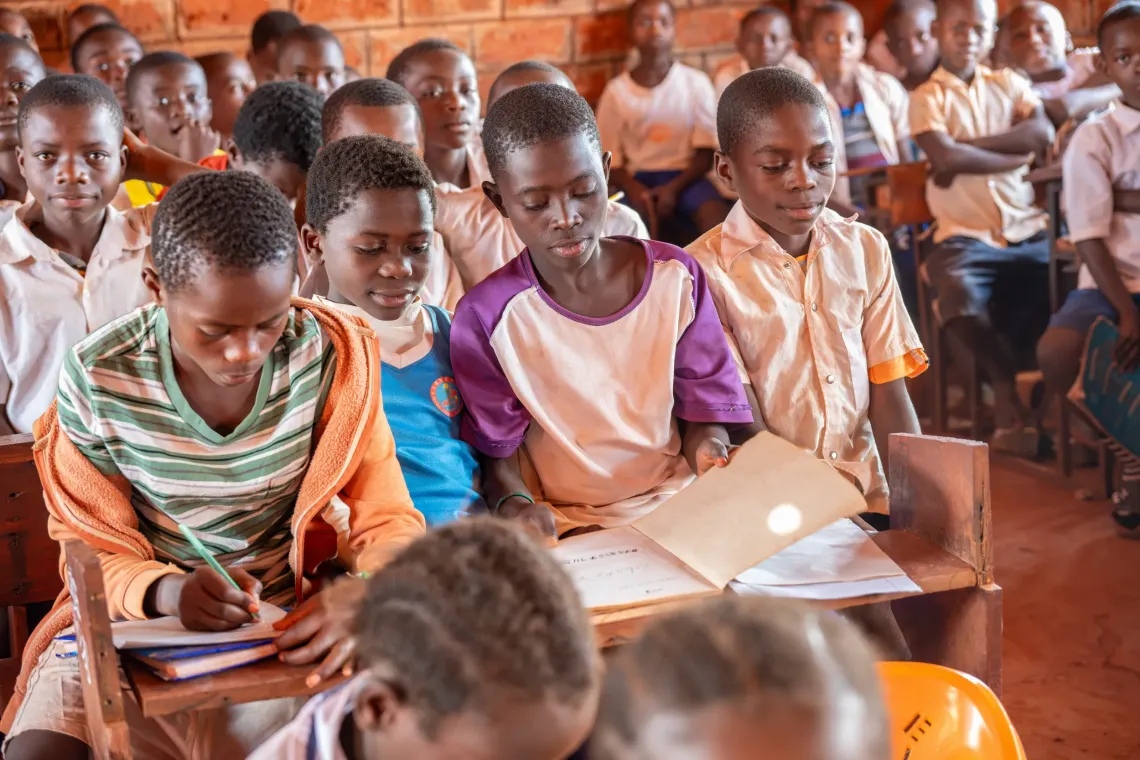
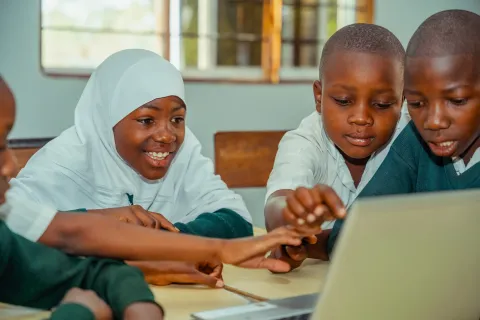
Now in Grade 5, not much separates Lukaba and Wabu. They study together, play together and often find themselves in the same class and play groups.
They also help each other with schoolwork, making their friendship an important part of everyday life.
“Our friendship is built on trust and supporting each other,” says Lukaba.
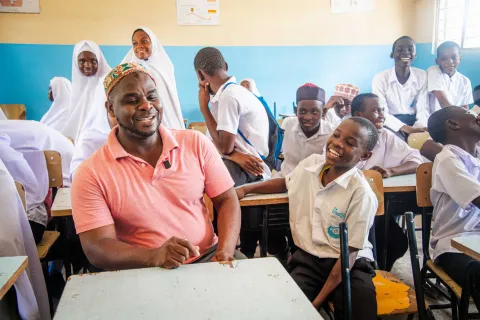
For their teacher, Remi, watching the friendship develop has been special.
“Lukaba and Wabu are often in the same class groups and play groups, supporting each other,” he says.
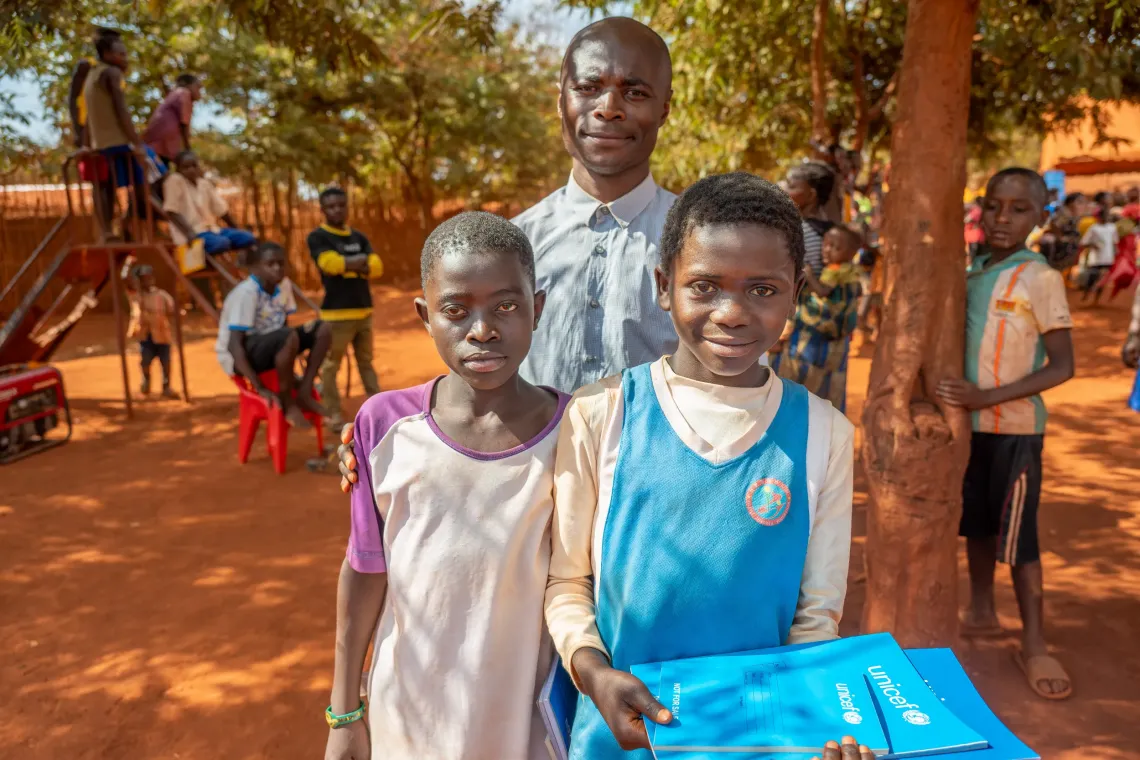
Remi understands something about the world the boys are growing up in.
He is also a Congolese refugee. He has taught for 12 years, including five years in refugee camps, and has watched children arrive carrying experiences from places and circumstances they did not choose.
But he has also watched what happens when they meet here.
“No matter what happened where we come from, tukikutana huku, tunasaidiana” (once we meet here, we support each other) says Remi.
But while Lukaba and Wabu have each other, learning is not always easy.
Lukaba currently still does not have an exercise book of his own. To follow lessons, he borrows pieces of paper from his classmates' books or picks up sheets that other students have left behind.
Keeping notes on loose pieces of paper makes it difficult for him to follow up on lessons, complete homework and prepare for tests.
Wabu has one exercise book, which he uses for all his subjects. Although the school discourages students from mixing subjects in one book, he has little choice.
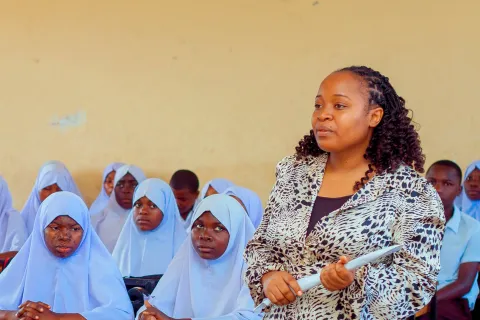
Their experience reflects a wider challenge facing children in Nyarugusu, where thousands of refugee children continue to face shortages of essential teaching and learning materials.
There are more than 30,800 refugee children enrolled across 17 schools in the camp, including 15,300 girls.


Schools are grappling with shortages of essential teaching and learning materials, including overcrowded classrooms, limited numbers of teachers and inadequate access to safe and sanitary WASH facilities.
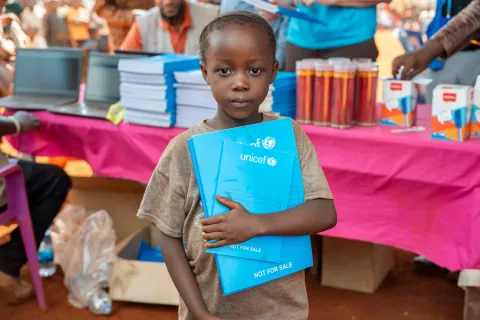
To help address some of the immediate barriers to learning, UNICEF, in collaboration with the Government of the United Republic of Tanzania, UNHCR and education partners, is distributing essential learning materials to refugee children in Nyarugusu.
The supplies include exercise books, pens, pencils and mathematical sets.
In Lukaba’s hands, an exercise book would mean somewhere to keep his lessons.
For Wabu, another book would mean not having to fit every subject between the same two covers.
“Every child has the right to quality education, wherever they are. For refugee children, education provides much more than knowledge. It offers stability, protection, hope and a pathway to the future,” said Elke Wisch, UNICEF Representative to Tanzania.
For Remi, more support is still needed to ensure children in the camp can learn and progress.
“Look at what is important for children first,” he says. “These are the things that need to be supported. Look at what basic needs they need to support their development.”
For Lukaba and Wabu, their friendship began with a pen and a book.
One had what the other needed, so they shared.
Today, they still sit together, study together and look out for one another.
The pen may run out. The pages of Wabu’s book will eventually fill.
But the friendship that began with that simple act of sharing is something the boys have held on to.

UNICEF and partners are providing learning materials this year, but continued support is needed to keep children equipped to learn, year after year. Help us ensure that children like Lukaba and Wabu have books and pens of their own as they move from one grade to the next. Their learning journey continues long after the pages of this year’s exercise books are full.