From physical punishment to positive discipline
A Head Teacher’s journey

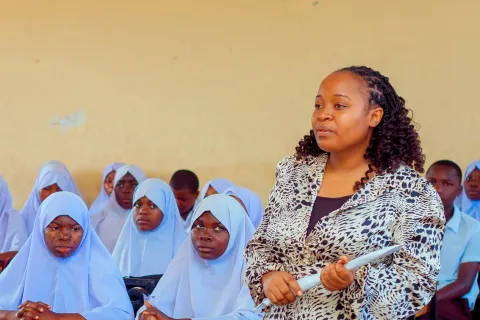
At first glance, Mwalimu (teacher) Sief Haji carries a serious expression. The kind that commands attention across the busy school grounds. But at Paje Secondary School in Zanzibar, that seriousness quickly gives way. Surrounded by students, he laughs easily, greeting them by name, pausing to listen and share.
It wasn’t always this way.
For many years, corporal punishment was a common part of school life, often accepted as a necessary form of discipline. In 2018, however, the Ministry of Education and Vocational Training, with support from UNICEF and other partners, introduced a positive discipline programme in schools to eliminate various harmful forms of corporal punishment. The Positive Discipline Guideline for Zanzibar schools was developed in 2018. The aim was to support teachers in moving away from practices that harm children and towards approaches that protect their dignity and support their development.
Sief, now Head Teacher at Paje Secondary School, was among those trained.
“At first, it wasn’t easy. I wanted to be an example for other teachers, so I had to practice what I preach,” he says.
Across Tanzania, the impact of corporal punishment cannot be ignored.
Data from the 2024 Violence Against Children Survey show us that over 50 per cent of Tanzanians aged 18-24 do not believe that corporal punishment by teachers is necessary.
While often framed as discipline, these practices can undermine children’s confidence, affect attendance, and limit their ability to learn.
At Paje Secondary School, Sief and his team made a conscious decision to change course. They began introducing positive discipline methods that guide behaviour without causing harm. Instead of physical punishment, students are asked to step out of class if they are disruptive, or take on responsibilities such as gardening, watering plants, or helping maintain the school environment. These actions are designed to build accountability and life skills, not fear.


The shift has transformed the school environment.
“This has brought big changes,” Sief explains. “Some students who had run away from school out of fear of the cane have returned. There is also a stronger sense of respect and understanding between teachers and students.”
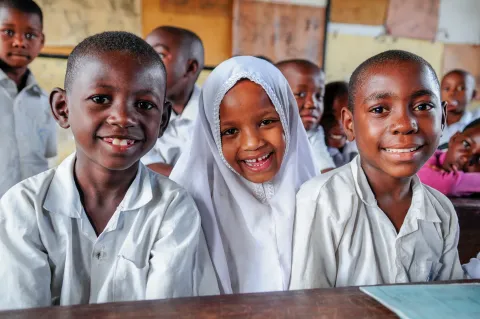
For Aisha, a 17-year-old Grade 10 (Form 3) student who has been part of the school community since primary level, the difference is clear. She describes a learning environment where students feel supported rather than intimidated, and where teachers take time to understand their challenges.
“Our teachers treat us like their own children. When we don’t understand, they help us. They talk to us and listen to what we are going through," she says.
For Aisha, discipline no longer feels like something to fear, but something that shapes her.
“Positive discipline helps us grow. It teaches us responsibility, respect, and how to be better people, not just better students.”
Sief has also begun applying the same principles with his own children. Where discipline was once enforced through punishment, it is now guided through conversation, patience, and understanding.
“I used to believe that beating was part of raising children,” he reflects. “But now I see that most of the time when you talk to them, when you listen, they open up they begin to understand why something is wrong, not just fear the consequences.”
He describes a noticeable change in his relationship with his children, one where they feel safe to speak and confident to learn from their mistakes.
At its core, this transformation is about more than changing disciplinary methods. It is about redefining what it means to guide and support children in classrooms, in homes, and across communities.
At Paje Secondary School, the change can be seen in the way students speak, participate and show up each day shaping classrooms where every child can learn and feel safe.