From curriculum to action:
Courage in the face of climate change

At Mtawanya Secondary School, climate action is taking root.
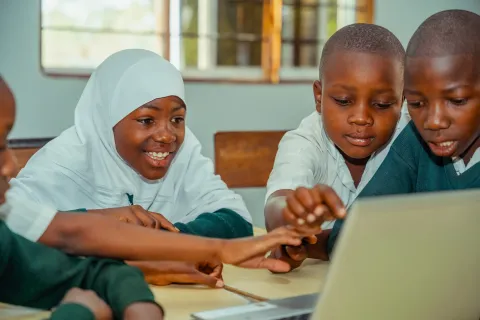
In Penina Mwame Shedrack’s classroom, students are learning to connect climate change to the world around them. They are thinking about how to conserve water, manage waste and turn organic waste into fertilizer. They are also learning how climate risks such as flooding and El Niño can affect their communities and why being prepared matters.
For Penina, a Geography and Business Studies teacher, these are signs of a deeper change: climate learning is becoming something students can understand, relate to and act on.
What is happening at Mtawanya is part of a wider effort in Tanzania to build climate change education into the education system helping teachers connect climate risks to everyday learning while generating evidence on what can work at scale.
Before the pilot, Penina’s students were already planting trees and cleaning their surroundings. What changed was the understanding behind those actions. By integrating climate change into subjects they already study, the pilot helped students connect what they experience — from floods and El Niño to water, waste and preparedness — with what they learn in class.
“Before the pilot, many of my students understood climate change mainly as an issue linked to large industries and countries that produce high levels of emissions. They did not always see how it connected to the climate risks they experience in their own communities,” she says. “Now they are making those connections. They understand that climate change affects their lives and communities, and that they have a role to play in preparing for its impacts and taking action.”
From curriculum to classroom
The change at Mtawanya builds on a broader investment in climate education. UNICEF and partners supported the development of a new gender-responsive climate education curriculum framework for upper secondary education, together with teaching and learning materials, including digital resources.
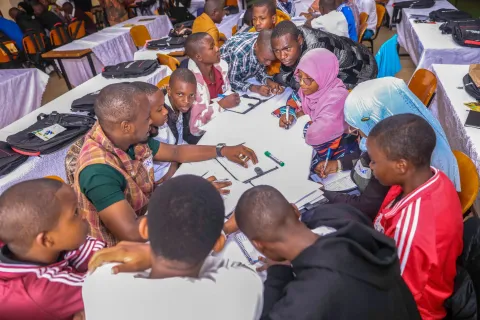
The four-school pilot is putting that work into practice. Twenty-three teachers were trained to use the new materials and participatory approaches, generating practical evidence on what students respond to, what teachers need and how climate learning can be integrated into the existing curriculum.
At Mtawanya, students established a climate action club, teachers shared learning with the wider school community, and students began going beyond routine environmental activities to think more deliberately about climate preparedness and action. What they learn is also spreading through peer learning and school activities.
“The preparedness modules helped us understand climate risks such as flooding and El Niño. The students can now relate climate warnings to what is happening around them and understand why preparedness matters,” Penina says. “The learning has changed me too. I used to burn vegetation when clearing my farm, but after understanding how this affects the soil and air, I stopped. Climate education should not only change what we know; it should change what we do.”
Across the four pilot schools, 403 students have been reached directly, 55 per cent girls, with a further 4,200 students, 50 per cent girls, reached through peer learning and school climate action activities.
But the significance of the pilot is not only the number of children reached. It is what the experience is showing about how climate education can work within the education system. Teachers have identified what helps including integrating climate concepts into existing subjects rather than adding another subject to an already crowded timetable as well as what needs to improve, such as time for practical action and clearer guidance for teachers.
From pilot to system change
These lessons are now informing Tanzania’s wider curriculum work. UNICEF and the Government are continuing dialogue with the Tanzania Institute of Education (TIE) on integrating the climate curriculum framework, learning materials and lessons into the education system. Evidence from the pilot is helping shape the next generation of climate education in Tanzania informing the final upper-secondary curriculum and teaching and learning materials, as well as the national Gender-Responsive Climate Change Education Framework. At the Government’s request, this work is now being extended to primary education, building towards a coherent approach to climate learning across the full school curriculum, from primary through secondary.
For Penina, the change is already visible. It is in students thinking differently about water and waste, classmates discussing how to prepare for climate risks, and a teacher adjusting a practice on her own farm.
These may look like small changes. But they show what becomes possible when climate learning is connected to children’s lives and when what is learned in classrooms can help shape a stronger education system for the future.
Through support from Postcode Lottery players, through the Postcode Education Trust, UNICEF and the Government of Tanzania have trained 23 teachers and reached 403 students directly, with a further 4,200 reached through peer learning and school climate action. The lessons are now informing the final climate curriculum for upper secondary education and the extension of climate learning to primary education, building towards a coherent approach across the full school curriculum.