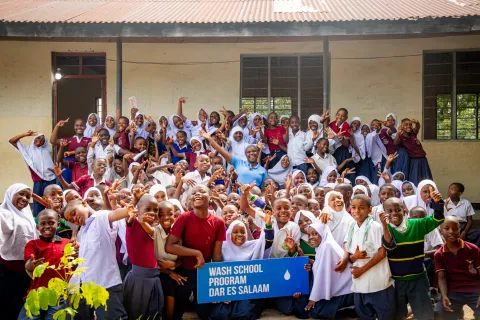
Empowering young people to champion child-centred climate action
UNICEF amplifies children’s voices for climate action

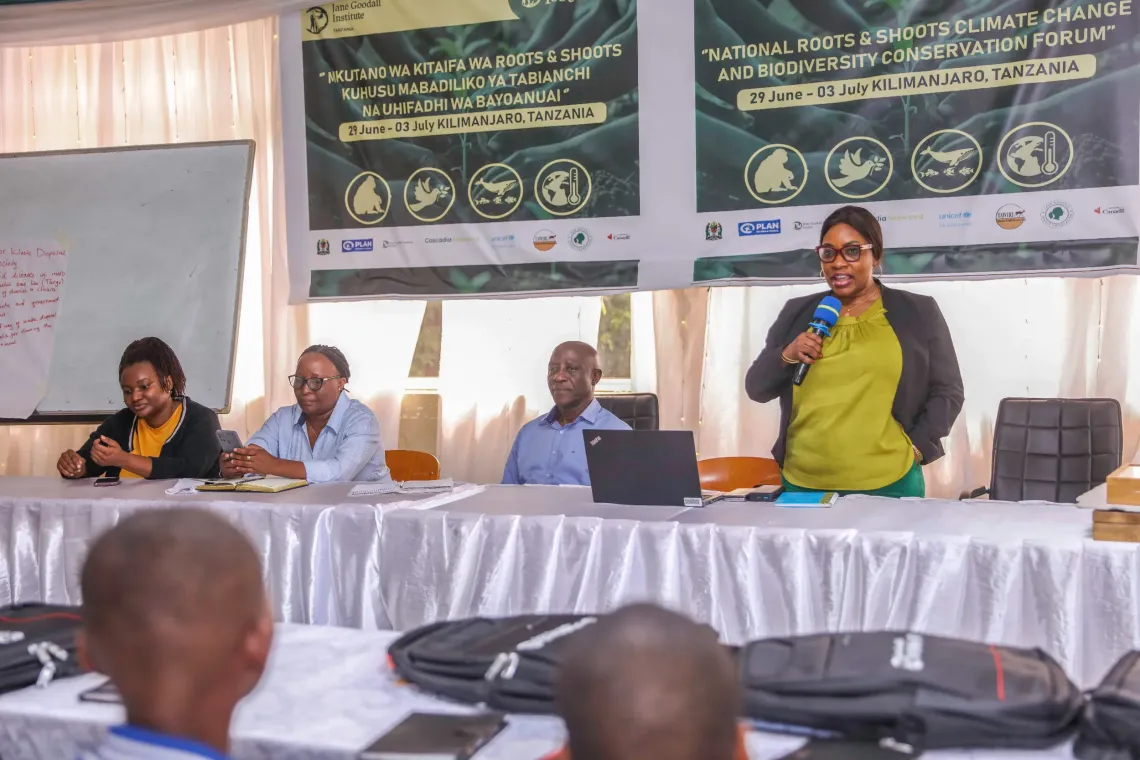
MOSHI, Tanzania – On 29th June,2026, UNICEF joined the Jane Goodall Institute's Roots & Shoots Biodiversity and Climate Change National Youth Council Forum in Kilimanjaro Region were more than 230 young people from across Tanzania and Kenya gathered to strengthen their knowledge and skills on biodiversity conservation, climate action, and youth advocacy
The forum brought together out-of-school youth, students, environmental champions, and youth leaders to deepen their understanding of biodiversity conservation, climate change, and leadership.
As climate change is already affecting children across Tanzania, the forum was an opportunity to ensure that the voices of children and young people are heard in climate discussions and translated into meaningful action.
During the dedicated sessions on children and climate action UNICEF presented recommendations gathered from consultations with children and young people conducted across Tanzania. These recommendations highlighted what children believe governments, communities, development partners, and young people themselves must do to respond to the climate crisis.
Participants engaged in lively discussions about environmental challenges affecting their communities, from plastic pollution and deforestation to prolonged droughts and changing rainfall patterns. Many reflected on how climate change is already disrupting livelihoods, education, food security, and health in their regions.
"I can easily relate to these recommendations because they reflect challenges we see every day in our communities," said Abdalah Shomari a participant from Mwanza
The forum was designed to move beyond awareness and build practical advocacy skills. Participants learned how to identify climate problems, gather evidence, develop solutions, and transform their ideas into persuasive policy asks. Through workshops and group exercises, they practiced how to engage decision-makers and advocate for change.
UNICEF's contribution strengthened this process by connecting local realities to a broader vision of child-centered climate action.
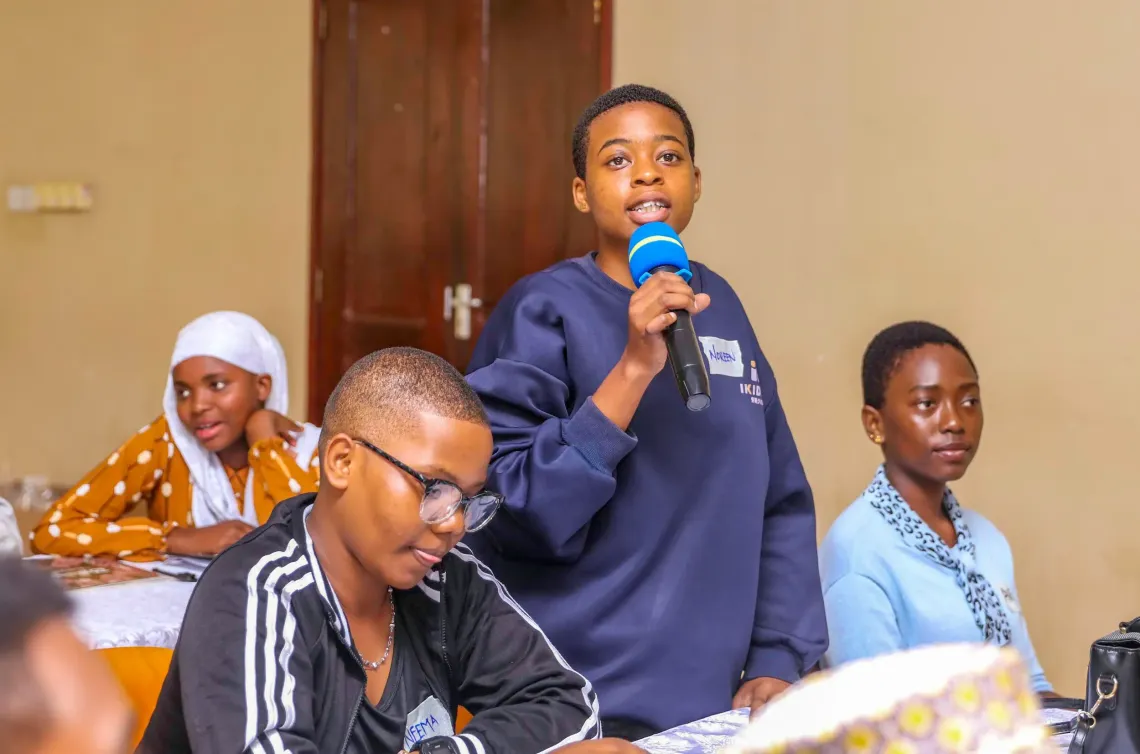
The recommendations encouraged participants to advocate for climate-smart schools with access to safe water and green spaces, integrate environmental education into learning activities, and ensure that young people have a voice in climate-related decision-making processes. They also highlighted opportunities for youth-led action, including tree planting, waste segregation and recycling, community clean-up campaigns, water conservation, and awareness-raising initiatives that help communities adapt to the impacts of climate change.
There was strong enthusiasm among participants to champion the recommendations and help translate them into tangible initiatives at local level. They committed to taking them back to their schools, youth clubs, and communities, using them as a foundation for advocacy and action.
During the forum, participants visited Dunia Designs in Arusha, a Tanzanian enterprise that transforms plastic waste into high-quality furniture and design products, demonstrating how innovation and entrepreneurship can contribute to environmental sustainability and create green jobs.
Further, participants had a dedicated session with the Nawiri Foundation officials, the philanthropic arm of Asilia Africa which works with communities and conservation partners to improve livelihoods, strengthen social services, and protect critical ecosystems across East Africa.
These experiences reinforced an important message to young people that climate action is not only about protecting the environment; it is also about creating opportunities, improving lives, and building resilient communities.
By participating in the forum, UNICEF helped bridge children's voices with a growing movement of youth environmental advocates. The organization leveraged an influential platform that reaches more than 5,400 Roots & Shoots clubs in schools and universities across Tanzania, extending the reach of children's climate recommendations far beyond the event itself.
As the forum concluded, participants developed commitments and advocacy plans to continue their work after returning home. Armed with new knowledge, practical skills, and recommendations shaped by children themselves, many left Moshi determined to become climate champions in their own communities.