Empowering young minds to protect the planet
How Madina Kimaro is inspiring a new generation of climate champions in Tanzania
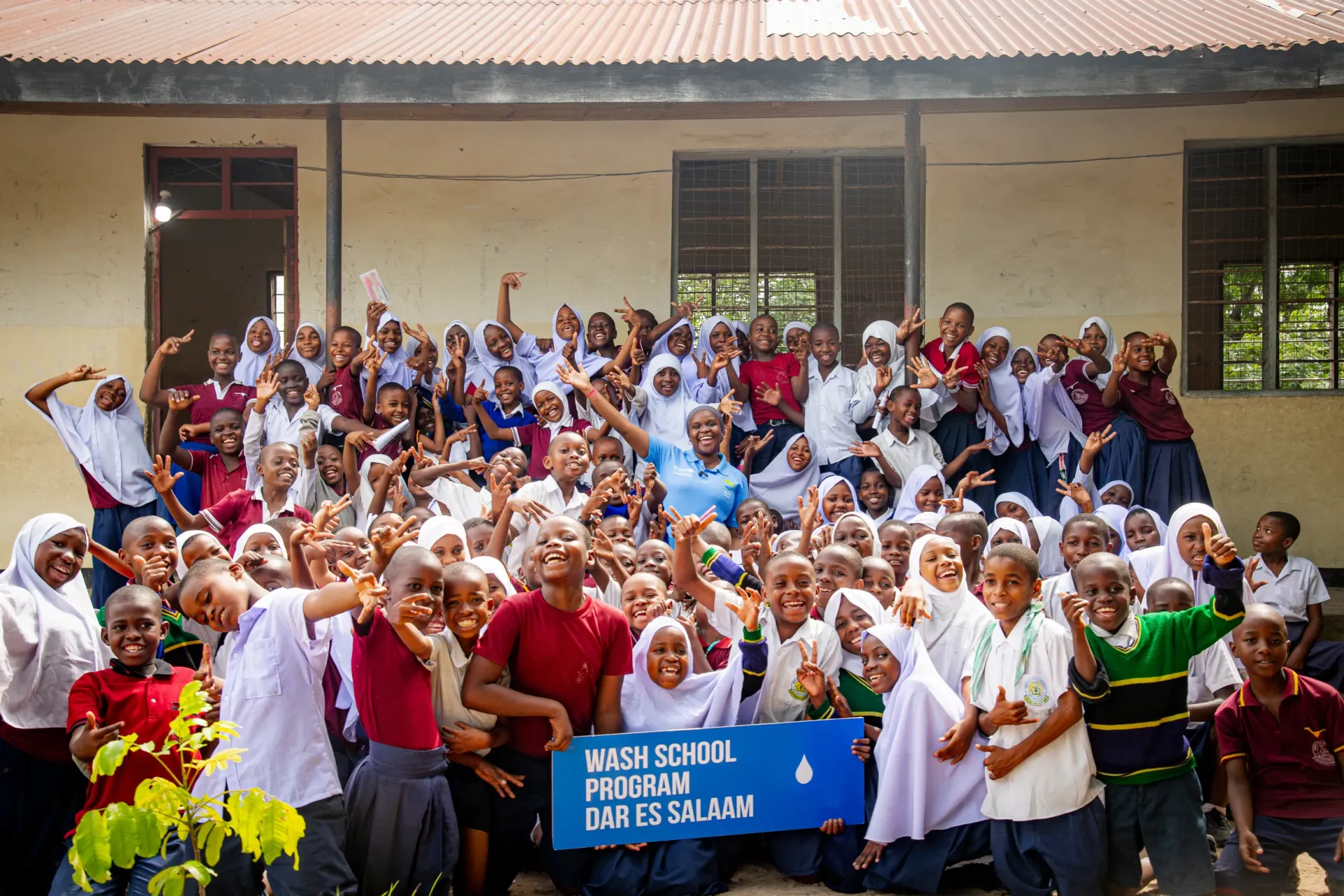
“Clean sand, charcoal, stones, and cotton. If you have these items at home, you can make a simple water filter!”
In a classroom at Mtongani Primary School in Dar es Salaam, a quiet anticipation fills the air. Dozens of children lean forward, eyes fixed on the demonstration unfolding before them. For a brief moment, it feels like magic.
But what Madina Kimaro is showing them is not a trick. It is proof that solutions can be built from everyday materials and that children, at any age, can be part of making change.
This belief sits at the heart of Madina’s work. For her, children are not only vulnerable to the impacts of climate change; they are central to solving it.
“Climate change affects everyone! But it does not affect everyone equally. Children are often the most impacted, yet they are rarely given the tools, knowledge, or space to act”, says Madina.


As the founder of the Madina Climatic Organisation (MCO), a youth‑led NGO in Tanzania, Madina is working to change that reality. Her organisation links environmental conservation with community development, focusing primarily on children and schools.
Through programmes that range from forest education to sanitation and hygiene outreach, MCO makes climate action practical, local, and accessible, especially for those most affected.
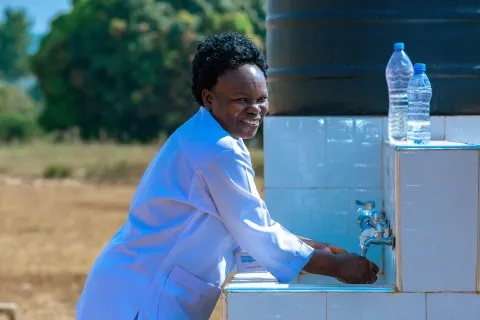
At Mtongani Primary School, a WASH club that began with just 20 pupils has grown into a movement of more than 170 young WASH ambassadors, evolving from basic lessons on handwashing and water safety into something far greater.
Today, these children are protecting their own health while experimenting, problem‑solving, and developing climate‑smart solutions for their school and the surrounding community.
“It began very simply,” Madina reflects. “We were learning why handwashing matters and how water becomes contaminated. But the children wanted to learn further. They wanted to understand climate change and how they could protect their environment.”
That curiosity became a catalyst.
Now, students are exploring water filtration, tree planting, and environmental stewardship.
Madina’s commitment is deeply personal.
As a primary school student, she joined environmental clubs, and those early experiences taught her that environmental action could start small and start young.
In secondary school, her involvement expanded. She began compost making, joined community beach clean‑up campaigns, deepened her climate education, and began using social media to raise awareness and mobilise others.
Even then, she was thinking about how to reach other children.
“I started creating a book with cartoon illustrations to explain climate change in a way my friends and classmates could understand,” she says. “I realised early on that if we want lasting change, we have to start with children.”
That belief would guide her future work.
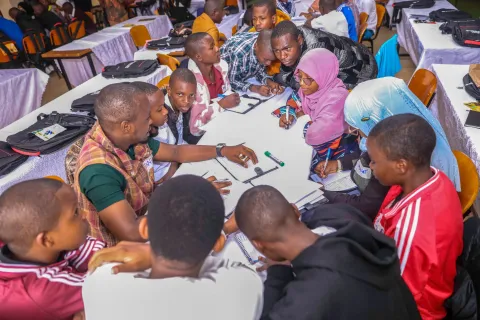
In 2022, Madina was appointed a UNICEF Youth Advocate for Climate Action in Tanzania, a role that enabled her to amplify children’s voices and priorities on national and global platforms. In 2023, she co-designed the Children for Climate Action workshop, which brought together insights from 12,000 young people through the U-Report platform and in-person consultations across the country. With UNICEF’s support, Madina’s vision of meaningfully engaging children nationwide became a reality, ensuring their voices are heard but actively shaping climate solutions and decisions that affect their future.
In 2025, Madina carried those voices to the global stage, addressing the UNICEF Executive Board at the United Nations Headquarters in New York.
Her message was clear: clean water, sanitation, and hygiene (WASH) are not optional; they are fundamental rights for every child.
“Water, sanitation and hygiene is about more than infrastructure. It is about dignity, health, and giving every child a fair chance to survive and thrive,” Madina told global leaders.
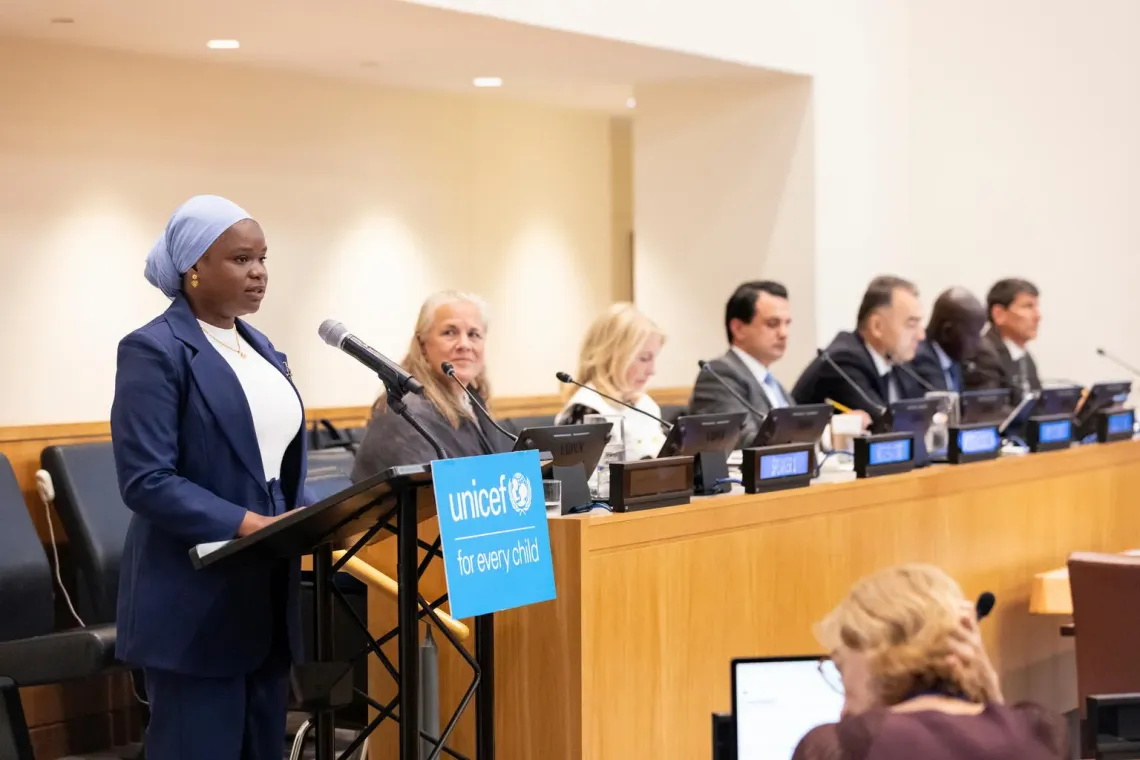
Her advocacy highlighted the urgent need for climate‑resilient WASH systems, particularly in communities where climate change is already disrupting access to safe water.
Yet even as she speaks on global platforms, Madina’s work remains grounded in classrooms like Mtongani, where change begins with children.
Madina believes climate solutions do not always require advanced technology or large budgets. Sometimes, they begin simply with sand, charcoal, cotton and the imagination of a child.
“You don’t have to wait until you have everything,” she says. “Start where you are and with what you have.”
When children are equipped with the right knowledge, skills, and confidence, they become powerful agents of change capable of protecting their health, their environment, and their future.
And in classrooms like Mtongani, that future is already taking shape with one lesson, one idea, and one young climate leader at a time.