Tanzania's landmark ruling on corporal punishment marks a major step forward for children's rights
National Coalition to End Corporal Punishment and UNICEF call for implementation of the High Court ruling and wider adoption of positive, non-violent discipline methods
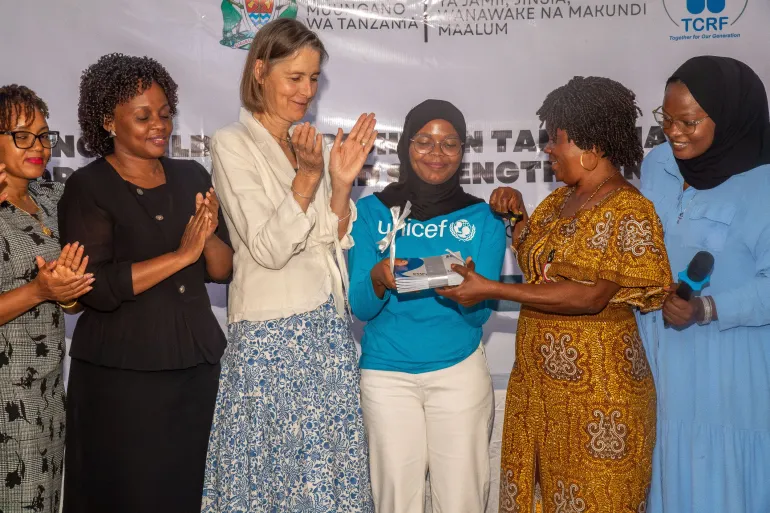
Dar es Salaam, 20 November 2026 – As Tanzania joins the world in commemorating World Children's Day today, the National Coalition to End Corporal Punishment, bringing together more than 20 civil society organizations and UNICEF, welcome the landmark High Court ruling declaring key provisions that permitted corporal punishment in schools as unconstitutional.
On 3 November 2026, the High Court of Tanzania declared Regulations 2 and 3 of the Education (Corporal Punishment) Regulations, Government Notice No. 294 of 2002, unconstitutional and null and void, finding them inconsistent with constitutional protections of human dignity and against cruel, inhuman or degrading treatment. The judgment is a significant step for Tanzania towards ensuring that schools are places where children can learn, develop and thrive free from violence.
“Discipline matters, but violence is not discipline. Ending corporal punishment does not weaken teachers’ authority or schools’ responsibility to guide children. It means choosing approaches that correct behaviour while protecting every child’s dignity, safety and right to learn free from violence.” Emphasized Anna Kulaya, WILDAF Executive Director and acting Chairperson of the Coalition when delivering the coalition joint statement at the press conference held today at Seashells Hotel in Dar es Salaam.
"This World Children's Day, Tanzania has an important milestone to acknowledge. The High Court ruling reinforces a fundamental principle of the Convention on the Rights of the Child: Every child has the right to learn and grow in safety and dignity. Discipline and learning should not depend on fear or physical punishment. We look forward to working with Government, education stakeholders, communities and families on strengthening the use of positive, non-violent discipline and creating safe and supportive learning environments for every child in Tanzania.” said Elke Wisch, UNICEF Representative to Tanzania. “Tanzania now has an opportunity to turn this landmark judgment into lasting change by supporting teachers, parents and caregivers to use positive, non-violent approaches that guide children while protecting their rights."
Members of the National Coalition to End Corporal Punishment including UNICEF call on the Government and other education stakeholders to uphold and effectively implement the High Court ruling, including ensuring that it is communicated and understood throughout the education system – both in public and private schools, by communities and parents, and reflected in relevant laws, regulations, policies and practices.
The Coalition also calls for strengthened investment in positive discipline approaches that equip teachers, parents and caregivers with practical alternatives to physical punishment. Positive discipline helps children understand consequences, develop self-discipline and learn appropriate behaviour while respecting their dignity and maintaining safe, supportive relationships.
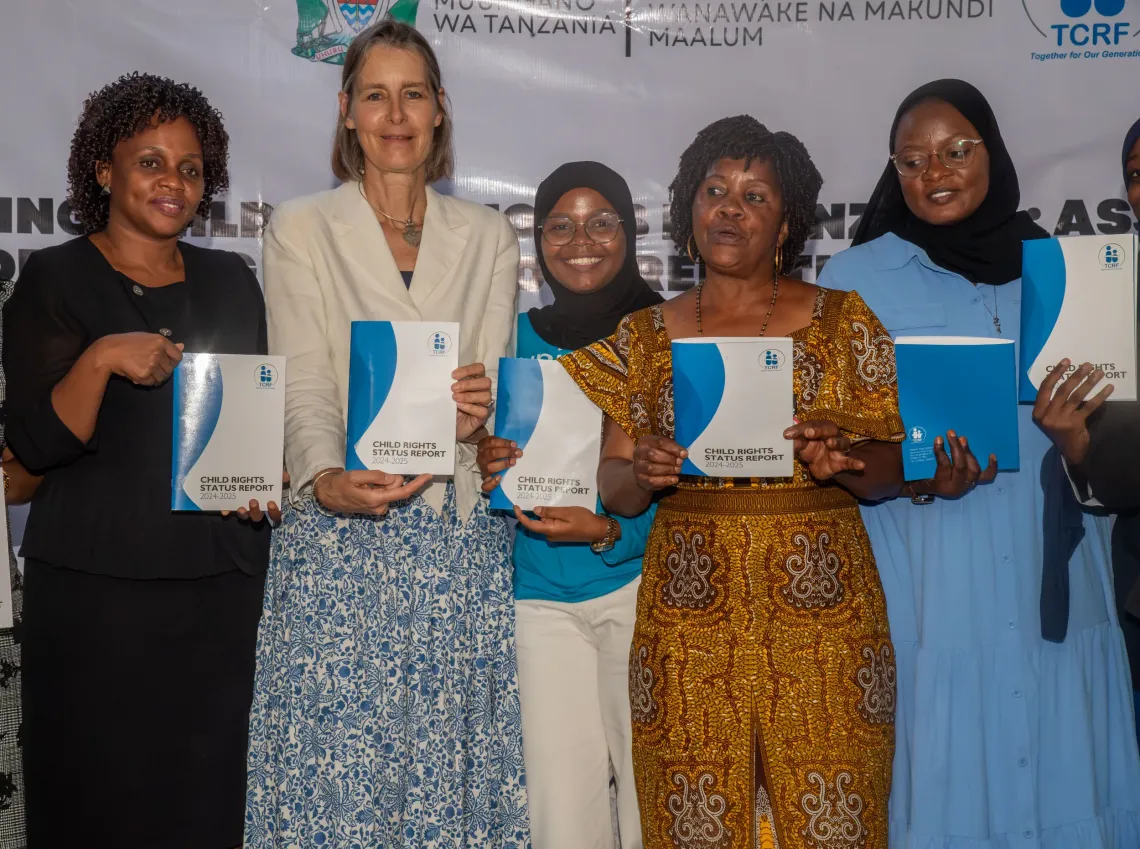
The ruling is particularly significant on World Children's Day because it shows how to translate children's rights from commitments on paper into meaningful protection in everyday life. Children spend a significant part of their childhood in schools, and every classroom should therefore be a safe environment where they can learn without fear of violence.
On her part, UNICEF Youth Advocate Aisha Mohamed Rashid said; "Every child deserves a childhood free from violence. Discipline should build character, not fear. As we mark World Children’s Day, let us protect children’s dignity, because every child deserves to grow in safety, love and respect. We want schools where children can make mistakes, learn and grow without being afraid of being hurt. As children, we ask adults to listen to us and choose ways to correct and guide children that respect our dignity. This ruling gives us hope that every child in Tanzania can have a safer future."
The High Court ruling is an important step, but its impact will ultimately be measured by children's experiences in classrooms, homes and communities. Ending corporal punishment requires collective action from Government, teachers, parents, caregivers, community leaders, children and young people themselves.
On this World Children's Day, the National Coalition to End Corporal Punishment, therefore, calls on:
- The Government and other education stakeholders to uphold and implement the High Court ruling and align all relevant laws, regulations, policies and guidance with the constitutional protection of children from degrading punishment.
- The Government and Parliament to amend laws to clearly prohibit corporal punishment in every setting: at home, at school, in alternative care settings, in detention facilities and as a punishment for a crime.
- Schools and teachers to strengthen the use of positive, non-violent discipline and create safe and supportive learning environments for every child.
- Parents and caregivers to embrace positive parenting and discipline approaches that guide children without violence.
- Communities and the wider public to challenge social norms that normalize violence against children and recognize that protecting children's dignity is a shared responsibility.
- Children and young people continue speaking about their rights and contributing to decisions that shape their lives and futures.
“UNICEF and its coalition partners are committed to working alongside the Government and education stakeholders to advance this important agenda. We stand ready to support practical steps towards ending corporal punishment, including strengthening legal protections and promoting positive approaches to discipline,” added Wisch.
Media contacts
About UNICEF
UNICEF promotes the rights and wellbeing of every child, in everything we do. Together with our partners, we work in 190 countries and territories to translate that commitment into practical action, focusing special effort on reaching the most vulnerable and excluded children, to the benefit of all children, everywhere.
For more information about UNICEF Tanzania and its work for children, visit www.unicef.org/tanzania.