“Wherever the water was, is where we went.”
For years, water determined every decision Ahmed’s family made

A nomadic herder in Sudan’s River Nile State, Ahmed grew up constantly on the move- searching for water and pasture to keep his family and animals alive. When he became a father, the pattern continued.
“We moved almost every month,” his wife Fatima said. “From one place to another, living through very difficult times.”
Every move came at a cost- especially for their children.

A childhood on the move
Without a reliable source of water, Ahmed’s children could never stay in one place long enough to learn.
“My children couldn’t remain in school,” Ahmed said. “Their education was always disrupted.”
A year ago, the family settled in Aldamer locality, near Atbara, hoping to finally stay put. His children enrolled in school for the first time. But as the dry season approached, water became scarce again.
Without water nearby, the family faced an impossible choice: move once more and pull the children out of school—or stay and struggle.
The burden of water
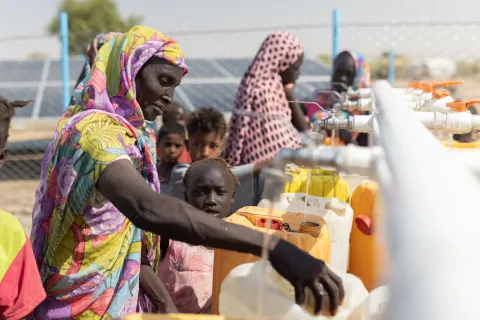
The responsibility of finding water fell mostly on Fatima and their daughter Amna.
“They left early in the morning and returned late,” Ahmed recalled. “All that effort—for just two containers of water. And it was never enough.”
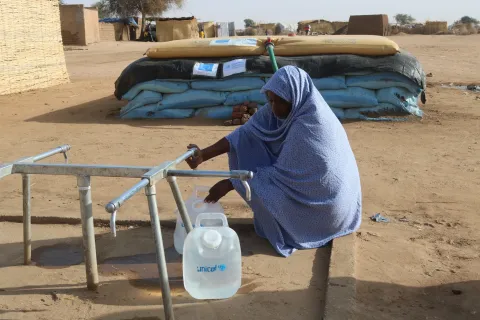
Long walks, heavy containers, and long queues became part of daily life. Hygiene suffered. Children fell sick with diarrhoea. Amna tried to balance school with hours spent fetching water, affecting her learning and grades.
Tensions also grew within the community, as families competed for limited water supplies.
“Nomadic movement is about survival,” said Khadir Ismail, Director of the State Water Corporation in River Nile State. “But it also puts pressure on already scarce water resources wherever families settle.”


When water finally came
Aldamer, an urban centre, faces severe water shortages- especially during summer- forcing many families to rely on unsafe and contaminated sources, including the Nile.
“I carried containers on my head. My children did too,” Fatima recalled. “The burden was too much.”
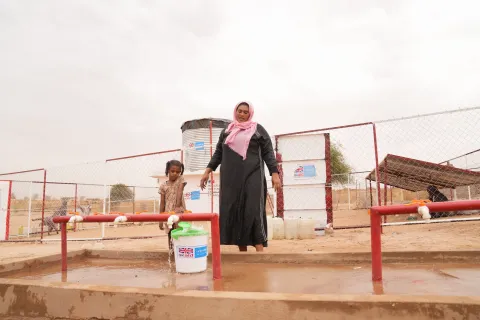
That changed when UNICEF, through its Enhancing Community Resilience Project (THABAT), installed a solar-powered, motorized borehole just behind Ahmed’s house.
The new water system now delivers clean, safe water daily to more than 12,000 people across 2,5000 households, serving one of the largest urban populations in the area.
For Ahmed and his family, water brought stability for the first time.
Water changes everything
Today, water flows just a few steps from Fatima’s home.
Sitting in their clean, shaded compound, she prepares coffee while her children play nearby. Bathing, cleaning, drinking—and caring for their animals—are no longer daily struggles.
“Water made our lives comfortable,” Ahmed said. “We can bathe, our homes are clean, and our children are healthy.”
The solar-powered system continues to function even amid power outages caused by attacks on infrastructure during the ongoing war—ensuring uninterrupted access to water.
As water reached more families, tensions eased. Host communities and nomadic families now share the resource peacefully, strengthening social cohesion.

From nomad to water caretaker
Ahmed’s journey has come full circle.
Once forced to follow water wherever it existed, he is now part of a water user committee established to keep the system running. Every day, Ahmed helps clean the station, checks pipelines, and supports families collecting water.
“The water is clean and free from disease,” he said.
Most importantly, it means his children can stay in school.
“Now that we have water, I won’t move again,” Ahmed said. “I will focus on educating my children.”
Al Hassan, Amna and Adam now attend school—consistently.

Water, dignity, and protection
With clean water came dignity.
UNICEF also distributed WASH dignity kits to families in Aldamer, supporting health, hygiene, and protection—especially for women and girls.
Fatima and her daughters smiled as they received their kits.
“These supplies help families maintain hygiene and dignity, even in difficult circumstances,” said Khamisa Mohammed, UNICEF WASH Officer.
For Amna, the impact was deeply personal.
“The sanitary pads are cleaner and more comfortable,” she said shyly. “They are better than using rags.”
Each kit includes soap, detergent, water containers, menstrual hygiene products, a torch, a whistle and other essential items—helping families stay healthy and safe.
Stability begins with water
Across River Nile State, UNICEF’s THABAT project is building sustainable water systems and delivering hygiene supplies—helping families affected by conflict and displacement rebuild their lives.
For Ahmed’s family, clean water means more than survival.
It means health.
It means education.
And for the first time, it means staying.