Water and hygiene: Key in the fight against malnutrition
How UNICEF’s integrated nutrition and WASH programme is improving child health in Aj Jazirah State

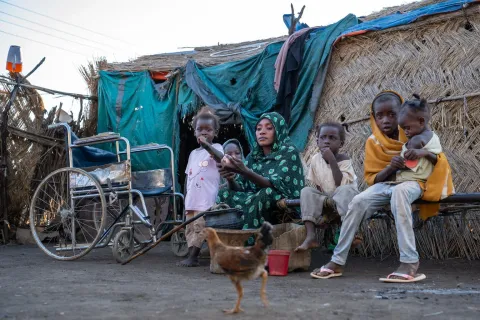
Marjan Al-Amal Primary Health Care Centre is among several facilities that were severely affected when the conflict reached Aj Jazirah State. As in many conflict-affected areas of Sudan, attacks on health facilities disrupted the delivery of essential health and nutrition services, cutting communities off from lifesaving care.
With the situation steadily returning to normal, UNICEF and its partners are rehabilitating health facilities and water systems to restore critical health, nutrition, water, sanitation and hygiene (WASH) services. These efforts are reaching thousands of people, including families previously trapped by the conflict and those now returning home.

Reaching hundreds with healthcare services
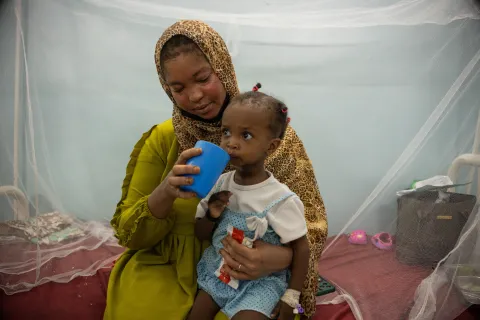
At Marjan, the queue of mothers and children grows by the minute. The UNICEF-supported facility now provides integrated health and nutrition services, including nutrition counselling, micronutrient supplementation, malnutrition screening and treatment, routine immunisation, reproductive health services, and integrated management of childhood illnesses such as malaria and diarrhoea.
Mothers, caregivers and fathers move through narrow corridors towards already congested consultation rooms.
Samar, a nutritionist, looks at the long queue, but she keeps going until the last child is screened. Together with her colleague Naila, she ushers in mothers, measures the weight and height of their children, and provides nutrition supplements, including ready-to-use therapeutic food (RUTF) for those who are severely malnourished. On average, they see about 40 mothers and their young children each day for nutrition services, but numbers rise on busy days—especially following intensified house-to-house visits and community screenings led by nutrition volunteers.
“The number of mothers we see here has significantly increased,” Samar says.

UNICEF/UNI959269/Ahmed Mohamdeen Elfatih
“Today they have told me his weight has increased.”
The screening results for her son, Mohammed, show progress, but his small feet remain swollen—a sign of oedema. He therefore continues on the treatment programme for children with severe acute malnutrition and is given additional sachets of RUTF until his next appointment.
Balgiz, another mother, is visiting for the first time. Her eight-month-old daughter is severely malnourished and is immediately enrolled in the programme.


Hygiene kits for home
As more mothers are ushered in, Sawakin and her group prepare to leave—not only with knowledge, but also with hygiene kits containing sanitation supplies and soap to use at home.
“Today I learnt the importance of personal hygiene, such as washing hands before eating and cleaning the breast before breastfeeding,” Sawakin says.
“Personal hygiene is very important. It benefits both mother and child.”
Water comes with hygiene education
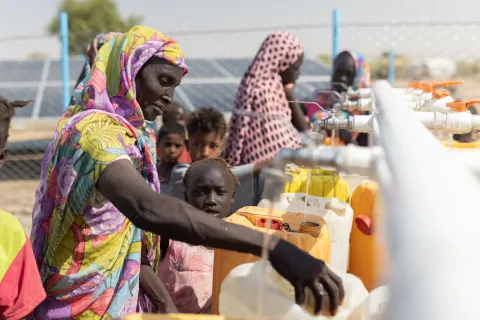
Marjan community was previously served by more than six boreholes, providing safe and clean water to 31,000 households. However, much of this infrastructure was damaged during the conflict, reducing water supply to both communities and health facilities.
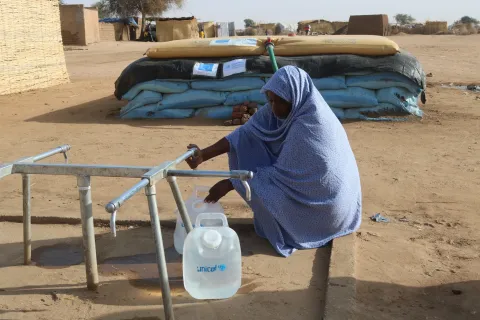
Recently, UNICEF rehabilitated and solarised two of the boreholes, increasing water supply by more than 70 per cent. Around 420 cubic metres of chlorinated water are now pumped daily to the health facility, improving hygiene conditions, reducing infections, providing safe drinking water for patients and benefiting surrounding communities.
“With newly renovated toilets and access to clean water, more mothers are now coming to the centre,” Hadia shares. “They feel reassured that if their child needs anything, they will find it in a clean and safe environment.”
Her sessions now end with a handwashing demonstration—made easier by clean water flowing from the taps.
“Water and hygiene are essential in combating malnutrition,” Hadia concludes. “When contamination is reduced, malnutrition also decreases.”


Taking hygiene and nutrition education door to door
Community workers are at the heart of the integrated programme. In Rufaa, Raneem, a hygiene promoter, and Tawsal, a nutrition volunteer, go from house to house, reaching at least 20 households each day with hygiene and health education.
During each visit, they screen children for early signs of malnutrition, refer those in need of treatment, and monitor the progress of children already enrolled in the programme. They also educate mothers and caregivers on the link between hygiene and the health of their children and families. Using demonstrations and visual learning materials, they share knowledge with hundreds of mothers across the community.
“Mothers have learnt that without cleanliness, diseases will increase,” Tawsal says.
Raneem has seen the connection between hygiene and nutrition first-hand.
“Hygiene and nutrition go hand in hand,” she explains. “Even if food is available, if it is prepared in unclean conditions or with dirty hands, disease will spread.”
Impact across the state
Implemented in two localities, the integrated nutrition, WASH and child protection programme is improving nutrition outcomes for vulnerable and conflict-affected children across Aj Jazirah State. It has reached over 46,648 children with nutrition care and treatment, 76,443 mothers with hygiene education, and 31,000 households with access to clean and safe water. In addition, 32 community health nutrition volunteers, 8 IYCF counsellors,16 nutrition assistants and 24 mother support groups have been trained.
Reflecting on the programme’s success, Dr Osma Ahmed Alfaki, Director General of the State Ministry of Health, said: “The integrated approach will now be adopted across other sectors, given its success.”
***
UNICEF and partners, with funding from the Government of the United Kingdom, is implementing an integrated programme, delivering nutrition services with nutrition-sensitive water, sanitation and hygiene and child protection interventions to conflict-affected children and families in River Nile and Aj Jazirah states to comprehensively address high levels of malnutrition.