Safe water, dignity and hope
Transforming lives for displaced families in Deiba Alneira camp, Tawila, North Darfur

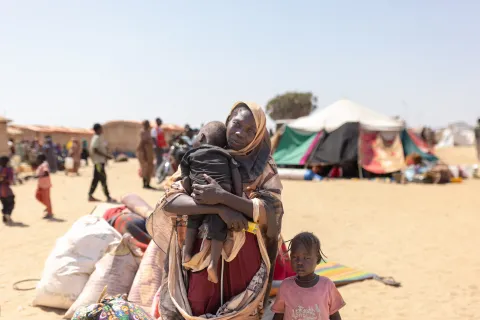
Thousands of internally displaced families from Al Fasher have arrived in Deiba Alneira camp in Tawila, seeking refuge from devastating violence.
As families continue to arrive, pressure on already strained services—including water and sanitation—is rapidly increasing.
When Maryam, a mother of four, arrived at the height of the displacement, access to safe water was extremely limited. Long queues formed at the few available water points.
“We drank from an open well, and my children were often sick with diarrhoea,” she recalls.
Tayseer, another mother who fled with her two young sons, shares a similar experience.
“During our journey, my children suffered from diarrhoea after drinking unsafe water.”

Bringing water closer
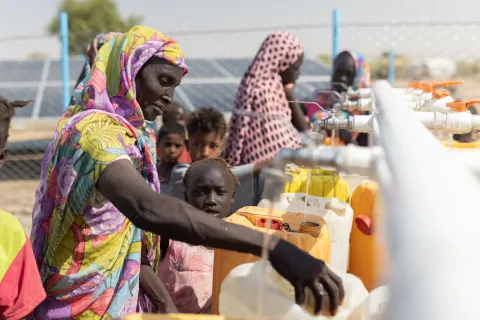
In Tawila, UNICEF and its partners are delivering emergency water, sanitation and hygiene (WASH) services through the daily trucking of safe, chlorinated water to strategically located distribution points across the camp. Emergency latrines are also being constructed—protecting families from waterborne diseases such as diarrhoea and cholera, while preserving dignity during displacement.
Today, near Maryam’s shelter, clean water flows from accessible tap stands and storage tanks—eliminating the long and often unsafe journeys previously endured by women and children.
Families are also receiving water purification tablets and safe storage containers, helping to improve water quality and prevent contamination during drinking, cooking and hygiene practices.
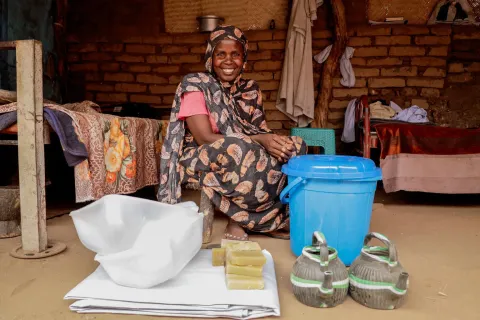
“With clean water from the taps, I no longer worry about what my children drink,” Maryam says with a smile.


Emergency latrines and essential supplies
Across the camp, UNICEF is supporting the construction of more than 150 emergency, gender-sensitive communal latrines. These are strategically located near shelters to reduce open defecation and ensure privacy, safety and dignity for vulnerable families.
In addition, families are provided with dignity kits containing essential items such as water containers, soap, sanitary materials and purification tablets—ensuring that women and girls can maintain hygiene, health and dignity during crisis.

An integrated approach
The majority of those displaced in Tawila are children. UNICEF is establishing child-friendly spaces and temporary learning centres where children can play, learn and receive psychosocial support.
At the same time, safe water points and latrines are being installed alongside these facilities—allowing children to drink clean water, wash their hands with soap, and access safe sanitation throughout the day.
This integrated WASH–education approach creates safer and healthier learning environments. It also ensures that children have consistent access to clean water and adequate sanitation wherever they are.
Building capacity for sustainability
To ensure sustainability, UNICEF is training local water technicians and community volunteers to operate, monitor and maintain water systems, including carrying out repairs when needed.
Hygiene promoters are also conducting awareness sessions on handwashing, household water treatment, safe storage, latrine use and maintenance, and menstrual health management—equipping families with the knowledge and behaviours needed to prevent disease.
With funding from European Union Humanitarian Aid (ECHO) and the Central Emergency Response Fund (CERF), UNICEF is helping ensure that displaced families have safe, equitable access to clean water and sanitation—restoring not only health, but also dignity and hope.