Beyond mountains and borders
Halima’s 500-kilometre journey to safety

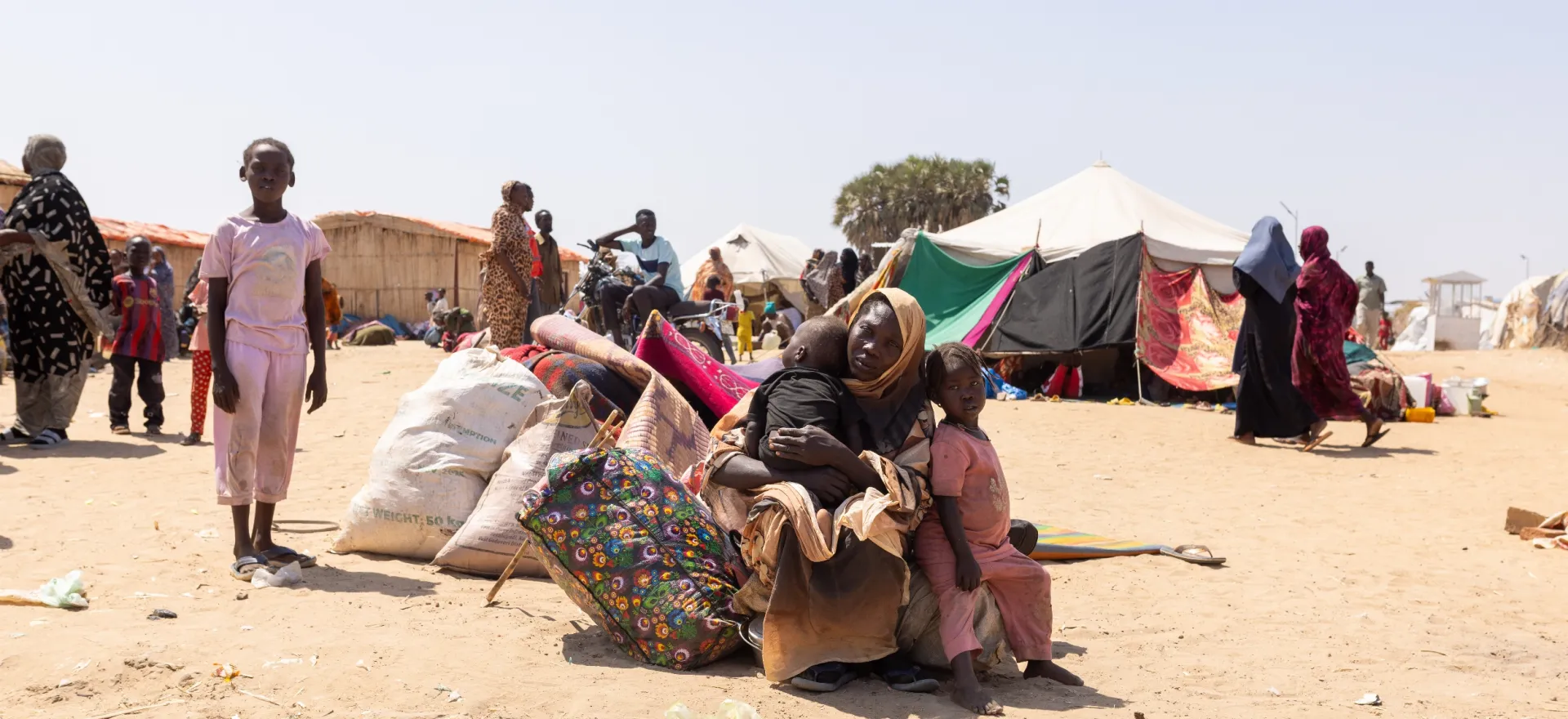
Carrying her two-year-old son Shamsadeen, on one shoulder and holding four-year-old Imtenan by the hand, Halima- a mother of seven- pauses as she arrives at Goz Alsalam IDP site in White Nile State.
Two small pieces of luggage – everything she has left- lie in front of her.
At the reception centre, she waits to be registered and relocated to the camp that will now become home. Until then, they sit under the scorching sun.
“We have nothing to shade us,” Halima whispers.
“My children are suffering from exhaustion.”
When fighting followed them
As fighting intensifies in the Kordofan region, families are once again forced to flee—children and women bearing the heaviest burden. Thousands face multiple deprivations in nutrition, education and protection, as they remain displaced and constantly on the move.
Three years ago, Halima and her family lived a simple but stable life in Lagawa, West Kordofan. When the war erupted, they fled to Kadugli, which at the time was considered safer. Life there was difficult, but her children were able to attend school, and together with her husband, Halima started a small firewood business. The modest income was enough to feed the family.
But everything changed when fighting recently escalated across the Kordofan states, turning the area into a hotspot. Today, Kadugli—the place they had come to call home—is under active conflict, with many families trapped under siege and others fleeing in search of safety.
UNICEF/UNI951483/Mohamed Dawod
“We adults can endure, but the children have no strength.”
Safe for now, unsure about tomorrow
At dawn, Halima and her children finally arrived at Goz Alsalam IDP site in Kosti, White Nile State—where more than 1,000 families from the Kordofan region have sought refuge.
The fear and trauma she carries are reflected in her daughter Imtenan. While her siblings explore their new surroundings, she clings tightly to her mother’s dress, following her every step.
Though they are safe for now, the future remains uncertain.
“We arrived today and hope this suffering will end,” Halima whispers.
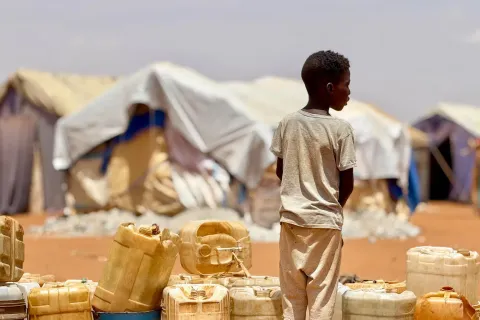
As they wait, Halima joins other families, sharing stories of the violence they fled and the long journeys they endured. Using pieces of clothing and blankets, families build makeshift shelters to protect themselves from the relentless sun.
“I feel safe here, even if I don’t have a tent yet,” Halima says.
“All I need is a place to rest and food.”
Restoring hope, providing stability
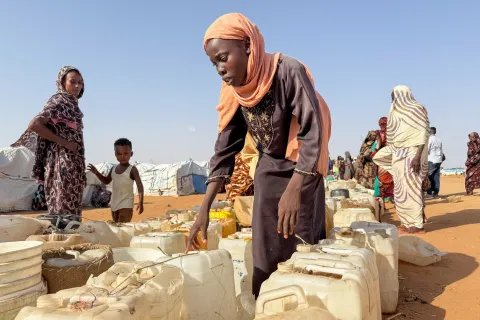
Over the past four months, more than 88,000 people have fled the Kordofan region. Newly displaced families often arrive malnourished, exhausted, and in urgent need of food, healthcare, water, sanitation and hygiene (WASH), and protection services.
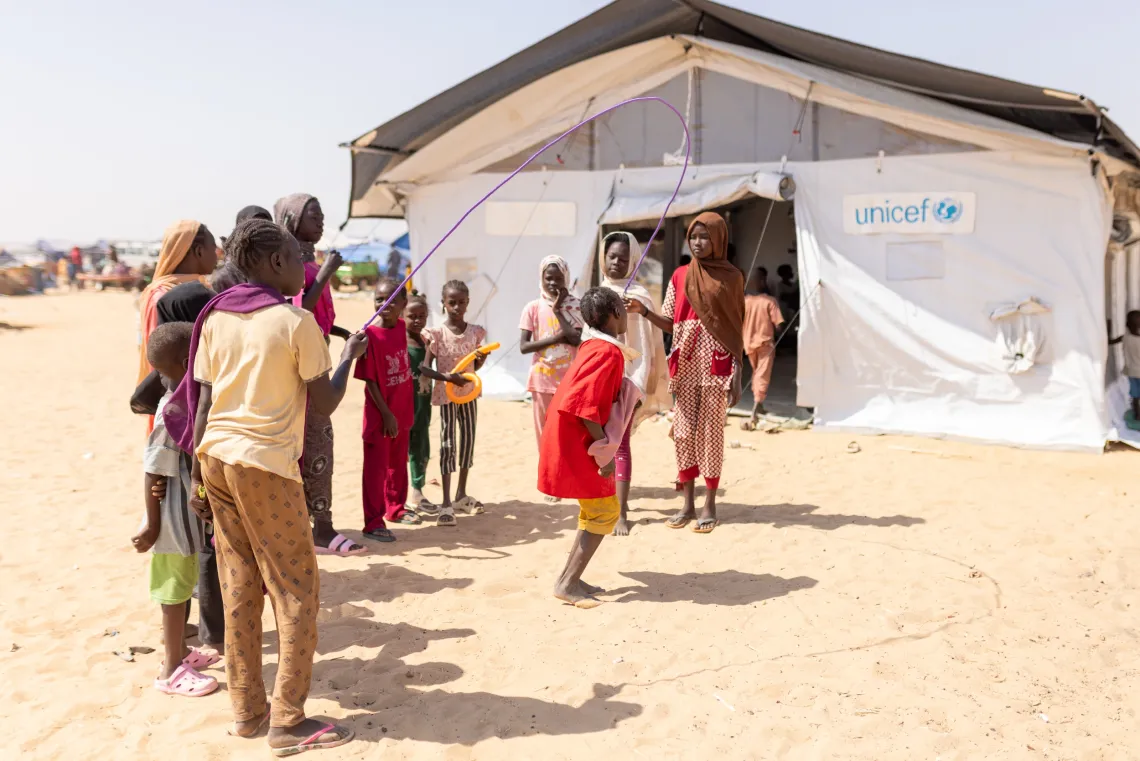
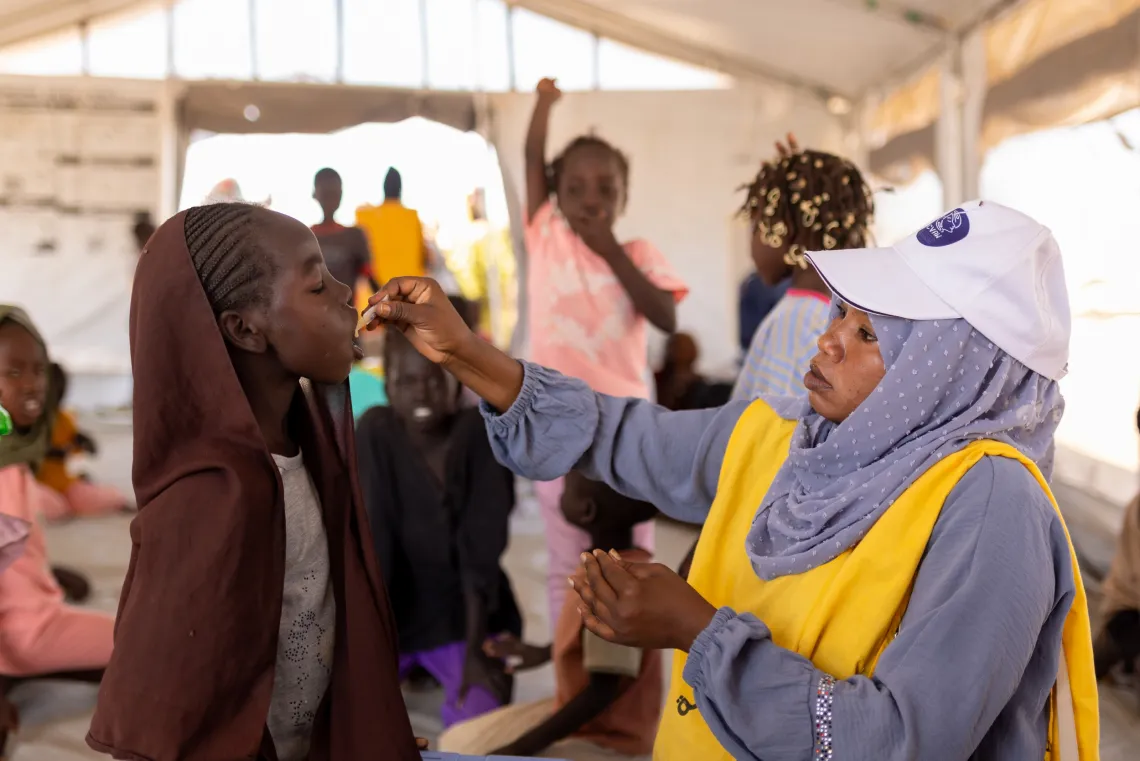
In Goz Alsalam, UNICEF and its partners are scaling up lifesaving support for newly arrived families. Child-friendly spaces provide children with psychosocial support and a safe place to play. Mobile health teams vaccinate children and adults against cholera and other life-threatening diseases, while community volunteers go door to door screening children under five for malnutrition and referring those in need for immediate treatment.
For families like Halima’s, these services offer a first step towards stability after weeks of uncertainty.
As Halima waits to be relocated, her greatest hope is simple: to see her children—Mufida, Omer, Khansa, Yusuf, Imtenan, Hassan and Shamsadeen—safe, healthy, in school, and one day, back home.