More than a bucket
UNICEF water, sanitation and hygiene supplies help restore dignity for a mother displaced by conflict in Nyala

Every morning at sunrise, Halima leaves her shelter in Otash Camp in Nyala in search of work.
Some days she washes clothes. Other days she carries materials at construction sites. For a full day's labour, she earns around 2,000 Sudanese pounds (approximately US$3) barely enough to help support her seven children.
Just a few weeks ago, Halima arrived at the camp after a long and painful journey from Al Fasher.
Life had become increasingly difficult. The conflict had taken their livelihoods. Together with her husband, they frequented the market in search of work and attempted to farm. But nothing worked and survival in those circumstances became hard.
"We spent many days without food or water," she recalls.
Halima was pregnant when conflict forced them to flee. Amid displacement and uncertainty, she gave birth under extremely difficult conditions. The family's story reflects the hardship experienced by many displaced families across Sudan.
Their journey first took them to Tabit, where they walked for two days. A stranger would later help them reach a relatively safer location, but tragedy struck again. Halima's husband was shot in both legs and could no longer walk. One of her children was also injured and lost both their hearing and sight.
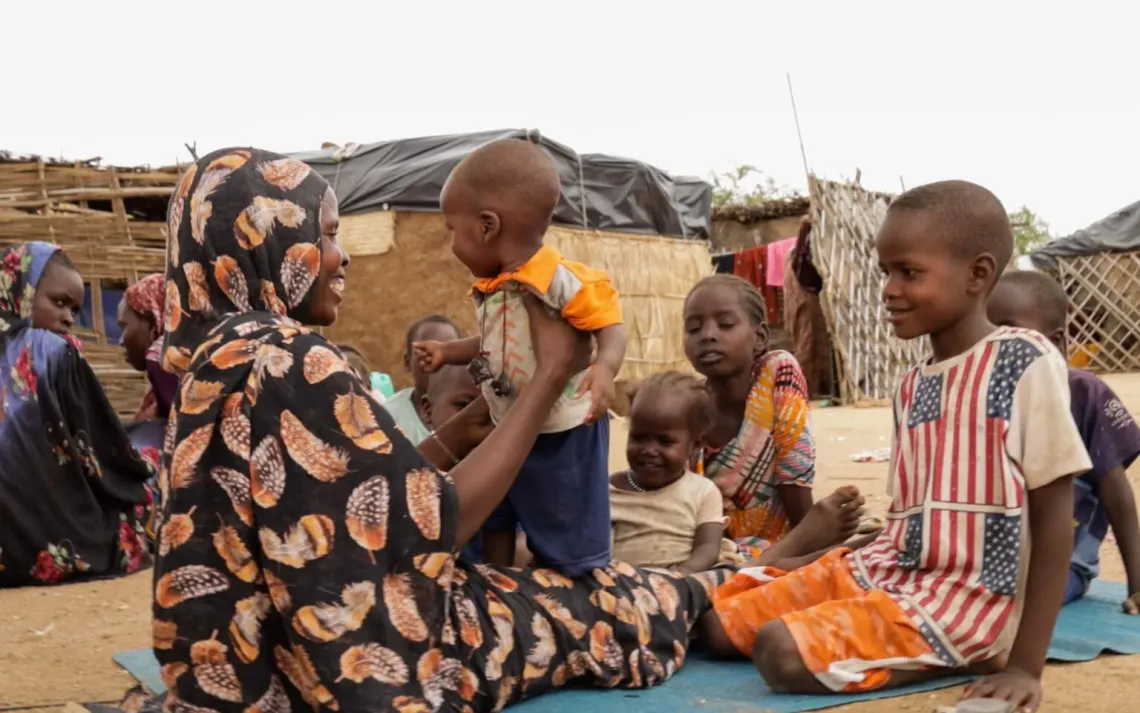
After months of displacement and continued movement, the family finally reached Nyala and have now settled in Otash camp.
When Halima fled her home, all she carried were her children and the clothing they had left.
Today, the family lacks suitable containers to collect or safely store water. Without these basic household items, even simple everyday tasks have become difficult.
Accessing water is one of Halima’s biggest daily challenges.
“Previously we had to pay for water, but I did not even have a bucket to carry it," Halima says.
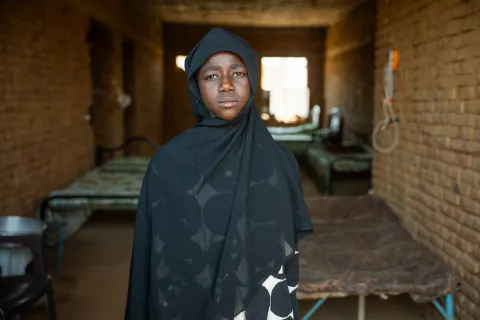
"I would wait until someone with a container arrived so I could borrow their bucket."
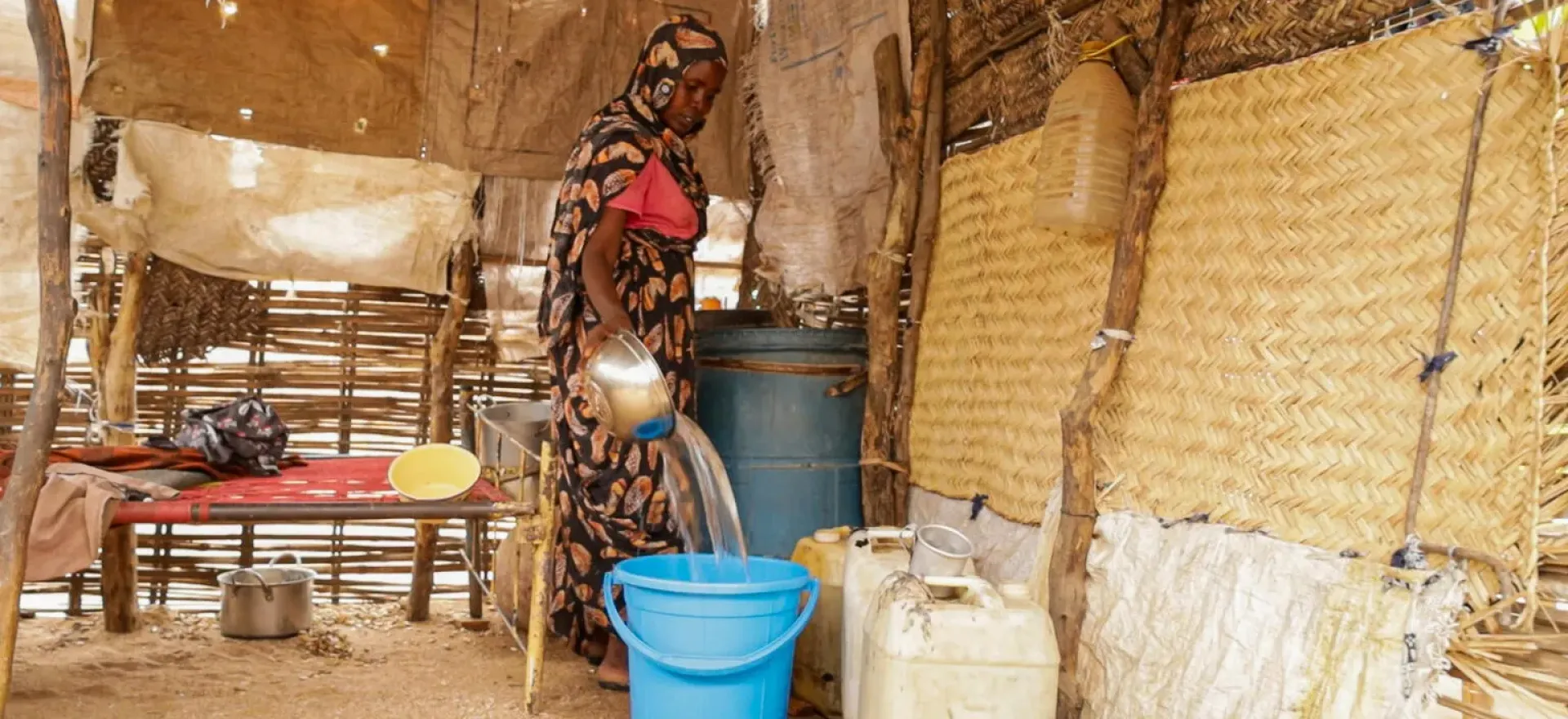
UNICEF Sudan/2026
"I would wait until someone with a container arrived so I could borrow their bucket."
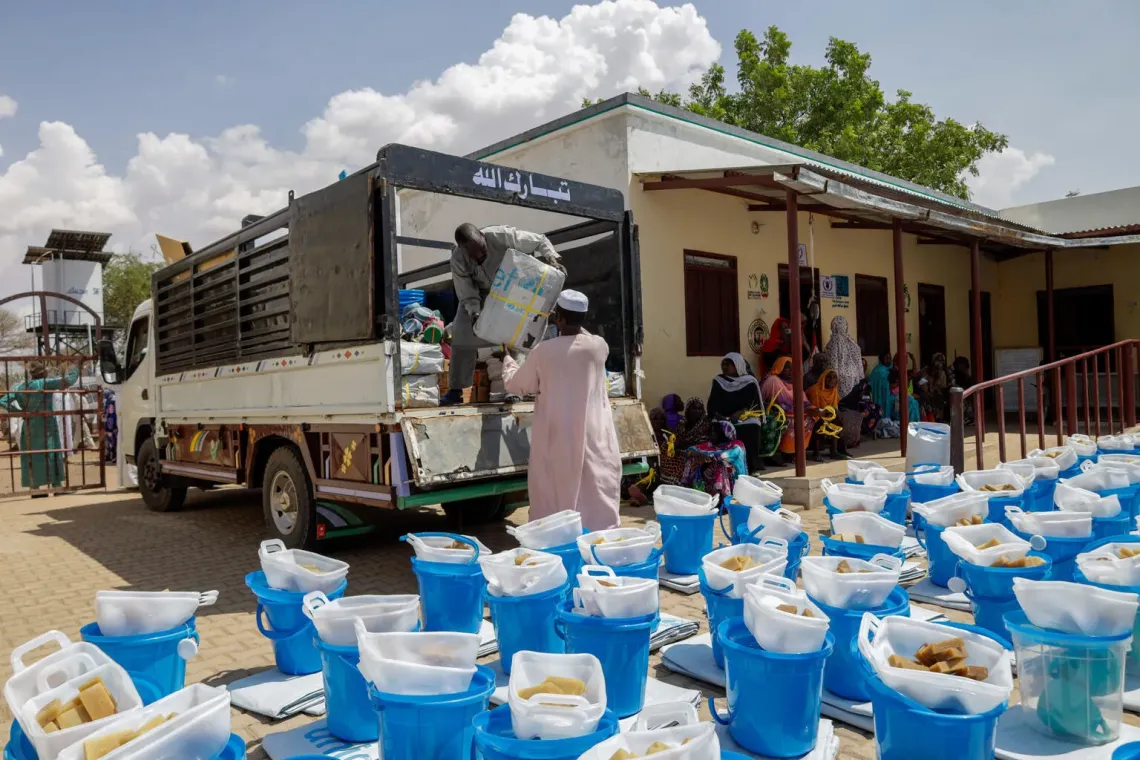
To support families affected by the conflict, UNICEF and partners, with funding from the Sudan Humanitarian Fund, recently distributed water, sanitation and hygiene (WASH) supplies to over 250 internally displaced households in Otash camp, South Darfur.
Each household received two locally made handwashing ‘ibrieks’, ten bars of soap, one plastic sheet (tarpaulin), one water bucket and two collapsible water jerry cans.
While these items may seem simple, for Halima they represent independence and dignity.
"I know they are intended for collecting water, but I will also use them inside our shelter, so my children have clean containers to drink from because we had nothing else," she said with a smile.
The containers now allow the family to collect, transport and safely store water. The soap helps them maintain good hygiene and reduce the risk of disease.
"The item that will help us the most is the soap," Halima explains.
Prior to receiving the supplies, she could only afford a small piece of soap each week, which had to be used sparingly. Faced with impossible choices, she often prioritized washing clothes over handwashing.
The tarpaulin will also make an immediate difference as the rainy season approaches.
"The tarpaulin will provide us with shade and protect us from the sun and the rain,” she said with relief.
For families who have lost their homes, livelihoods and possessions, relief can come in many forms.
For Halima, a bucket means no longer waiting for a neighbour to lend her a container to fetch water.
The jerry cans mean her family can safely store drinking water.
Soap means her children can stay clean and healthy.
The tarpaulin means greater protection from harsh weather and the comfort of a more secure shelter.
These simple but essential items help vulnerable families affected by the conflict like Halima’s, restore something that conflict and displacement has taken away - dignity.
“The supplies will improve water storage, reduce contamination of drinking water, and improve hygiene practices especially handwashing with soap,” said Abdullah Adam, Water Officer from a UNICEF’s implementing partner.
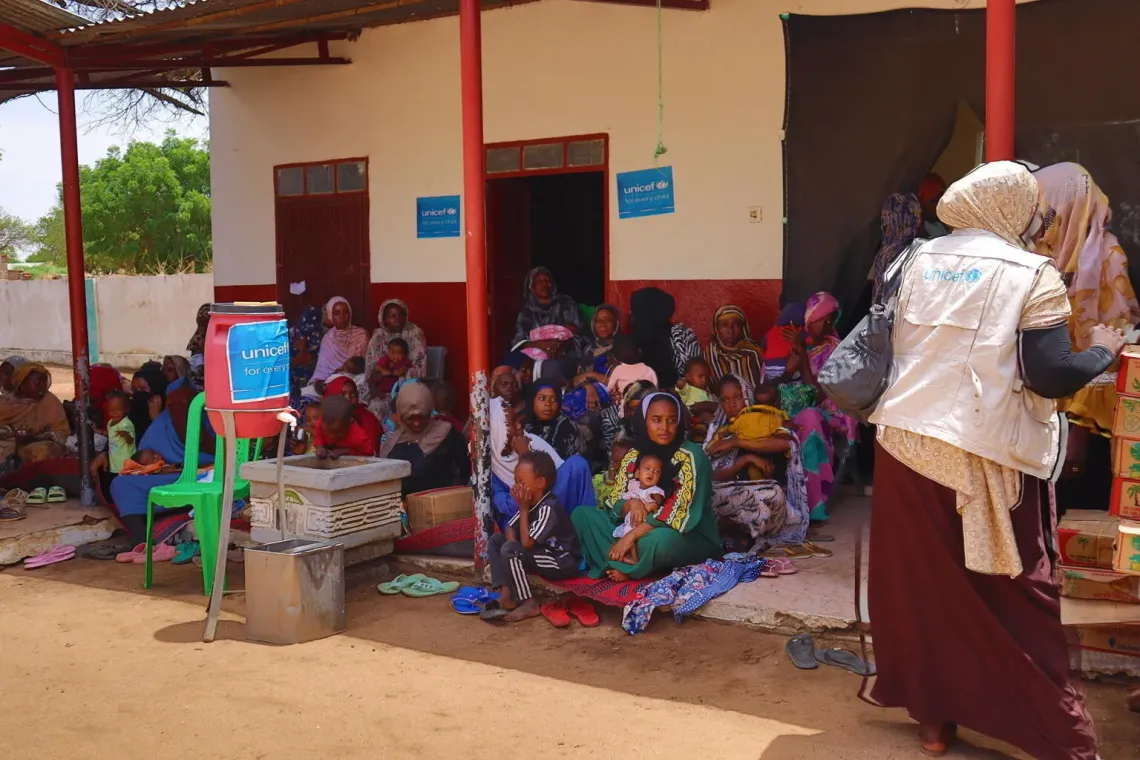
At a nearby health facility, WASH supplies are also enhancing hygiene practices during the delivery of health services, helping to strengthen infection prevention and control measures. Health workers are also using the supplies during health education sessions to reinforce the importance of handwashing with soap and water, a simple yet effective practice that helps prevent diseases like diarrhoea.
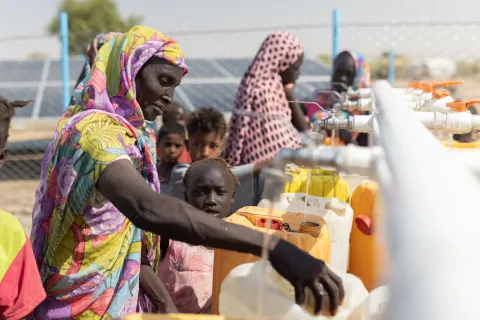
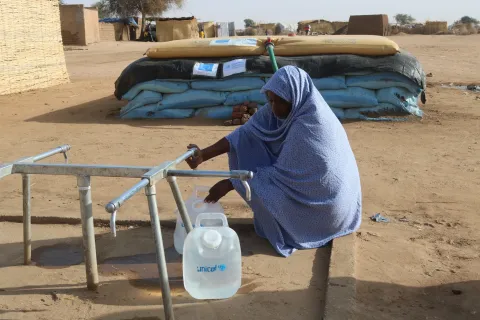
Alongside the distribution of household supplies, UNICEF and partners are rehabilitating water stations, carrying out hygiene promotion activities, implementing environmental sanitation interventions, and monitoring water quality across the camp.
For Halima, these interventions mean more than access to basic supplies. They offer her family greater safety, better health and the dignity to begin rebuilding their lives.