One war, many scars
Voices of children and women from the Kordofan region

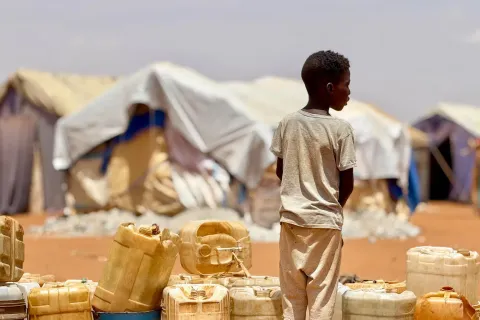
The small white tents - now shelter for displaced families in Goz Asalaam internally displaced people’s site in White Nile State - stretch further each day as more families arrive.
The site is now home to hundreds who have fled the recent fighting in the Kordofan region. Children and women, who make up the majority, have travelled long distances on foot, arriving exhausted, weakened, and many cases malnourished.
Inside each tent or makeshift shelter is a story of resilience, survival, loss, pain and trauma.
Nuha has lost more than a home
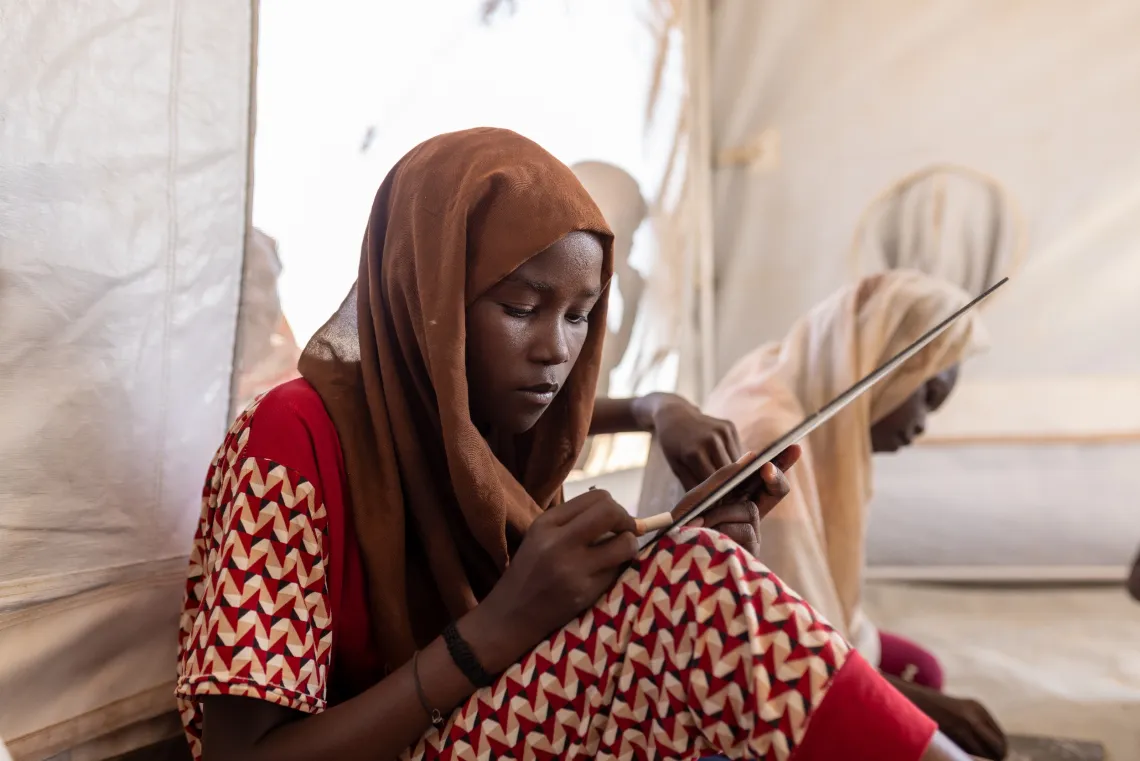
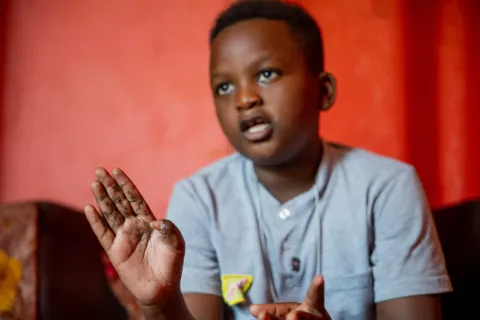
“I miss my mother and my father,” 13-year-old Nuha whispers.
For days, Nuha and her family lived through continued bombing. Often, they hid under beds for protection and, as children, believed that blocking their ears might silence the loud bangs. Stepping outside was impossible- it meant risking being shot or kidnapped.
“People were killed in front of us,” Nuha says softly.
“I was so afraid to die.”
But the war did not only take her home. In the chaos following a bomb that fell close to their home, Nuha was separated from her parents and siblings. Months have passed without any news of their whereabouts.
She fled with her aunt and grandmother, who remain her only support as efforts to trace her loved ones continue. Each day carries the weight of uncertainty for a girl who has already endured so much.
At the child-friendly space established by UNICEF, Nuha is slowly rebuilding a sense of normalcy- forming new bonds, establishing routines, and accessing counselling services. Every day, she joins other children in fun, play, singing, dancing and creative sessions led by trained social workers.
Yet the memories of her life back home- her parents, siblings and friends, Bismat and Saida - remain vivid and painfully distant.
A story of loss and grief

Umsiyad left home with all five of her children- but arrived with only four. Sadly, her three-year-old daughter didn’t survive the journey.
“I lost my child on the way here,” she narrates, her voice trembling.
“She had a fever, with vomiting and diarrhoea.”
At a nearby hospital, her daughter was diagnosed with malnutrition.
“I was told it was too late,” she says, tears rolling down her face.
The long journey - days without sufficient food, water or shelter- took a devastating toll on the child’s small body.
“She lost so much weight.”
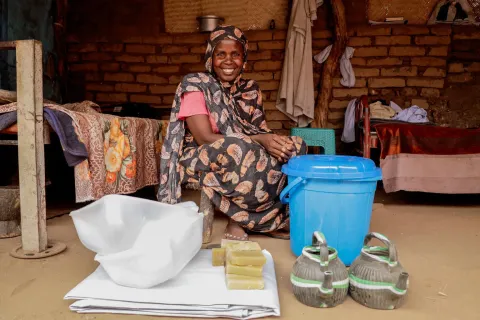
Despite her grief and loss, Umsiyad presses on, striving to secure food, water and shelter for her surviving children.
Sitting outside their tent, she comforts and plays with her little ones – while her youngest, Salim, occasionally asks about his sister.
A beautiful life no more

For days, Nada and her family remained trapped inside their home as airstrikes lit the skies.
“We couldn’t even go out to collect water,” Nada recalls.
Then one day, her mother came rushing in, shouting: “We have to leave, we have to leave.”
Before she could gather her belongings, Nada found herself on the road with her mother and siblings.
“We walked for so many days that I stopped counting,” she says.
Her father stayed behind and remains missing.
Nada struggles to understand how life changed so suddenly- forcing them into an IDP site far away from home.
“Life was so beautiful,” she says.
“We did everything we wanted – we went to the market, to school, and I played with my friends Zahara and Mayada.”
At the child-friendly space, Nada now spends her days playing outdoor games and learning volleyball. Inside the large tent, she takes part in activities designed to help children heal from trauma and stress.
As she waits for the day she can return home, Nada holds tightly to her mother’s presence – something many children around her, separated from or having lost loved ones, no longer have.
Wasting in her eyes
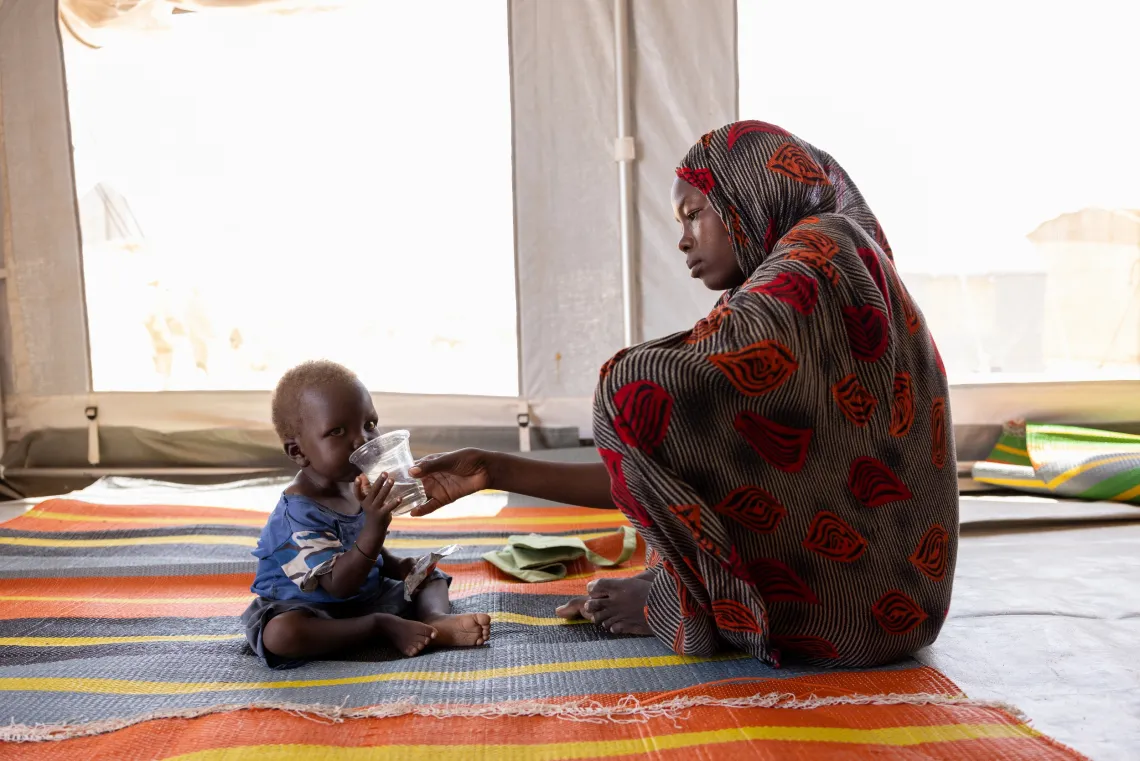
Two months ago, Aziza arrived at the IDP site with her two sons, Mujahid and Mohammed. Mujahid, just 20 months old, was severely malnourished after suffering from severe bouts of vomiting and diarrhoea that began during the journey.
“Back home, Mujahid ate well, was breastfeeding and very healthy,” Aziza says.
Everything changed when the family was forced to flee.
Through community mobilisers, Mujahid was identified and referred to a UNICEF-supported nutrition programme for treatment.
At the outpatient’s therapeutic nutrition centre, Mujahid is seen during his second follow-up visit.
“He didn’t eat much when we arrived,” Aziza explains.
“He would just cry, but his appetite is now improving.”
As he continues his recovery, Aziza watches him nibble on ready-to-use-therapeutic food (RUTF), giving him small sips of water. She is provided with additional RUTF sachets to take home until their next appointment in two weeks.
She is relieved—her son is stronger than when they first arrived.
Responding to the needs of families
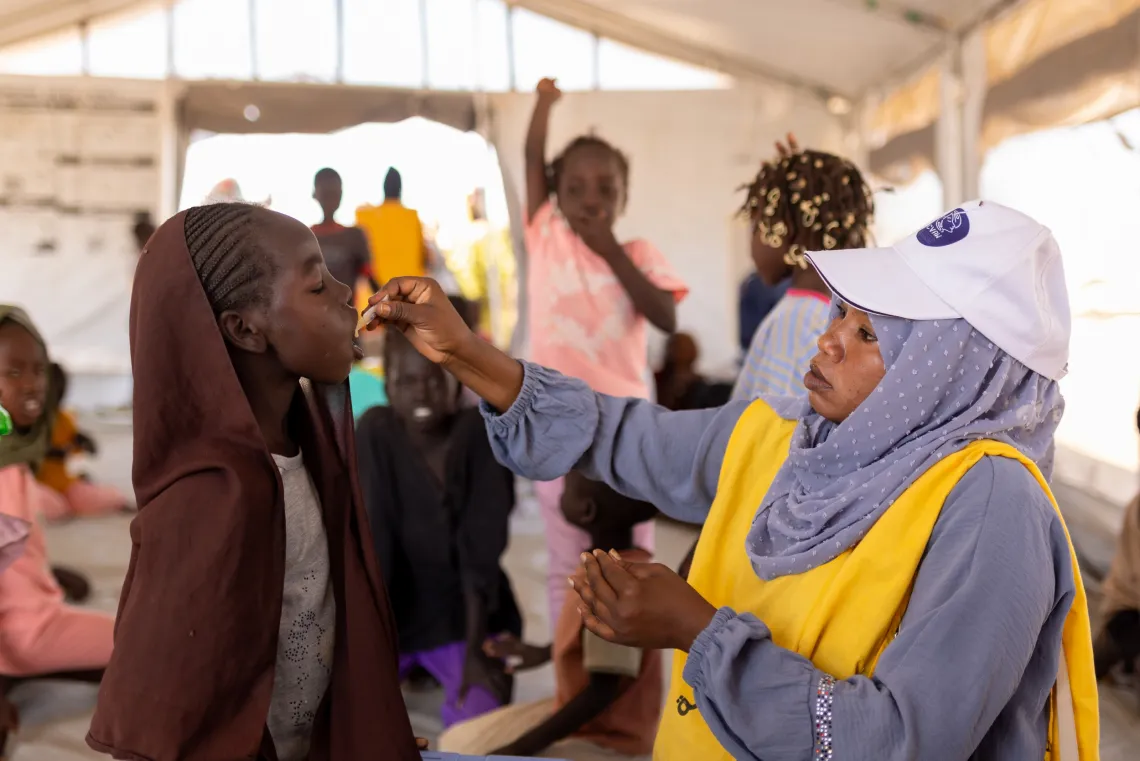
Responding to the needs of families
Since the recent influx of displaced families from the Kordofan region into White Nile, UNICEF with its partners are:
- Sustaining essential health services through primary health care centres and mobile clinics.
- Conducting door-to-door screening of children under five years for malnutrition to ensure early care and treatment.
- Scaling up critical water, sanitation and hygiene (WASH), protection and education services.
- Expanding child protection, gender-based violence (GBV) interventions, and mental health and psychosocial support services (MHPSS), including safe learning spaces and child-friendly spaces.
Across the site, mothers, fathers, caregivers and children—who have already lost so much—carry stories of resilience and quiet hope, even as they remain burdened by uncertainty.
For many who have been displaced multiple times, the war continues to follow them—bringing exhaustion and emotional fatigue.
For now, they wait.
And they hope—one day—to return home.