Aisha’s first steps
After an explosion caused life-changing injuries, five-year-old Aisha is receiving rehabilitation and psychosocial support to regain mobility and confidence.

The night Aisha was injured
Five-year-old Aisha was asleep beside her mother, Amera, in their compound when an explosion occurred during the night.
The blast killed Aisha’s father and two siblings and caused injuries that resulted in the loss of one of Aisha’s limbs. Amera, who shielded her daughter, also sustained multiple fractures and serious injuries.
What followed were months of pain, fear and distress.
Today, Aisha still struggles to sleep through the night. Loud noises frighten her, and she is often afraid to step outside her home.
Aisha, who lives in North Omdurman, is one of many children whose lives have been permanently affected by explosive ordnance after years of conflict. Children have been killed and injured, while some survivors face multiple surgeries and long periods of rehabilitation.
Amera, who was pregnant at the time, recalls the incident that changed their lives.
“The explosion completely turned my daughter’s life around.”
"She stopped speaking, experienced severe night terrors, waking up screaming and crying in the middle of the night. If a door slammed or a loud noise occurred, she would panic, scream, and try to hide.”
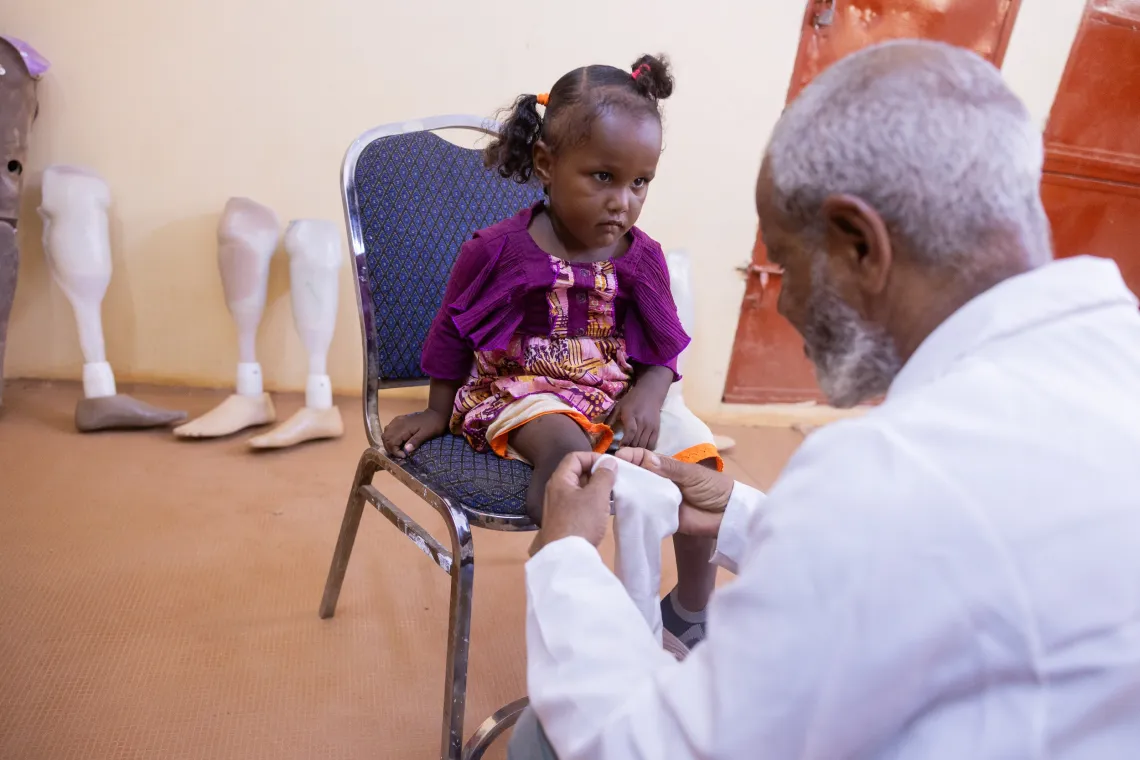
Searching for help
In a country where the health system has been severely disrupted, with 70 per cent of hospitals non-functional, accessing immediate treatment and care was extremely difficult for Amera, who had already lost so much.
Watching her daughter in so much pain was overwhelming.
"Local clinics were under resourced, and by the time we received specialized care, the damage was deeply extensive."
Aisha’s injuries resulted in the loss of a limb, and she could no longer walk without support.
Even after the physical pain eased, Aisha continued to experience distress. Not being able to walk independently was difficult for her, and she became withdrawn.
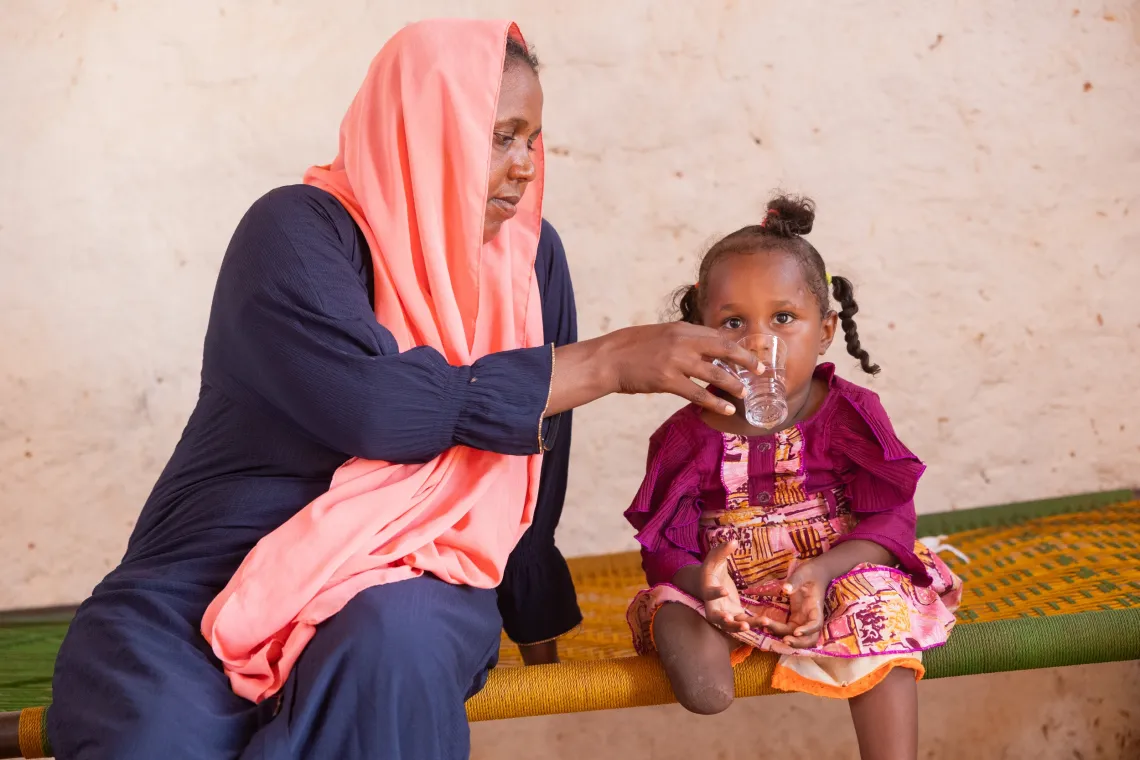
A journey of recovery
In Khartoum, UNICEF, through the National Mine Action Centre (NMAC), supports survivors of explosive ordnance by providing much-needed psychosocial support and rehabilitation services. Aisha and Amera are both receiving support and, after months of care, are slowly recovering.
Amera has also received guidance on how to comfort and support Aisha when she becomes frightened. Despite the progress, Aisha continues to stay close to her mother and rarely lets her out of sight.
UNICEF/UNI1018520/Ahmed Mohamdeen Elfatih
“When I look at her altered body, at times, I fear for her future.”
Aisha’s first steps
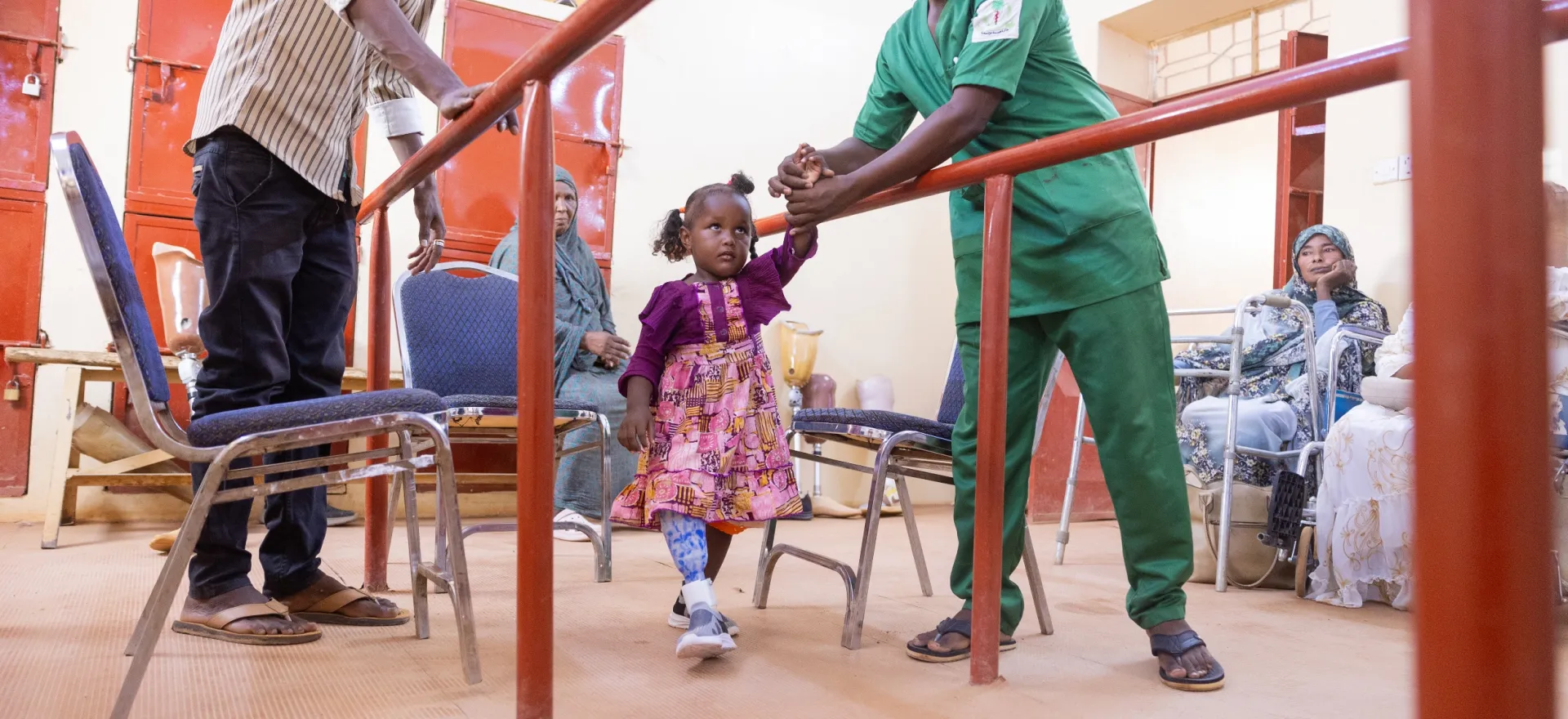
Recently, Aisha was fitted with a prosthetic limb.
At Karrari Centre for Prosthetics, Aisha and Amera join other patients awaiting rehabilitation and fitting services. When Aisha’s turn came, two health workers carefully supported her as she took her first steps with the new limb.
Aisha’s first steps mark the beginning of a longer recovery journey — one that extends beyond the physical injuries caused by the conflict.
“When I look at her altered body, at times, I fear for her future,” Amera whispered as she watched her daughter take her first steps.
With support from UNICEF and its partners, Amera is finding answers to many of the questions she continues to have. For now, she is focused on helping Aisha regain mobility, confidence and a sense of safety.