Walking alongside children on the road to recovery
A frontline social worker shares how sustained support helps children affected by conflict recover, reconnect with family, and reintegrate into the community.

The conflict in Sudan is a child protection crisis.
For more than three years, the conflict has caused widespread suffering, deeply affecting children, families and caregivers. It has disrupted family relationships and created uncertainty, fear, loss and sadness.
Millions of children caught in the fighting or forced to move remain at risk of violence, abuse, exploitation, conflict-related sexual violence and severe psychosocial distress.
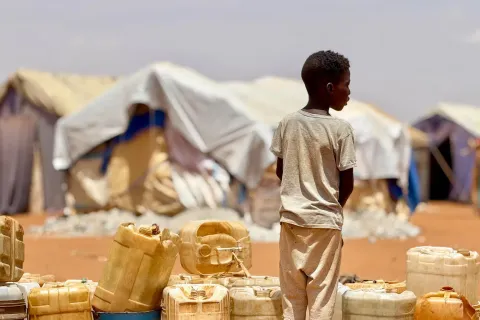
Today, Sudan remains one of the world’s largest and most complex humanitarian crisis, displacing millions of children and families within the country and across borders.
Since the conflict began in 2023, grave violations of children’s rights have been reported. Killing and maiming remain among the most widespread and persistent grave violations affecting children.
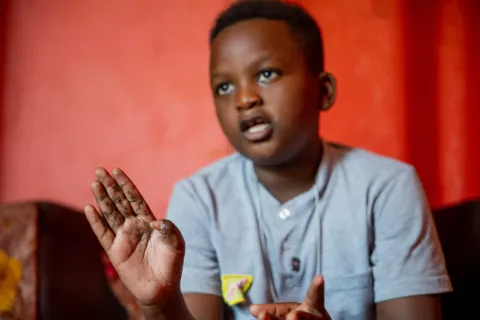
Children across Sudan have been affected by violence, displacement and loss. Many show signs of distress and need sustained support to recover from what they have experienced or witnessed.
Across the country, UNICEF works alongside frontline social workers who support children as they cope with fear, loss and distress and work towards recovery and reintegration.
UNICEF spoke to Zahia Awad, a social worker with decades of experience on the frontlines of child protection in Sudan. Among the most significant moments in her career has been supporting children after release from detention and accompanying them through recovery and reintegration.
Can you describe the nature of your role in supporting children affected by conflict?
My role involves identifying children in need, providing them with psychosocial support, and helping them reunite with their families.
Every day is different. The evening before, I prepare a list of the children I will visit the following day. During each visit, I check on their well-being and monitor their progress, which is a critical part of their recovery.
Each visit is meaningful to me and an opportunity to support children who have been deeply affected by the conflict.
Can you share an experience that reminded you why your work is so important?
One girl I will never forget is a child whose name is withheld for her protection.
She had been associated with an armed group and detained for months. At the time, she was seven months pregnant. The difficult conditions in detention affected both her health and her pregnancy.
When we met her, she needed extensive medical and psychosocial support, which we provided. We also continued to follow up closely after her release and reunification with her family.
After the severe stress she had experienced, doctors initially expected that she would need a caesarean delivery. With continued medical care and follow-up, she later gave birth without a caesarean section.
Knowing that we had helped protect both the girl and her baby brought me immense joy. It felt like we had helped save two lives.
What role do social workers play in helping formerly detained children recover and reintegrate?
Our role begins with identifying children who need support and understanding the challenges they face.
We provide psychosocial care, help trace family members, facilitate reunification, and continue supporting children even after they return home.
Recovery does not happen overnight. Children often need ongoing emotional support and guidance as they rebuild relationships, return to school, and adjust to life in their communities.
Being able to walk alongside them during that process is one of the most important parts of our work.
What challenges do children face after returning home?
Many children face stigma and negative perceptions in their communities after they return. Some are labelled because of their past association with armed groups and are called names such as ‘child soldiers’.
In some areas, children face difficulties returning to school, accessing training opportunities or finding acceptance among peers and community members. Poverty and the disruption caused by conflict can make these challenges even harder. Others feel uncomfortable with constant attention, questions or stares from people around them.
That is why reintegration support is so important. Our support does not end once we find a child’s family. It continues as children rebuild relationships and reconnect with family and community life.

What is it like to witness children reunite with their families?
Those moments are incredibly emotional.
After days or months of separation from their families, many children began to lose hope. Some did not know whether they would ever see their families again. Others were confused and could not understand why they had been detained, let alone believe that we could help secure their release. Reaching families was often difficult because phone numbers no longer worked or relatives had been displaced.
Whenever family reunification finally happened, there were tears, hugs and overwhelming happiness. Families, relatives, friends and community members gathered to welcome children home. In one case, I remember a community leader coming with families to receive a child. Those are moments I will never forget.
Have you seen children's lives change after their release?
Absolutely. I remember closely following eight children who initially could not believe they would ever leave detention or see their loved ones again. After their release, with support, they returned to school, enrolled in vocational training, rebuilt family relationships and reconnected with community life.
I saw their confidence grow as they began to look towards the future with hope.
Why does the work of frontline social workers matter?
Social workers are central to child protection work. When we visit homes, we meet children, listen to their experiences, assess their needs and connect them to the support they need.
When you see a child regain confidence and move forward with life, you know the support has made a difference. Seeing positive changes is what motivates me to step out every morning. I know that every day there is a child who may need my help.
While healing can take time and may be challenging, our goal is simple - to help children recover and move forward with their lives.
What is that one thing you would share with the world about children affected by conflict?
These children are innocent.
They are not responsible for what has happened.
We should accept them, support them, guide them and ensure they have access to safety, education and healthcare so they can grow into the people they dream of becoming. Seeing positive changes in their lives gives me hope and reminds me why this work matters every day.
#################################################
UNICEF continues to support children formerly associated with armed groups through psychosocial and social support, family reunification, education support and other humanitarian assistance. These services help children recover and reintegrate into their communities. To date, over 70 children have been released and reunited with their families and continue to receive follow-up support from trained social workers.