For Hayat, safe water brings relief closer to home
In Tawila, access to safe water and essential hygiene supplies is helping displaced families protect their children’s health and rebuild daily life with dignity.

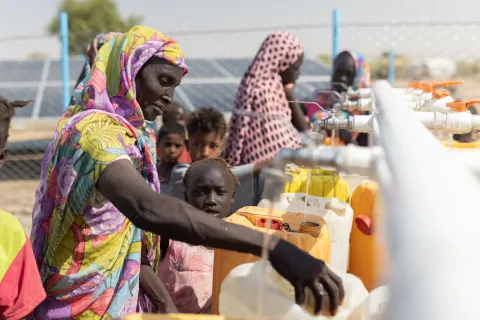
At a new water yard in the heart of a displacement camp in Tawila, Hayat arrives with her daughter to collect water.
Around her, mothers and children gather with their jerry cans and buckets. Some families arrive with donkey carts carrying large gallons. They exchange pleasantries, chat and share stories as clean water flows from multiple taps into their containers.
The water system installed by UNICEF is connected to large, elevated storage tanks that channel water to multiple outlets, allowing children and women to collect water without spending long hours waiting under the scorching sun.
“There is enough water for everyone,” Hayat whispers.
For mothers like Hayat, having water closer to home means more time to care for their children and attend to other household chores.
The long search for water
Hayat says the early days at the camp were hard.
Every morning, she woke up before sunrise in search of water. At the time, most families relied on trucks distributing water at designated points across the camp. But as more families arrived, the queues grew longer.
“When the trucks arrived, families rushed to collect what they could,” Hayat recalls. “It was never enough.”
“Sometimes we waited for a long time and sometimes we didn’t get any water at all.”
When she missed the water trucks, Hayat had to travel further to reach one of the few available water points.
The burden of collecting water grew each day for Hayat and hundreds of other mothers, taking time and energy away from caring for their children and families.
Cholera and other waterborne diseases were confirmed, claiming lives, including those of children, who are particularly at risk from unsafe water and poor sanitation.


Water is connected near home
Then, one day, a new water yard was constructed close to Hayat’s home. Within days, large water tanks were installed and connected to large pipes and facets, bringing water closer to families. Mothers and children celebrated the opening of a water source they could easily access whenever they needed it.
Today, the solar-powered water system serves approximately 10,000 people through six water-distribution points. Each point is equipped with six taps, providing at least 15 liters of safe water per person per day.
Every morning, Hayat arrives at the water yard. After about 10 minutes, she collects water into a clean bucket and walks back home, where she can wash utensils and prepare a hot meal for the family.
With water came more supplies
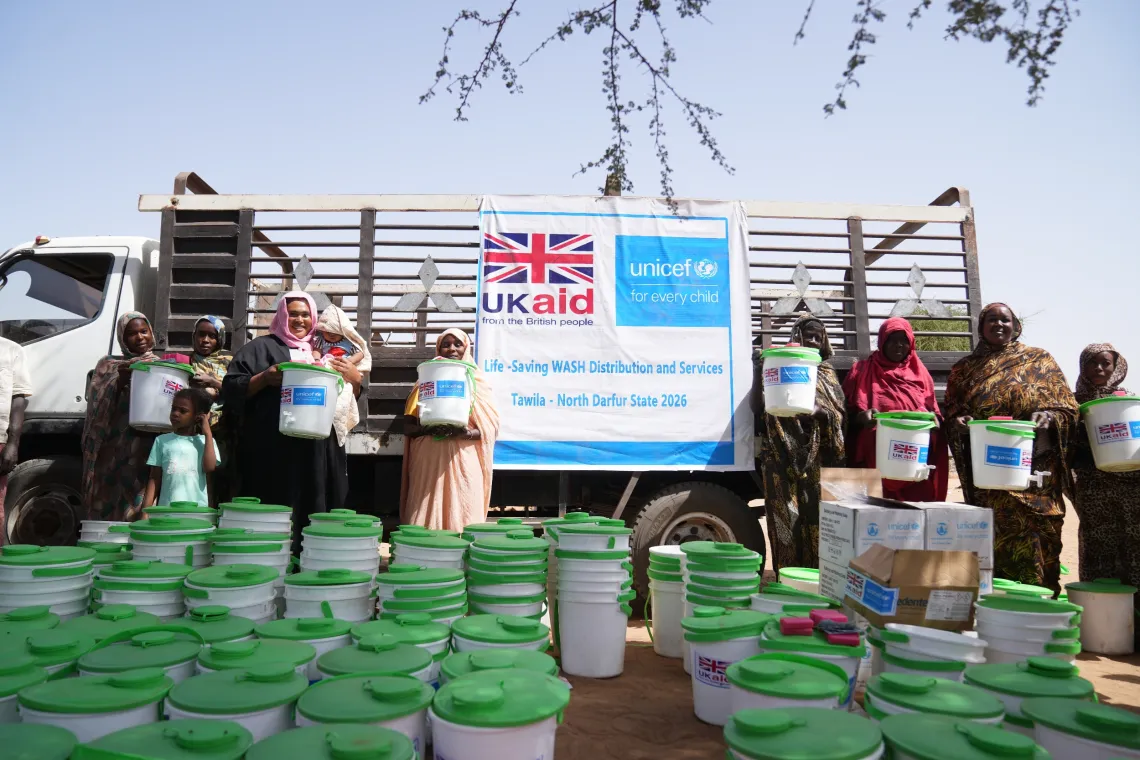
The new water yard was just the start of the support Hayat and her family received from UNICEF, with support from the United Kingdom's Foreign, Commonwealth and Development Office (FCDO).
In Tawila, Hayat and other conflict-affected displaced families received jerry cans, water buckets, soap, household water-treatment chemicals and family hygiene kits as part of the FCDO in-kind contribution. The supplies form part of a wider humanitarian response reaching families across Tawila, Um Baro, Karnoi and Golo.
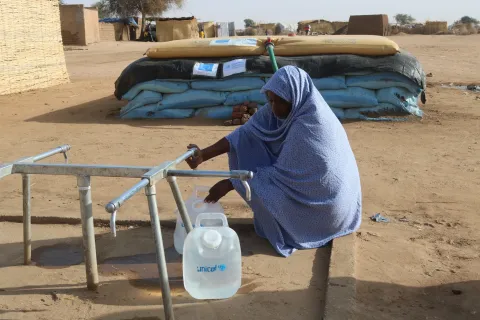
Hayat received two buckets - one for collecting water and another for safely storing drinking water at home.
“The water containers help us keep our water clean and safe from contamination,” she says.

Improving dignity too
The emergency supplies were complemented by sanitation services across the camp.
Families also received materials to construct temporary latrines, helping improve privacy and dignity while reducing the risk of hygiene-related diseases.
With support from volunteers and hygiene promoters, UNICEF and partners also conducted hygiene-awareness sessions. Hayat and her children participated, learning simple but effective ways to help prevent disease, including handwashing with soap at critical times and safe storing drinking water.
“We talk to each other,” Hayat says. “We remind each other to wash hands, to keep water safe. We help each other.”
################################
In Tawila, North Darfur, UNICEF, with FCDO in-kind WASH support, is delivering lifesaving water services to displaced and host communities facing severe water shortages. Supplies including water tanks, pumps and essential WASH materials have enabled the rapid expansion of access to safe water, while household water containers are helping families safely collect and store water.