Menstruation, no longer a problem
Mubarak helps his sister overcome menstruation challenges in displacement
Adolescence, a time when children transition to adulthood, can be exciting but also challenging, especially for girls. A period when many experience social, physical, psychological, and emotional changes.
For adolescent girls, it includes the onset of menstruation – a new phase marked with new vulnerabilities. And for girls growing up in emergencies, managing menstruation with dignity while on the move and in displacement is even more difficult.
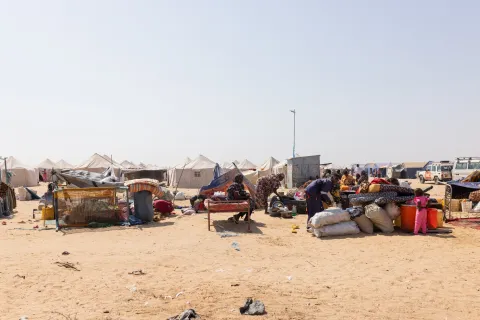
Thirteen-year-old Magda and her brother Mubarak lived a steady life in Al Fasher before the war forced them to flee. Today they live in Kaima camp with hundreds of displaced families.
Their lives have been shaped by the daily struggles. There is barely no food, the shelters are crowded and the living conditions are poor.
“Everything feels uncertain,” Mubarak says.
For Magda, life is even more challenging as she embraces adolescence far from home.
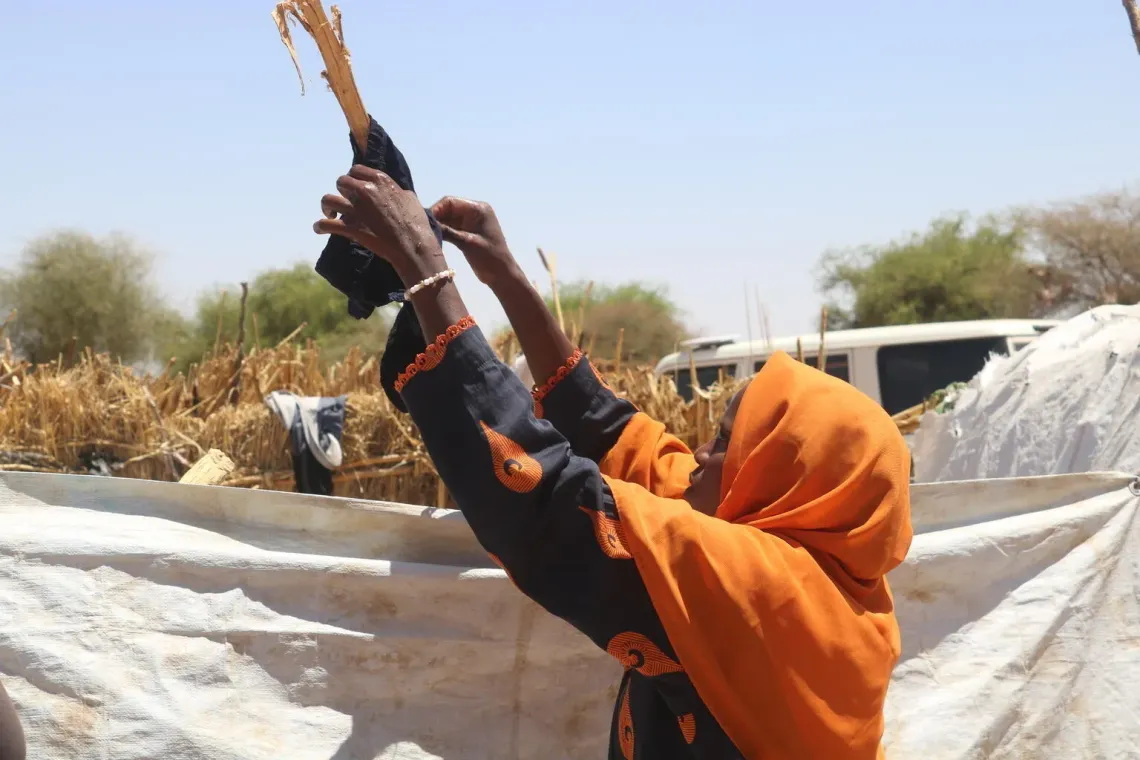
Period, a frightening experience
“I was terrified,” Magda recalls the first time she got her period.
“I didn’t understand what was happening.” “I thought I was sick.”
With no sanitary materials and knowledge of menstruation, she withdrew from her peers. The fear quickly turned into shame.
“I didn’t know how to manage it,” she whispered. “I just wanted to hide from everyone.”

UNICEF Sudan/2026
“This is normal.” “You are not sick.”
Skills that made a difference
Mubarak quickly noticed something was wrong. Magda was alone and seemed frightened and confused.
When the family arrived in Kaima, Mubarak had joined a UNICEF-supported adolescents’ club at the safe learning space. It is where he quickly learnt about menstrual hygiene management - including how to make reusable pads using locally available materials.
The skills came in handy when Magda needed support.
“This is normal,” he explained to her. “You are not sick.”
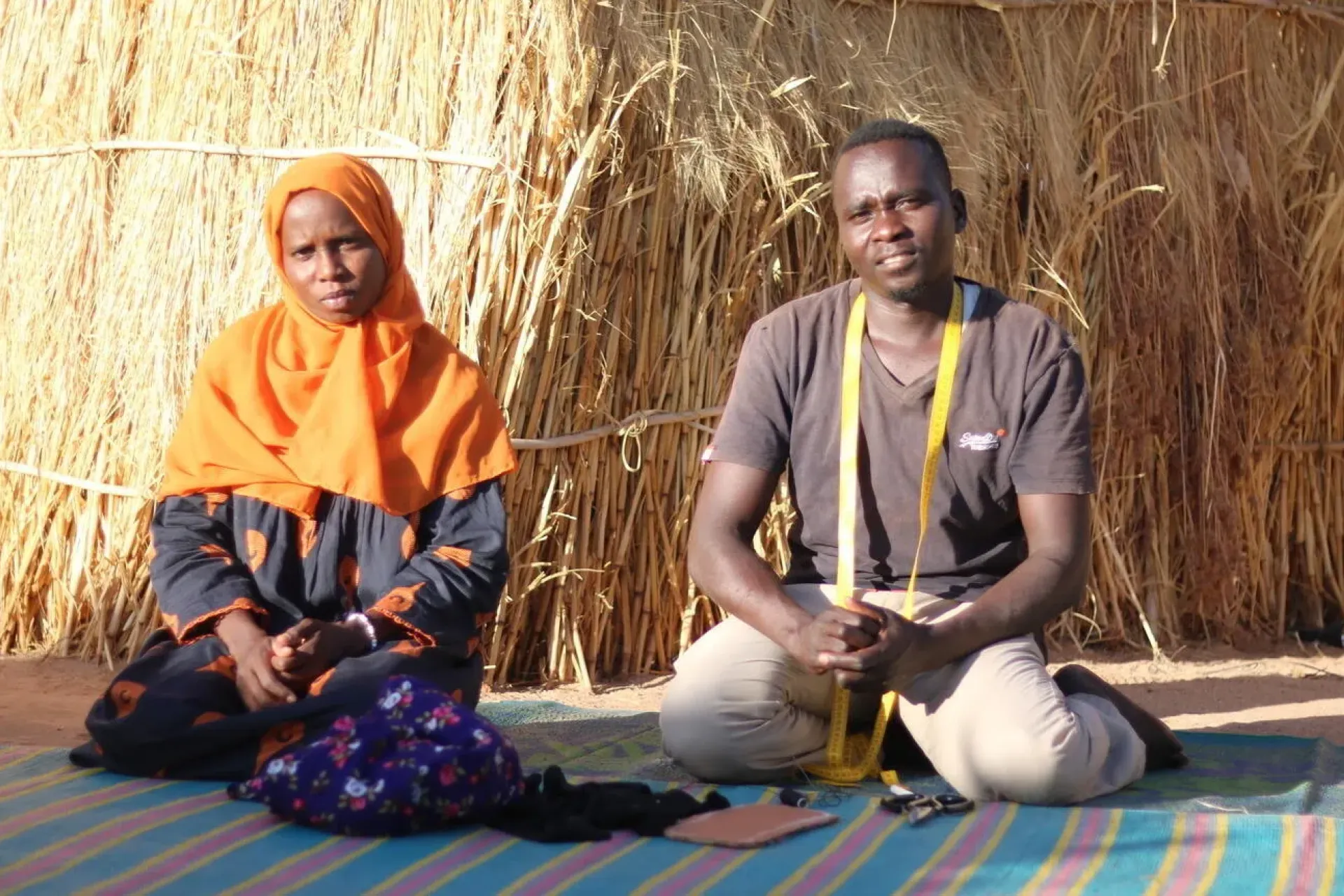
With a needle and thread, clean cloth, and a pair of scissors in hand, Mubarak immediately stitched a set of reusable pads for Magda. He then showed her how to use, wash, dry and keep them safely. For displaced families who have lost everything, disposable pads are far from reach and reusable pads provide a solution.
Challenging norms for dignity
In a society where menstruation is rarely discussed, let alone by boys, Mubarak and his peers are challenging social norms to help girls manage their periods in dignity during conflict and displacement.
Mubarak has also passed on the skills to Magda.
Today, menstruation is no longer a nuisance for Magda, but simply part of growing up.
“I feel safe.” “I am not worried anymore and can move freely.”
Debunking menstruation myths and misinformation
Away from home, Mubarak continues to reach more adolescents – sharing knowledge and skills to help girls manage their periods safely and with confidence. His efforts have earned him a new title – the menstrual hygiene ambassador.
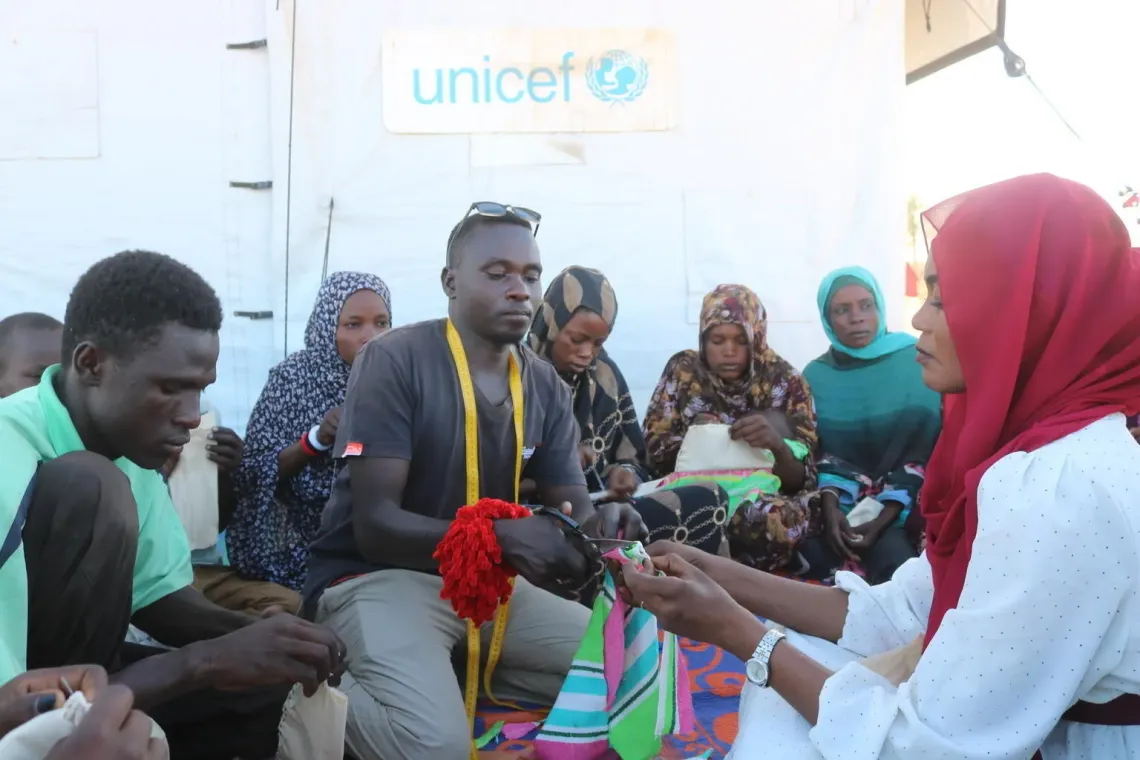
Outside the UNICEF safe learning space, Mubarak sits on a large mat surrounded by adolescents. His sessions start with a brief on what menstruation is and why good hygiene matters during periods. He keenly demystifies myths and misinformation, talking about his sister’s experience.
He then demonstrates how the reusable pads are made – from measuring the fabric, to stitching and adding the buttons for safety and comfort.
“These skills are very relevant and powerful,” he mentions.
“For families that have very little, this knowledge can make a difference.”
In his free time, Mubarak continues to make extra pads distributing them to girls across the camp.
Pads and more
In the camp, UNICEF is also providing clean and safe water, distributing soap and constructing gender-segregated latrines – all key elements for menstrual hygiene management.
For Magda and hundreds of girls displaced by the war, life can go on, even with periods.
With latrines, clean water, soap and reusable pads, they are managing their periods safely and privately.
“My wish is that girls can live without fear or shame,” Magda explained.
“I also want a community where boys and girls support each other.”