Three years of war in Sudan
Years of loss, pain and conflict, with children paying the highest price

- English
- العربية
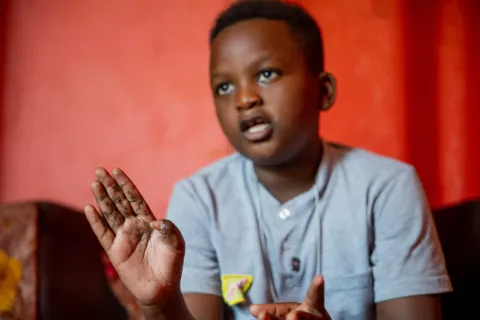
“How much more will I lose?” ten-year-old Mohammed asks, his eyes filled with tears.
Staring into space, he recounts how the war has robbed him of nearly everything and displaced him multiple times. Now, he is unsure of where home is.

“I lost my mother, sisters, and friends in this war.”
In Al Fasher, Mohammed has witnessed it all: “I saw explosions, warplanes, and all kinds of weapons.”
Today, millions of children across Sudan are overwhelmed by sadness, fear, and uncertainty. For three years now, they have lived through the devastating war, displaced again and again, exposed to diseases, hunger and malnutrition and witnessed violent scenes that no child should ever see.
Almost every child has lost or been separated from someone they dearly loved.
The prolonged exposure to conflict and violence is causing them severe emotional and psychosocial stress, affecting their mental health, with many completely withdrawn.
“Since the war started, my daughter has fallen into a state of silence,” Intesar, a mother shared, her voice heavy with concern.

UNICEF/Elfatih
“Sometimes she shivers, and her body turns cold.”
Every day without action costs children more
With each passing day, the cost of inaction grows.
Children are not only losing their homes- but they are also losing their safety, their health, their education, and their future.
Across Sudan, basic services have collapsed. In areas like Kordofan region, children are trapped by active conflict – they cannot flee, they cannot be reached, cannot access services like healthcare, clean water or protection.
Without urgent action, more children will die from preventable causes.
More will suffer trauma that may never heal.
Years of a crisis for children
“I am starting to forget how my home looked like,” whispers six-year-old Fatima. “But I remember we had red doors, red flowers, and my room was beautiful.”
Fatima is one of millions of children who have fled their homes when the war started.
Today, more than 9 million people are displaced across Sudan – three out of five are children. This is now the largest internal displacement crisis in the world.
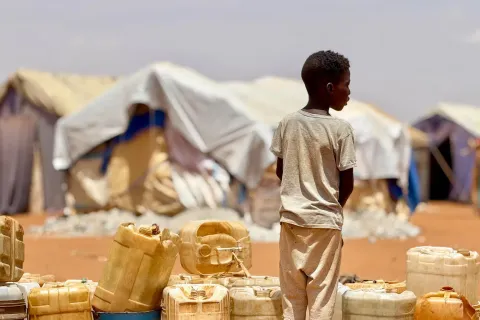
In displacement sites, children struggle to rebuild routines many miles away from home. Millions walked for months to reach safety, unsure of when or if they will ever return home. Their parents worry about the safety of their children as they flee.
“We walked for so many days that I stopped counting,” says Nada, 13, who fled Kordofan with her family.
“Life was so beautiful at home,” she says.
“We did everything we wanted – we went to the market, school. I played with my friends Zahara and Mayada.”
As long as home remains unsafe, children like Nada are left holding onto memories – unsure if they will ever return.

“I am sick and cannot breastfeed him well. He is not getting adequate nutrition.” –Qabil.
Hunger, disease and fight for survival
Famine conditions have been confirmed in multiple locations.
Children are facing extreme levels of malnutrition, especially in besieged and hard to reach areas where aid cannot reach them.
The consequences are life threatening – and long-lasting.
Pregnant and lactating mothers are also enduring malnutrition that is endangering the health and the well-being of their unborn babies. And this is creating undernourished generations.
Qabil was eight months pregnant when she fled home.
“His health will be affected,” she says of her newborn son.
“I am sick and cannot breastfeed him well. He is not getting adequate nutrition.”
Without urgent support, this crisis risks creating an entire generation of undernourished children, with irreversible impacts on their growth and development.

A future on hold: Children out of school
Every day out of school is a stolen dream and potentially future.
“I haven’t studied for three years because of the war,” says Yaqueen. “During those years, that I didn’t read, I felt terrible.”
For many children, education has simply stopped.
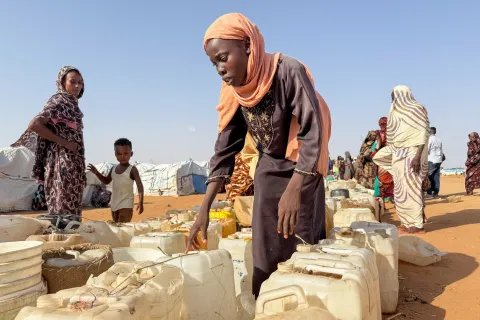
“Instead of going to school, I spend time here collecting water for my family,” says Mihrab, 14.
“I couldn't learn a single letter,” Mustafa adds.
With each passing day, the learning crisis deepens while the country also risks raising a generation without the skills needed to rebuild.
In some areas, schools are gradually reopening, but an estimated 8 million school-aged children still remain out of school.
Without education, children lose more than learning – they lose protection, routine, hope, and the skills needed to rebuild their country.

With support comes hope
Despite immense operational and access challenges, UNICEF and partners are reaching conflict-affected children and families wherever possible by:
- Restoring water supply to provide safe drinking water and prevent disease.
- Expanding safe water access to displaced and returnee families.
- Reopening schools and providing learning materials so children can safely return to school.
- Restoring health and nutrition services to save lives.
- Supporting mental health and psychosocial services for children in distress.
But the needs are far greater than the response.
Without sustained access, funding and protection, millions of children will remain beyond reach.

Amidst the turmoil, children in Sudan continue to dream.
Mohamed’s hope is in education.
“I know that education can change my life and help me become a better person.”
While Mustafa, who was separated from his family, longs for a warm hug from his lost family.
“When I see them again, I will be very happy. I will hold them very tightly and cry with them.
After three years of war, Sudan’s children cannot wait any longer.
They need protection.
They need access to life-saving services.
They need the world to act – now.