“Nothing for us, without us”
Communities leading change amidst the crisis in Sudan

Nine-month-old Osman waits quietly in his mother Amal’s arms as a mobile health clinic arrives in Al Jadab village. For families here, the nearest health facility is more than four kilometres away — a distance that can mean the difference between life and death for a malnourished child.
Osman is severely malnourished. After careful screening, health workers provide him with ready-to-use therapeutic food and essential medicines. Around them, dozens of parents wait patiently as children are vaccinated, screened and treated — many for the first time in months.
For Amal and many others, this weekly mobile clinic is more than a service. It is a lifeline.
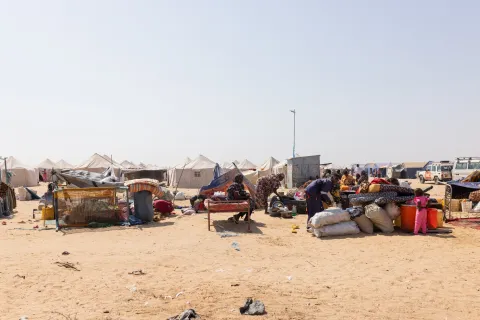
After more than two years of war in Sudan, essential services such as health, education, nutrition and water have been severely disrupted. Schools and health facilities have been damaged or destroyed, while repeated displacement has pushed already fragile systems to the brink. In River Nile State, a rapid influx of displaced families has placed enormous pressure on limited services.
Yet amid the crisis, communities are stepping forward — not as passive recipients of aid, but as leaders of their own recovery.

Communities at the centre of change
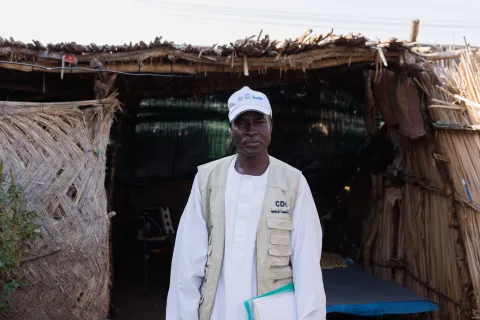
Through THABAT – Enhancing Community Resilience Project, UNICEF is working with partners to support community development committees (CDCs) to lead the restoration of essential services. The approach is simple but powerful: involve communities directly in identifying their priorities, designing solutions and ensuring that support reaches those most in need — equitably and transparently.
“Since the project was introduced, it has focused on local communities,” says Mariam, a CDC member from Al Jubarab. “We focus on issues affecting children and women.”
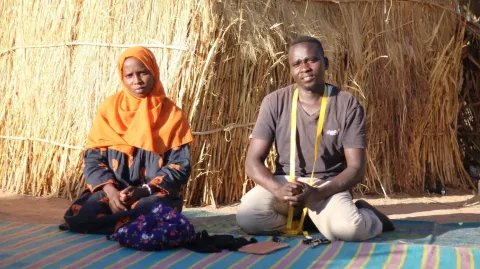
Representatives from CDCs across Alhsaya, Aljubarab, Alhudaibah, Almosyub and Almogram meet regularly to share experiences and learn from one another. Despite facing different challenges, they collaborate on solutions — building trust, strengthening accountability and fostering local ownership.

“This is the first time we are consulted on issues that concern us,” says Hassan, a CDC member from Alhudaibah.
“Bringing us together was the first sign of success.”
Where communities once competed for scarce resources, they are now working together for sustainable, resilient solutions.


Clean water for children in Alhudaibah
For families in Alhudaibah, water was once a daily struggle — and a serious health risk.
“Water was scarce,” recalls Nadia, a mother. “Sometimes we drank murky or salty water. We even drank water from air conditioners.”
Many families relied directly on water from the Nile, exposing children to waterborne diseases such as cholera. For displaced families like Salma’s, the situation was even more difficult.
“We used to travel very far to find water,” she says.
Today, that has changed. With the installation of a new solar-powered water system, more than 1,000 families, along with schools and health facilities, now have access to clean and safe water.
“A water problem in one community is a problem for us all,” says Hassan, a CDC member. “As long as we have water, we will have education, health and protection.”
Women leading
Inclusivity is at the heart of the CDC approach. Women, youth, displaced people and persons with disabilities are actively involved — and increasingly taking on leadership roles.
In Al Jubarab, CDCs identified the safety of women and girls as a priority. Through a newly established centre, women and girls now have access to a safe space offering specialized support services.
“Our slogan is: every woman is an essential part of society,” Mariam says with pride.
Through ongoing training and orientation, CDC members are gaining confidence and leadership skills — ensuring that community-driven solutions reflect the needs of the most vulnerable.


Back to school, back to hope in Almogram
For children, the impact of community leadership is perhaps most visible in schools.
In Almogram, the sudden increase in displaced families left many schools overcrowded and damaged. More children were out of school, and safe learning spaces were urgently needed.
Through THABAT, UNICEF supported the rehabilitation of classrooms, the creation of safe and inclusive learning spaces, and the provision of learning materials and psychosocial support activities.
At Almogram Primary School for Boys, 13-year-old Azus, who fled violence in Al Fasher, is learning again.
“I want to learn to achieve my dreams,” says Azus, who hopes to become an architect one day.
Next door, 13-year-old Shaza is back in class for the first time since her family fled Khartoum in 2023.
“Being here reminded me of my old school and friends,” she says. She dreams of becoming an engineer — one day helping rebuild the home her family lost to the war.
For children like Azus and Shaza, school is more than a place to learn. It is a space to heal, reconnect and imagine a future beyond conflict.

Health services reaching the hardest to reach
In Al Jubarab, CDC member Omar Mansour leads on health issues. Together with community volunteers, they mapped urgent needs — with child malnutrition ranking high.
“We mobilize families to ensure they benefit from the services,” Omar explains. “We also visit health facilities to ensure services are running and supplies are available.”
At Al Jubarab Health Centre, long queues are a sign of progress. Parents are bringing children for nutrition screening, immunization and treatment — services that were once out of reach.
For remote villages like Al Jadab, mobile clinics now bridge the gap. Each visit brings vaccinations, malnutrition treatment and essential medicines closer to children who need them most.
“These clinics help us reach more children with life-saving services,” Omar says.
Communities as agents of change
Through the THABAT project, UNICEF and partners are restoring essential health services, strengthening systems, rehabilitating schools, expanding access to safe water and supporting protection services for women and girls.
As the project expands across Kassala, Northern and River Nile states, with support from the Sudan Transition and Recovery Support (STARS) Trust Fund, 24 community development committees are demonstrating what is possible when communities are placed at the centre of the response.
In the midst of crisis, they are proving a simple truth: when communities lead, children have a better chance not just to survive — but to thrive.