Clean water, renewed hope
How a new water system is transforming lives of families in New Halfa, Kassala State
Zainab has lived her entire life in rural Al-Majadhib in Kassala. For decades, her community enjoyed abundant water and harvested plentiful crops. Water was always flowing.
“Water was brought to us and the flow was constant,” she recalls. “The water flow was good throughout the year.”
But in recent years, Kassala- like in many parts of the country- has faced extreme weather and rising temperatures. Slowly, the changes became impossible to ignore. Boreholes dried up or broke from over-pumping, leaving hundreds of families in Al-Majadhib without a safe water source.
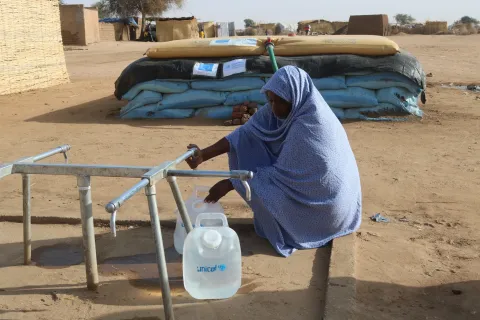
With no other option, families began to rely on an open canal- shared with animals and filled with insects. Collecting water there put children at daily risk of disease and harm.
In Zainab’s household, the burden of collecting water fell on the children.
Her 11-year-old son, Al-Tahir, recalls those difficult days well.
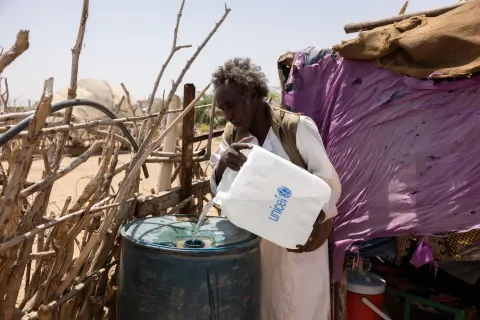
Together with his siblings, he walked to the canal three times a day, carrying heavy containers back home.
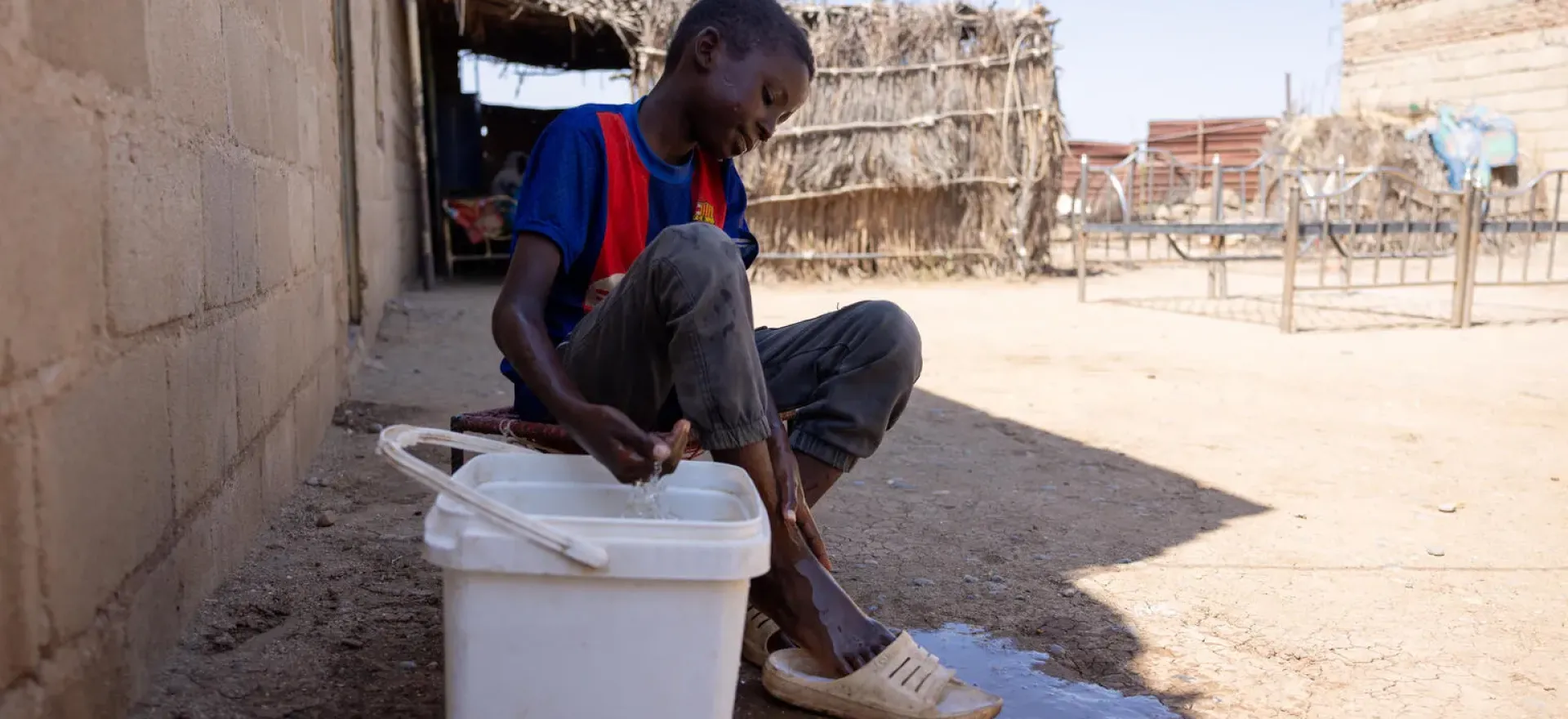
UNICEF 2025/Dawod
“It was very tiring,” he says quietly.
“There were lots of insects in the water that clung to us, and there were dogs on the street.”
Even after all that effort, the water was never enough. Zainab had to prioritize cooking and washing dishes, while saving whatever she could for bathing and handwashing. The long hours spent searching for water meant her children arrived late to school or missed lessons entirely.

Water is restored
Zainab still remembers the moment the new water system in Al-Majadhib was switched on.
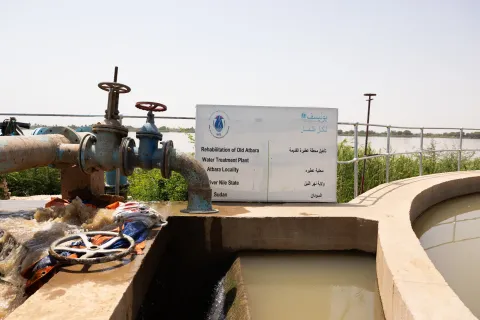
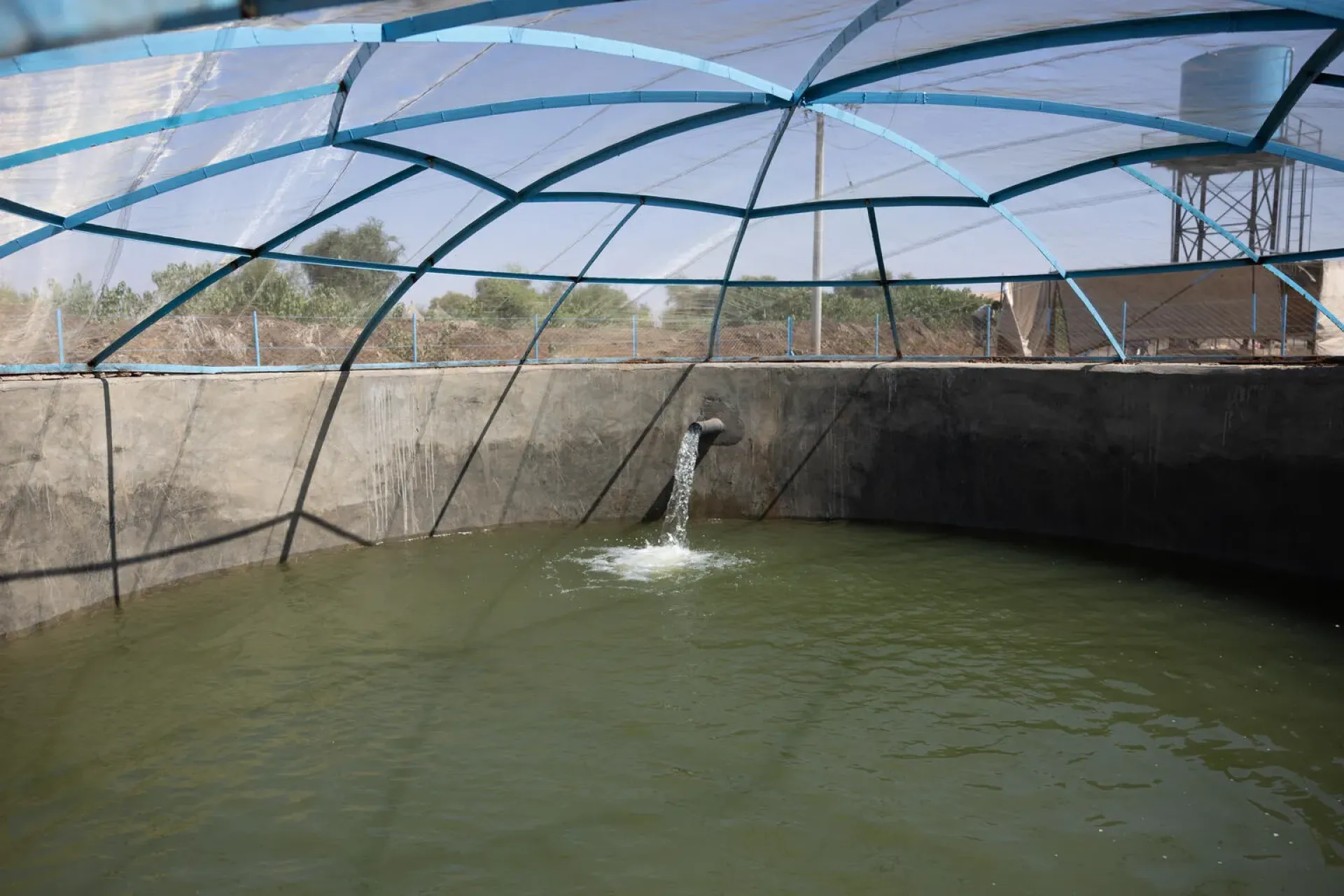
For two years, families watched engineers lay pipes, build elevated tanks, install solar panels, and dig underground reservoirs. Then, one day, clean water finally reached their homes.
“My daughter came home from school, and I told her the water was flowing from the taps,” Zainab says.
“She laughed so hard before falling on her bed with excitement.”
News spread quickly. Clean water—once a distant dream—was suddenly available with just a turn of the tap.
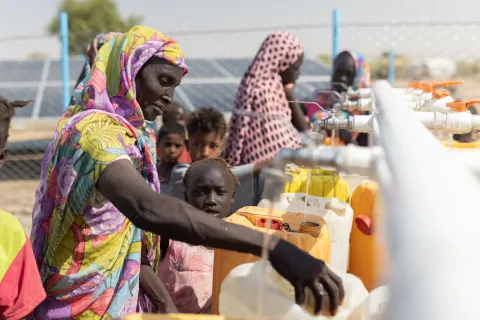
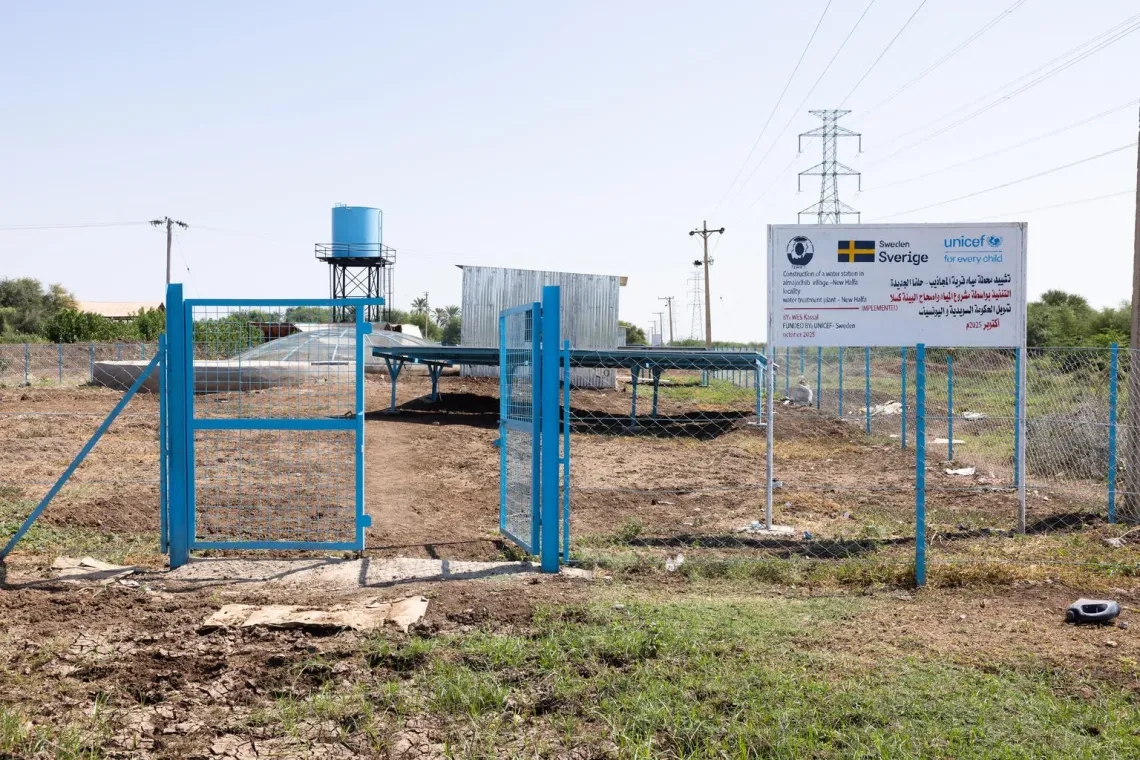
With support from the Government of Sweden, UNICEF built two high‑yield, solar‑powered water systems in the villages of Almagazeeb and Algadisya, bringing safe water to more than 6,000 people.
Powered entirely by solar energy, the systems provide a steady supply of water day and night. Multiple outlets—community water points, water‑truck filling stations, and animal troughs—ensure that families, farmers, and livestock can all benefit.

Dreaming again
For Zainab’s daughter, clean water meant more time to learn.
“Now that the water is here, we can save time for studying and resting,” she said.
For Al-Tahir, it means childhood reclaimed.
“I now have time to play football,” he said while washing his feet after a great game with friends.
With water close to home, Zainab can focus on her children’s education and well‑being—without fear that water scarcity will interrupt their schooling again.
She has even begun transforming part of her compound into a small kitchen garden to supplement the family’s meals.
“We will grow vegetables and fruits,” she says with pride.
Water, a source of livelihoods
Across the country, UNICEF is constructing solar-powered, climate‑resilient water systems to expand access to clean and safe water—one community at a time, including communities hosting families displaced by conflict.
Bringing water closer to home protects children’s health, restores families’ dignity, strengthens livelihoods, and frees children to return to school and dream again.