Sustaining life amidst war
How UNICEF’s investment in Atbara’s water system stopped cholera and restored dignity to families in Sudan

“Water is life” — a phrase that only tells half the story in Atbara locality, River Nile State, Sudan. Situated at the junction of two rivers, Atbara should never have faced water scarcity. With its water treatment plants, the community should have been safe from waterborne diseases. Yet, severe shortages and a devastating cholera outbreak revealed the deeper truth: it’s not just about water — it’s about safe water.
“We always check water quality at the household level to ensure it’s safe for consumption,” says Adil Khidr Ahmed, Director General of the River Nile State Water Corporation.
He explains that the state typically uses chlorine and other chemicals to disinfect water before distribution. But when conflict erupted, everything changed.


WASH in conflict
When civil war broke out in 2023, Atbara became a refuge for tens of thousands fleeing violence. The city’s population swelled from 1.5 million to nearly 5 million, putting immense strain on social services — especially water and sanitation systems.
The consequences were dire. Women and children, often responsible for fetching water, faced heightened risks of gender-based and other forms of violence. Limited access to clean water led to unsafe water use, poor hygiene, and outbreaks of preventable diseases. River Nile State alone recorded more than 8,000 cholera cases a month, most in Atbara locality.
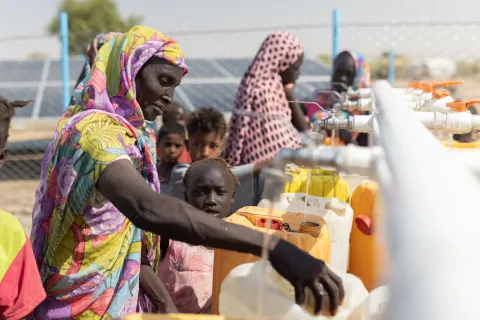
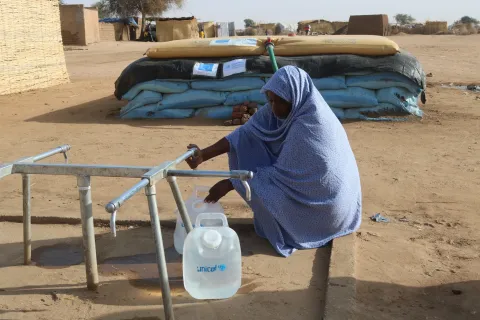
“Getting water was a daily struggle,” recalls Ikhlas, a displaced mother. “People fetched it directly from the river. The water wasn’t clean, but we had no choice.”
When attacks on power infrastructure triggered widespread blackouts, water treatment plants could no longer operate. UNICEF immediately stepped in — delivering 104 barrels of fuel every day to keep the systems running for two weeks and ensure safe water continued flowing.

Restoring safe water access
To provide a lasting solution, UNICEF rehabilitated one of Atbara’s two water treatment plants, which had been operating at just 40 per cent capacity due to conflict damage.
Following repairs, the plant’s output increased to 8,500 cubic metres per day (85 per cent capacity) — dramatically improving access to safe water for households, schools, and health facilities.
Emergency interventions also included:
- Construction of solar-powered boreholes.
- Mass chlorination of water sources.
- Installation of water storage tanks.
- Expansion and upgrading of the water network.
The results have been transformative. According to the River Nile State Water Corporation, no cholera cases have been reported in the state since these interventions began.
During a visit to the refurbished plant, Ted Chaiban, UNICEF Deputy Executive Director, reflected on the progress:
“Two years ago, water was pumped straight from the river into homes without purification. Today, every household has access to safe, treated water — 24 hours a day.”
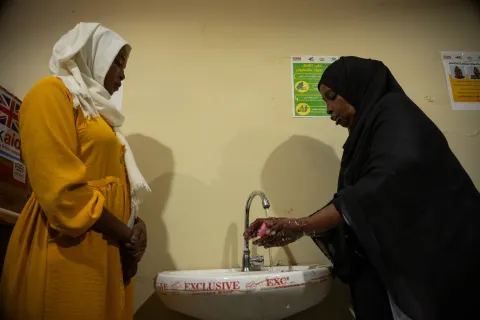
UNICEF has also trained frontline Water, Sanitation and Hygiene (WASH) workers — known as WASH Extenders — to promote hygiene awareness, monitor water quality, and coordinate community outreach.


Financing water in emergencies
The refurbishment of Atbara’s water treatment plant was made possible through UNICEF Regular Resources via Global Humanitarian Thematic Funding (GHTF).
This flexible funding enables UNICEF to act quickly in crises — delivering life-saving services when and where they are needed most.
Even as fighting continues, UNICEF remains on the ground, ensuring displaced families and host communities have access to one essential human right - safe, life-sustaining water.