When the health system collapses, she stands
Why supporting Sudan’s frontline health workers is the difference between life and death

The gates of Old Khatmiya Primary Health Centre open as early as 7:00 am., but the health workers arrive even earlier – ensuring lifesaving services are ready for those in need, even amid the conflict.
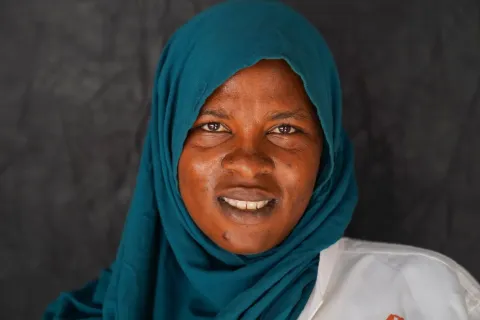
Among them is Salha, a midwife whose passion for protecting mothers and their newborns has driven her work for over two decades. Every morning, she takes two public buses to the facility, arriving early to prepare her workstation- stocking equipment, vitamins, medicines, and registers before patients begin to arrive.
Her busiest days are Sunday to Wednesdays, dedicated to antenatal care at the health centre, nestled at the foot of the beautiful Kassala mountains. Here, families from Kassala and surrounding communities access integrated health services — free of charge.
Two years ago, however, the calm rhythm of Old Khatmiya was shattered. It became one of the few facilities serving thousands of displaced families, putting intense pressure on scarce medical supplies and overwhelming the small number of health workers.

UNICEF 2025/Nakibuuka
Frontline health workers are the backbone of the country’s health system.
A fragile health system
Across Sudan, essential systems- including health- are on the brink of collapse as the war continues. More than 70 per cent of hospitals in conflict-affected areas are non-operational. In the relatively safer areas like Kassala, facilities are overwhelmed by displacement and are run with minimal resources, with staff working without pay.
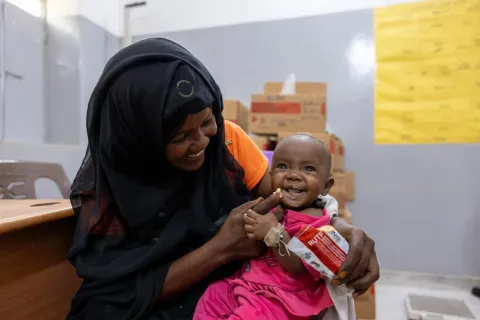
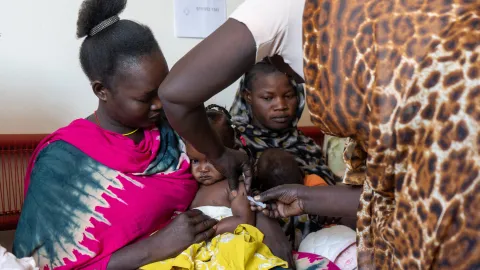
Yet, even during these conditions, frontline health workers ensure continuity of care- vaccinating children, helping pregnant women give birth safely, and supporting mothers to raise healthy children.
“Serving my community is a calling. I am here to save lives,” she says.
Innovating to reach vulnerable pregnant women
Before the conflict, Salha saw around 20 patients a day. But when the displacement swelled the population, her caseload tripled.
“Pregnant mothers were in dire need, and even a slight delay could mean losing a mother or a child,” Salha shares.
Many women could not reach the facility, sheltering in schools, unfinished buildings, and makeshift camps. Salha and her colleagues adapted, initiating outreach services to reach women wherever they were.
Some days, they saw more than 100 women with only the most basic supplies, like gloves.
“It was heartbreaking to see mothers without enough to cover their newborns,” she says.
In one case, a desperate phone call led Salha to deliver a baby safely in an IDP shelter. Her dedication made her a household name — her phone number passed from family to family.

UNICEF steps in
After three years of conflict, Sudan’s health sector remains extremely fragile. Retaining health workers is critical to sustaining essential services — from vaccinations to maternal care to malnutrition treatment.
With funding from the World Bank through the Sudan Transition and Recovery Support (STARS) Trust Fund, UNICEF is providing support to midwives, nurses, and community health workers, ensuring every mother and child has a chance to survive and thrive.
The support ensures Salha can cover transportation, food, and household needs, as well as cater to relatives who sought refuge in her home.
“Seeing a mother and baby safe after delivery is enough for me to come back the next day,” she says.
Frontline health workers are the backbone of the country’s health system. Without them, essential services—like maternal care, disease prevention, trauma response, and mental health support—simply cannot function, leaving millions without access to services children and families desperately need. Through the THABAT programme, UNICEF is investing in systems that protect the workforce, retain talent, build capacities and prevent brain drain.
Over 970 frontline health workers like Salha have been reached in 3 states and continue remain on the frontline, delivering critical services and saving lives. In addition, hundreds of health facilities, including Old Khatmiya, have also received essential medicines and equipment to help the health workers continue their lifesaving work.