Strengthening healthcare services in remote areas
How UNICEF and communities are restoring essential health services for children and mothers affected by displacement

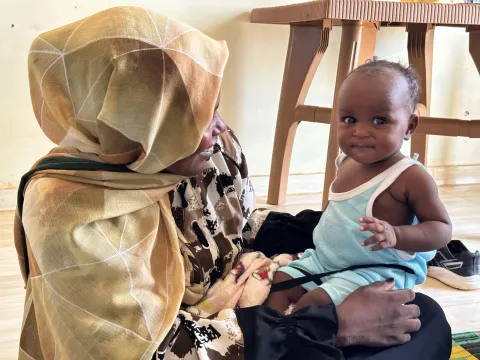
When Hadija noticed her 7-months old daughter, Zahara, growing thinner and weaker, she knew she had to act fast.
She had heard from community volunteers that services at Al Jubarab health facility were free — and that medicines were available. At dawn the next morning, Hadija began the journey, joining other mothers and families walking long distances in search of care.
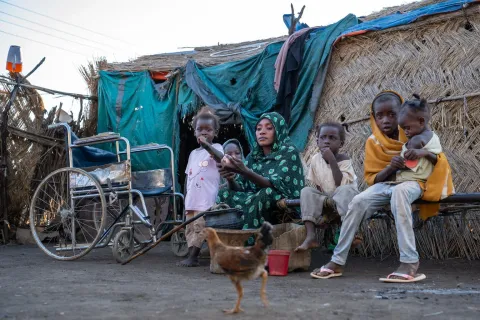
Since the war triggered mass displacement into River Nile State, the patient load at Al Jubarab health facility has sharply increased. Children arrive daily with chest infections, diarrhoea, malaria and malnutrition — conditions worsened by food shortages and limited access to basic services.
“Malnutrition rates are very high, especially among displaced families,” explains Dr. Sumaya. “Many children come to us already in a fragile condition.”


Curbing malnutrition
Inside the nutrition clinic, the pace is relentless.
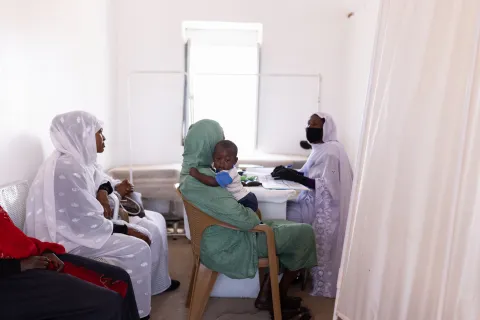
Nusaiba, a nutritionist, and her team screen and treat dozens of children every day — sometimes up to 50. Outside the small room, queues of mothers stretch across the waiting benches.
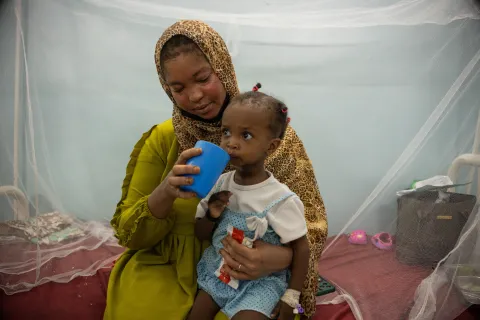
Hadija waits her turn, cradling Zahara and carrying a small metal cup she uses to give her sips of water.
“I came because my child is thin,” she says quietly.
Zahara is weighed and measured. Her weight is far below what is recommended for her age, and her mid-upper arm circumference falls in the red zone — a clear sign of acute malnutrition.
She is immediately enrolled in the nutrition programme and given ready-to-use therapeutic food (RUTF) to begin treatment.
Hadija watches as Zahara cautiously nibbles the red sachet. Each small bite is a step toward recovery.
Before leaving, Nusaiba hands Hadija enough RUTF sachets to last two weeks, until their next follow-up visit.
Care for mothers, care for children
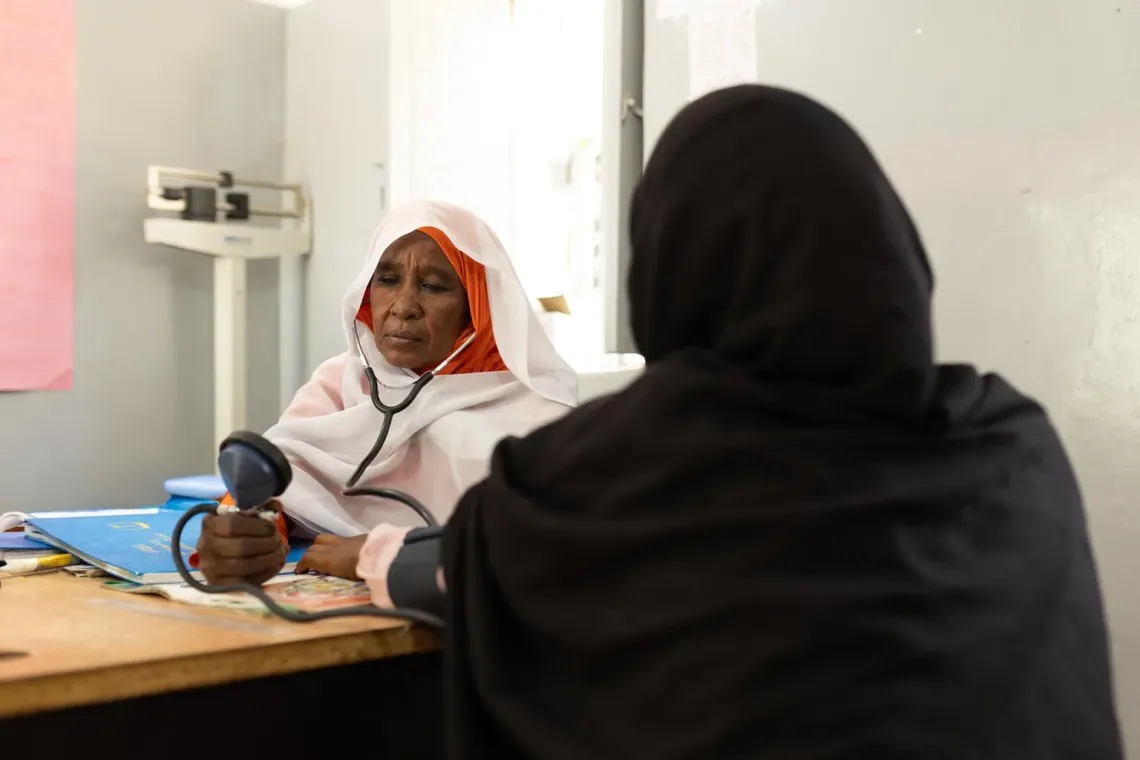
Beyond nutrition services, Al Jubarab health facility provides essential care for pregnant women, mothers and children.
In Atbara, UNICEF — through the THABAT: Enhancing Community Resilience Project — is restoring health services in facilities serving large numbers of displaced families and host communities. These services include immunization, nutrition care, antenatal and postnatal care, medical consultations and health promotion.
The support also includes essential medicines and medical equipment, helping health workers continue delivering quality care despite growing needs.
Afaf, a midwife, spends her days attending to women waiting for antenatal and postnatal services.
“I see many mothers and pregnant women with anaemia,” she says. “But when we have folic acid and vitamins in stock, they leave with enough until their next visit.”
She pauses, then adds: “Healthy pregnancies lead to healthy babies. That’s why this work matters.”

Communities leading the response
A defining feature of the THABAT project is its focus on community leadership.
Local volunteers and Community Development Committees (CDCs) play a critical role in identifying needs, mobilizing families and supporting outreach services.
Omar, a CDC member in Al Jubarab, is accompanying a mobile clinic to Al Jadab village, located four kilometres away — a community with no permanent health facility.
“These clinics help us reach more children with treatment and immunizations,” he says.
Strengthening health systems, saving lives
Across Atbara, health facilities supported under the THABAT project are delivering an integrated minimum package of services at primary health care and community levels — through fixed facilities, mobile clinics, outreach activities and campaigns.
Implemented with support from the Sudan Transition and Recovery Support (STARS) Trust Fund, the project is also strengthening health systems by training frontline health workers like Afaf and Nusaiba and equipping facilities to respond to emergencies.
For children like Zahara, this support can mean the difference between life and death — and a chance to grow, heal and thrive.