How a mother-to-mother support group in Sudan’s East is leading the way for improved quality of life
Summary: Empowering women and improving quality of life, one session and one vegetable at a time

- English
- العربية
Awadia Osman is a young mother living in Al-Rai neighborhood in New Halfa, a locality in Kassala state. Every month, she holds a meeting in her house for the mother-to-mother support group she supervises. The groups have between 10-15 members, Awadia’s group has 12 women and all of them live near each other.
There are 314 mother-to-mother support group in the eleven localities in Kassala state. The first group began in 2015 and UNICEF continues to initiate and train new groups to serve neighborhoods and communities.
In 2017, Awadia and others began attending workshops held by UNICEF on infant and young child care issues and issues such as breastfeeding, hygiene practices, nutrition, and other critical areas before starting their group. The group members are expected to educate and follow-up on 10 community members by sharing the knowledge they receive and communicate with them in the form of messages. Awadia’s group is also one of the groups that received training on diet diversity to help them start household gardens to improve access to nutritious and healthy food items within the group.
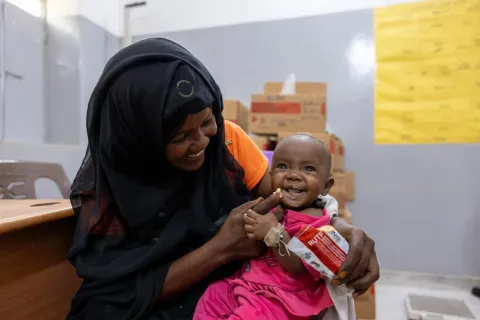
Maram Ahmed, a member said that “I benefited from the messages on breastfeeding and nutrition for children and I now work with pregnant women to take better care of their children.”
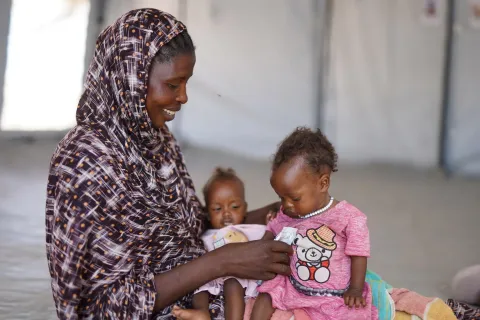
Eiman Mohamed, another member said that “I learned here how introducing water in the first six months is very harmful to children and this was a common practice in our community, we now talk to our community about the importance of breastfeeding and ruling out water in the first months to improve the child’s immunity.”
Tamador Abdel-Hassan, another member, commented that they are seeing less cases of diarrhea after they stopped giving infants water from birth.
Alawia Malik from the New Halfa locality and one of UNICEF’s partners noted that the messages shared on the importance of breastfeeding led to change in habits.
“We used to see the baby bottle as a central component of the baby bag that was prepared before birth, right now, we rarely see it which shows that women understand the importance of breastfeeding for infants,” said Alawia who supervises the group.
If any of the women in the community face problems with breastfeeding, they contact the group members and they show them exercises and food items to stimulate milk production.
Female Genital Mutilation (FGM/C) and child marriage are decreasing in the small community of New Halfa, but the women are all committed to protecting children from these harmful practices.
“We feel that there is more awareness, and that people are more receptive to awareness on FGM/C, there are still a few cases that we monitor,” said Najwa Mohamed, a member of the group.
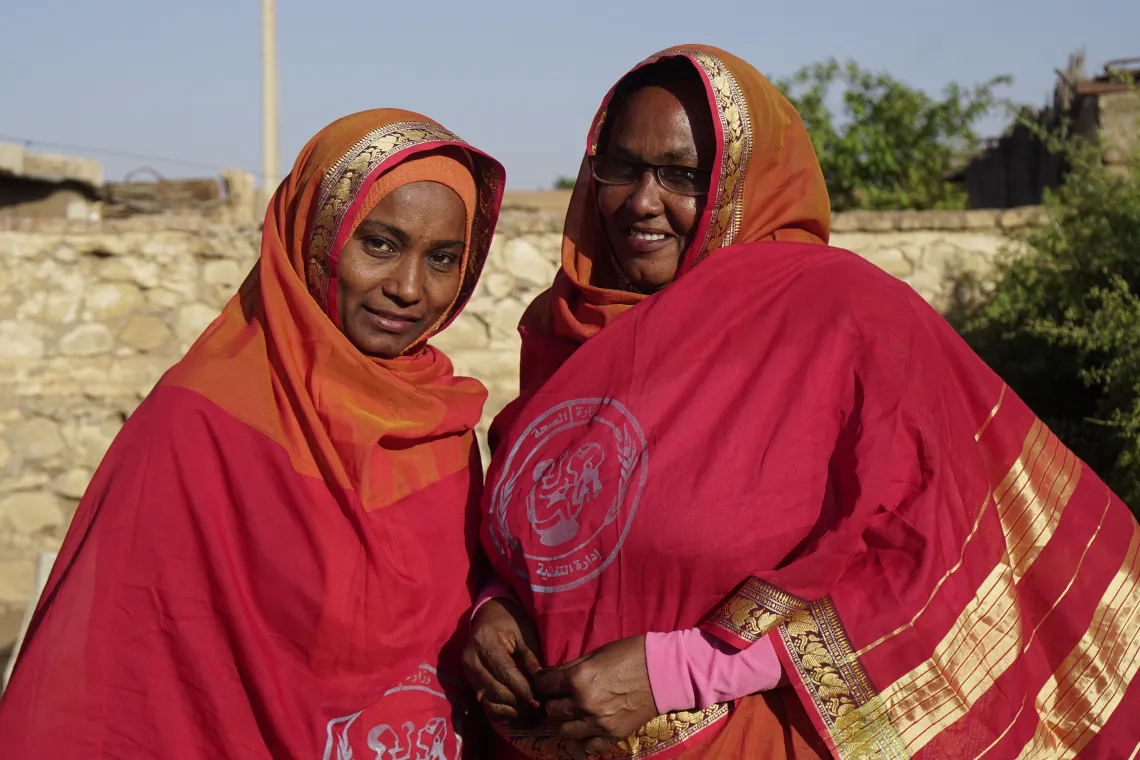
Child marriage is quite high in Kassala state with recent statistics showing 30.8 of women married at or before 15 years of age. In New Halfa, the group said that the reasons behind it are sometimes unexpected.
“It is not always a cultural issue, sometimes it is about the lifestyle or the way the community lives that drives this issue, in some communities here, the villagers live in houses with no gates or fences and this is the norm, but the families are worried about the security of their daughters, they view early marriage as a form of protection,” said Enas Farouk, a group member.
The group have become more than a mother-to-mother support group, they are in fact a family. They were brought together because they were gaining critical knowledge that would help them and their families and communities live a healthier and safer life.
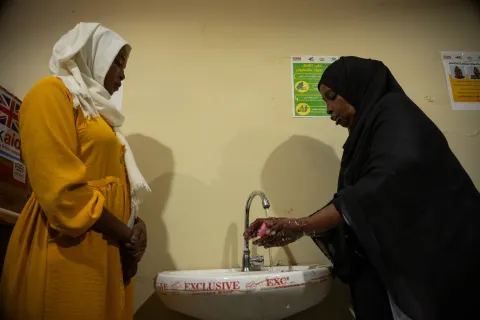
Over the past few months, they have found ways to communicate about COVID-19.
“We practiced social distancing in meetings, we wore masks and covered our faces and we shared messages on best hygiene practices,” said Nada Abdullah.

The relationship now includes a household garden that benefits the entire group. Awadia, the supervisor of the group, and another member are growing vegetables inside their yards. The vegetables depend on the season, but in November 2021, they were growing arugula, cucumber, purslane and even pumpkin.
The group members follow-up and take care of the vegetation and when the harvesting is available, they share the produce among themselves. The garden is not an investment, but an attempt to improve the quality of their life.
“Because of the economic situation, many families can’t afford vegetables, so this garden is a great approach to improving the food habits of the community by giving access to a basket full of vegetables,” said Alawia Malik from the New Halfa locality, a UNICEF partner.
Enas Farouk, another group member, also started growing vegetables in her yard, the other members showed interest, but complained that they don’t have the needed space.
A healthy diet is critical in a state such as Kassala where UNICEF estimates that 43.8 percent of children suffer from stunting because of chronic malnutrition. UNICEF and partners hope to bridge this gap using several innovative tools such as training women to lead and initiate household gardens in their communities.
UNICEF estimates that the eight Key Family Care Practices discussed during the support groups have reached 800,000 community members all over Sudan. In Kassala, 550 mothers were trained on preparing diversified nutritious meals and grow food to increase food diversity, of which 463 mothers started harvesting their home-grown crops.
This life-changing effort is funded by the Government of Sweden, USAID’s Bureau for Humanitarian Assistance.