“We fled the fighting with nothing but hope.”
Tayba escaped relentless shelling in Al Fasher with her newborn twins—finding her first support at a UNICEF nutrition centre
- English
- العربية
For decades, families in Al Fasher have lived through recurring waves of conflict and displacement. For many, the latest violence has been among the most devastating.
Ten years ago, Tayba was displaced to Al Fasher when she was very young. Over time, it became home.
“Life was okay, and our families were living well,” she recalls.
She remembers going to school, visiting functioning hospitals, and having basic services available.
But everything changed when the shelling started. Days of fighting turned into months.
“I cannot describe the suffering that happened in Al Fasher,” she says quietly. “There were battles, clashes, and shelling every day.”
Under the long siege, families faced critical shortages of food, clean water, medicines and health care. Hospitals were damaged, health workers were killed, and essential supplies ran out.

UNICEF 2025/Jamal
“I cannot describe the suffering that happened in Al Fasher." “There were battles, clashes, and shelling every day.”
While pregnant with twins, Tayba attempted her first antenatal visit. The doctor who examined her was killed days later when a shell struck the hospital. She had no access to medical care for the remainder of her pregnancy—no check-ups, vitamins, or vaccinations.
She later delivered her babies in the trenches, far from any health facility, as fighting intensified around them. Under stress and hunger, her breastmilk began to dry up.
“I spent forty days in a trench with the babies,” she recalls.
With houses around them burning and the trenches no longer safe, Tayba knew she had to move.
With her seven children, she set off on foot—no blankets, no food, no shelter—supported only by the kindness of people they met along the way.
Carrying the newborn twins in turns, they walked for days before reaching Tawila. By then, all were exhausted, and the twins were severely malnourished.
“We fled the fire with nothing but hope.”

Starting anew with nothing
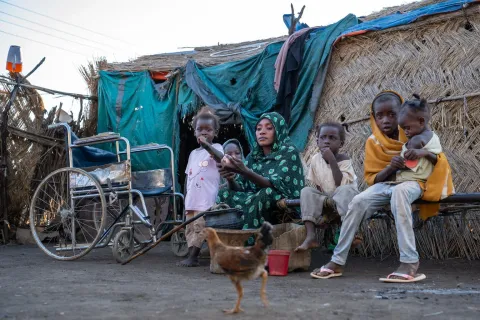
Now in safety, Tayba is rebuilding her life from scratch. In a large settlement hosting displaced families, she has begun putting up a shelter from cloth and sticks shared by neighbours who arrived earlier.
Nights are cold, and the twins were quickly getting weaker.
“By the time we left Al Fasher, there was nothing to eat,” she says. “The babies were only nursing, but I didn’t have enough milk.”


Hope at the nutrition centre
In the settlement, Tayba heard about a nearby nutrition centre supported by UNICEF and partners. She rushed there with the twins.
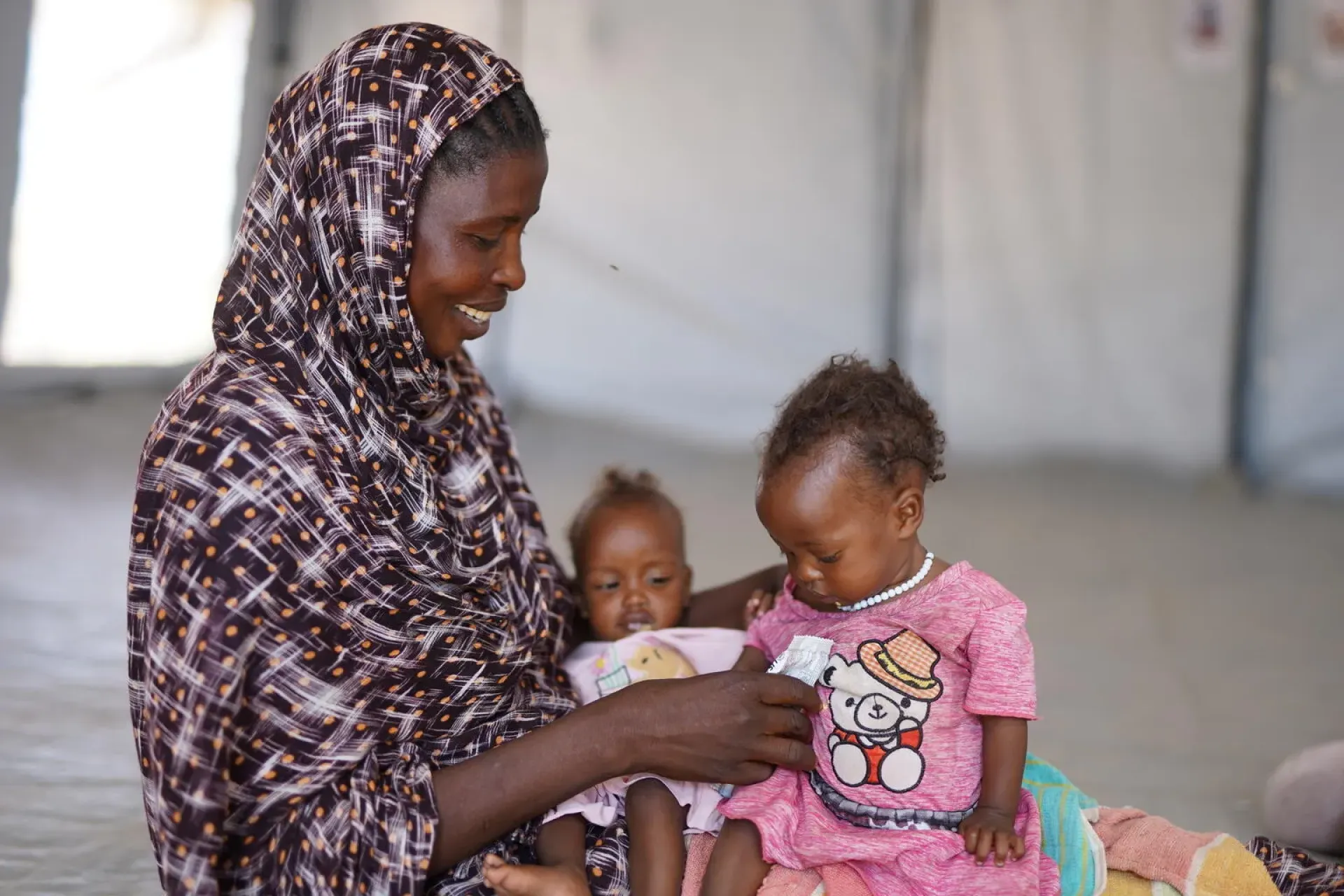
Under a grass-thatched temporary shelter, mothers sit holding their babies—some as weak as hers—while nutritionists screen children, record their details and provide lifesaving treatment.
“Their condition is very bad, and they are weak,” Tayba told the team.
The twins were immediately enrolled for emergency treatment and received ready-to-use therapeutic food.
“They have given them the biscuits [RUTF], and they are eating well,” she says with a relieved smile.
In Tawila, hundreds of children are arriving weak and malnourished. During a recent integrated house-to-house campaign led by UNICEF and partners, more than 10,000 children under five were screened for malnutrition, received vitamin A supplements and deworming tablets. Those in need were referred for immediate treatment and pregnant and breastfeeding women received iron tablets and essential vitamins.
But the family needs more
Tayba and her children are now safe—but still lack the basics.
No home. No tent. Almost no food.
“We own nothing,” she says softly. “No money, no homes… nothing at all.”
Despite the hardship and uncertainty, Tayba holds onto her children with unshakeable strength. Their survival—and hope—carry them forward.
With the support of the European Union Humanitarian Aid (ECHO), The United Kingdom Government and the Government of the United States, UNICEF together with partners in Tawila, is scaling up efforts to prevent, identify early, and treat acute malnutrition.