Clean water, better lives
A UNICEF rehabilitated system brings water to households in rural Alsabaat, Kassala State

Fatima painfully recalls life without water.
“We bathed our children once a week, drank and cooked with dirty water, our children were ill, our barrels empty and dry, and our children in search of water instead of attending school,” she summed up.
12-year-old Shaimaa echoed “We arrived late to school and got punished. At home, we lacked water for washing, cleaning dishes and the house was dirty.”
For over two decades, this was the life of Fatima, Shaimaa and over 7,000 people (60 per cent children) in the remote community of Alsabaat and neighbouring villages. Until recently, these communities close to the River Atbara in Kassala state relied on a nearby canal as their only source of water.
The canal that stretches over 80 kilometres from Khasmelgirba Dam, containing coloured unsafe water mixed with algae, clearly unhealthy for consumption. Driving past it, people use it to wash clothes and bathe, while animals wander and drink in it, underscoring the risks it posed for the people.
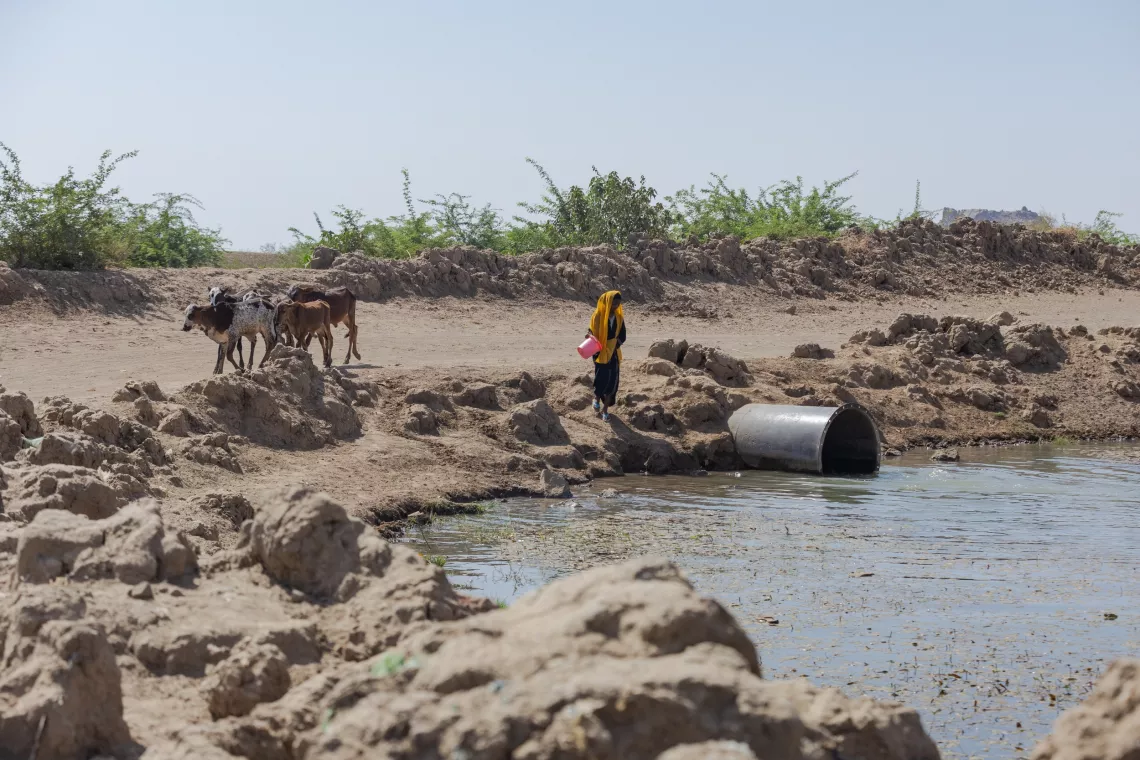

“Collecting water those days began with clearing the algae, and in the rainy season, we waited for the mud to settle before using it,” recalled some of the elders. Many remember the numerous children who drowned as they tried to get water from the deep canal.
“It was the only water source in the village from which both humans and animals drank,” Ibrahim, a community leader, added. “Many times, we found dead animals in the water stream.”
For this community, there was no alternative water source until UNICEF, with support from the global thematic fund, rehabilitated a water treatment plant providing sufficient clean and safe water.

The new solarized treatment plant produces 15 cubic meters per hour for an average of 10 working hours a day - pumping water from the canal, channeling it through slow sand filters, then into a large ground tank and into an elevated tank where it is then pumped to the household level. The latter is a community initiative that has ensured the water is as close to the homes as possible.
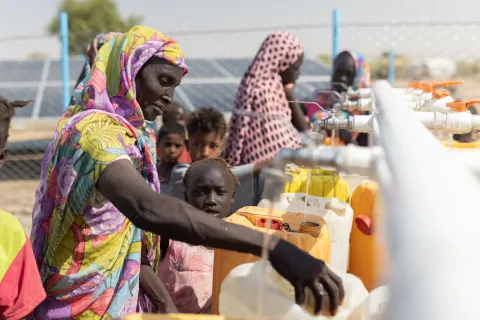
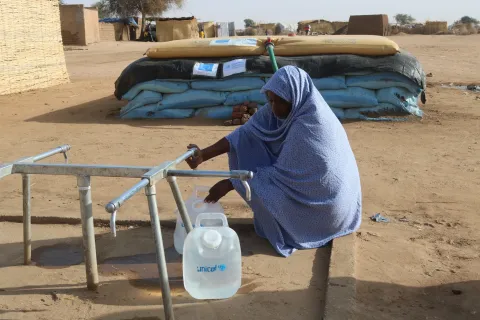
Today, the water point is right behind Fatima’s house, something she is delighted about.
“Clean water means health and wellness to me,” she shared.
Clean water close to homes and schools also means children can spend time playing and learning in dignified environments.
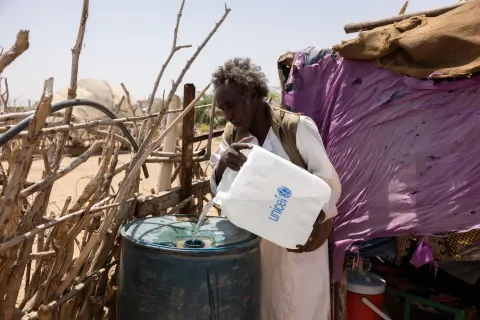
For 12-year-old Shaimaa, clean water is life. The eldest in her family, Shaimaa has shouldered the burden of searching for and collecting water for her family all her life. A few metres from her house, water is flowing. In her family kitchen, the large containers are filled with water, enough to drink and cook. And it is clean.


In another corner, a group of children collects water and wets their foreheads to cool off under the scorching sun.
“Our lives have greatly improved,” Shaimaa said.” “Life has become better.”
Shaimaa and her peers continue to enjoy the benefits of lifting the burden of collecting water.
“In the past we could not play.”
Fatima can’t hide her excitement. “We have never drunk directly from the tap, showered, or filled our barrels this way before. When our children return home, all the barrels are filled with water for them to bathe whenever they want. They now have time to study and play. Before, they didn't have time,” she continued.
With extreme weather events such as droughts and heat waves so common in Sudan, many communities across the locality are water stressed. With limited water at household level, hygiene practices like handwashing are also compromised, exposing families to hygiene-related diseases. UNICEF and partners are expanding clean water supply through similar projects in five additional communities benefitting approximately 15,000 people.
In addition to providing clean water sources, UNICEF also ensures the communities are trained on the management of the facilities and continuous water quality checks and chlorination to prevent contamination.
UNICEF’s water and sanitation support in Alsabaat is part of the Mother and Child Cash Transfer plus (MCCT+) interventions that include unconditional cash grants for pregnant women and lactating mothers as well as linkages to critical health services including safe water and proper sanitation practices for optimal growth and development of children during their first 1,000 days.