From burden to blessing
How a water facility transformed Nashwa’s life

For 14-year-old Nashwa from Alsofara, remote village in West Galabat locality, Gedaref state, fetching water used to be grueling daily task. What once took three exhausting hours now takes just 5-minutes, thanks to a nearby safe and clean water facility.
On a sunny afternoon, Nashwa helps prepare the day’s meal while her sisters wash dishes in their clean and tidy homestead. Water is essential for this large family daily chores, and with scorching temperatures, it is also vital to keep everyone, especially the children, hydrated. A lack of clean water would compromise their health, hygiene, and sanitation practices around the house.
In Nashwa’s home, as in many others around Sudan, the responsibility of collecting water falls on girls. For Nashwa, this task came with enormous physical and emotional strain—long journeys under the hot sun, carrying heavy containers, and worrying about the dangers along the way. The option of carrying smaller containers meant more trips and lost time.

“The hardest part was carrying the heavy buckets of water under the hot sun,” Nashwa recalled.
Balancing her schoolwork with the daily chore of fetching water was an overwhelming challenge.
“Sometimes I worried that after walking this far, I would not find any water,” she said.
Occasionally, Nashwa had to trek even further, and coming home empty-handed was not an option. But when she had friends by her side, the burden felt a little lighter.
“When I went with my friends, I felt safer and happier. We would go and return together,” she shared.
Nashwa’s father, Elsafi, was equally concerned. “We used to send Nashwa out, and worried about her when it got dark. I would also go out myself to look for her.”
“They used to spend three hours just to fetch water, and sometimes even more,” he added.
But everything changed with the introduction of a new water system in the village.


A new chapter: hope and relief
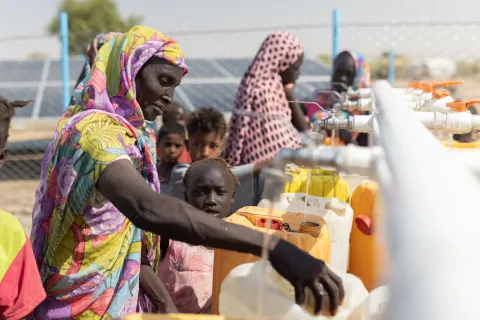
Fetching clean and safe water should never be such a burden. Yet for many girls like Nashwa, the daily search for water comes with heavy consequences. Thanks to the support of USAID, UNICEF has constructed a solar water facility providing clean and sufficient water for over 6,400 people from 900 households, every day.
This new facility has brought immense relief, especially to women and girls who no longer have to face long, dangerous journeys to find water. Not only does it save time and effort, but it also significantly reduces the risks of sexual violence that many face while searching for water in distant locations.


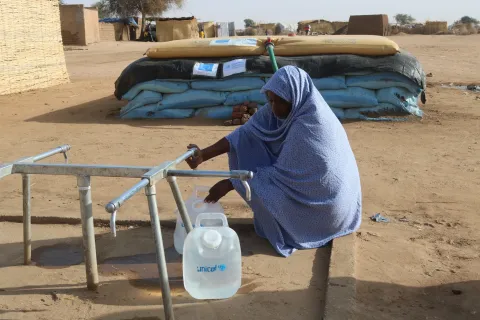
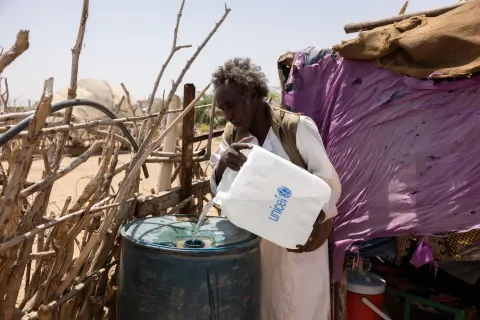
At the newly constructed nearby safe water facility, people can be seen throughout the day- boys, girls, men, and women- filling containers large and small, some transported by donkey carts. In no time, they are back home with enough water for their families.
For Nashwa, the water facility is a stone throw away from her home – not more than 5 minutes away.
“The distance became shorter, and it saved me so much effort,” she said with a smile.
Today, she collects water five times a day through a hustle free exercise and her home has sufficient water to support the family.
“I go quickly and return, and the water is clean. I feel very happy,” Nashwa shared.
Now that Nashwa spends much less time for fetching water, she has devoted most of her free time to reading the Quran and solving mathematics homework, the two things she likes most.
Improved water facilities closer to homes are game changers for rural children, especially girls, by improving their safety, health, and ability to focus on their education.
“The water facility has changed our lives,” Nashwa concluded.