Finding invisible leaks
How innovative technology is helping restore water systems damaged during the war in Sudan

Inside Al-Mogran water treatment plant in Khartoum, a team of engineers has its eyes fixed on a small black screen showing live footage from inside underground water pipes. From a distance, it might look like they are playing a video game. In reality, they are operating robotic technology that is helping restore Khartoum's damaged water network.
The technology was introduced by UNICEF to help detect water leakages, damaged pipes and blockages as part of efforts to restore basic services, including water systems, following years of conflict in Sudan.
For three years, the war raged in Khartoum. Water infrastructure was damaged and, in some areas, directly targeted, causing widespread destruction. The prolonged shutdown of water systems across much of the city also led to corrosion of pipelines and further leakages across the network.
Currently, an estimated 60 per cent of Khartoum's water network is affected by leakages, resulting in significant water losses across the system.
As more families return home, demand for clean and safe water is increasing. Without the rapid identification and repair of damaged infrastructure, millions of people could be left without adequate access to safe water, increasing the risk of waterborne diseases such as cholera and diarrhoea.
But the consequences of damaged water systems extend beyond service disruptions. In 2024 and 2025, Khartoum experienced a major cholera outbreak amid severe water shortages, damaged infrastructure and electricity disruptions that affected water supply systems. As access to safe water declined, many families were forced to rely on unsafe water sources, increasing the risk of disease transmission.
More than 24,000 cholera cases and 430 associated deaths were reported across the state's seven localities.
The outbreak underscored how restoring water infrastructure is not only an engineering priority, but also a critical public health intervention that can help protect children and families from deadly waterborne diseases.
Every drop of water lost through a damaged pipe means less water reaching a family, school or health facility. For children, unreliable water supply can mean longer journeys to collect water and greater exposure to disease.
That is why UNICEF introduced non-intrusive robotic technologies to identify leakages, damaged pipelines and blockages across the city’s main water network, helping improve reliable access to safe and clean water.
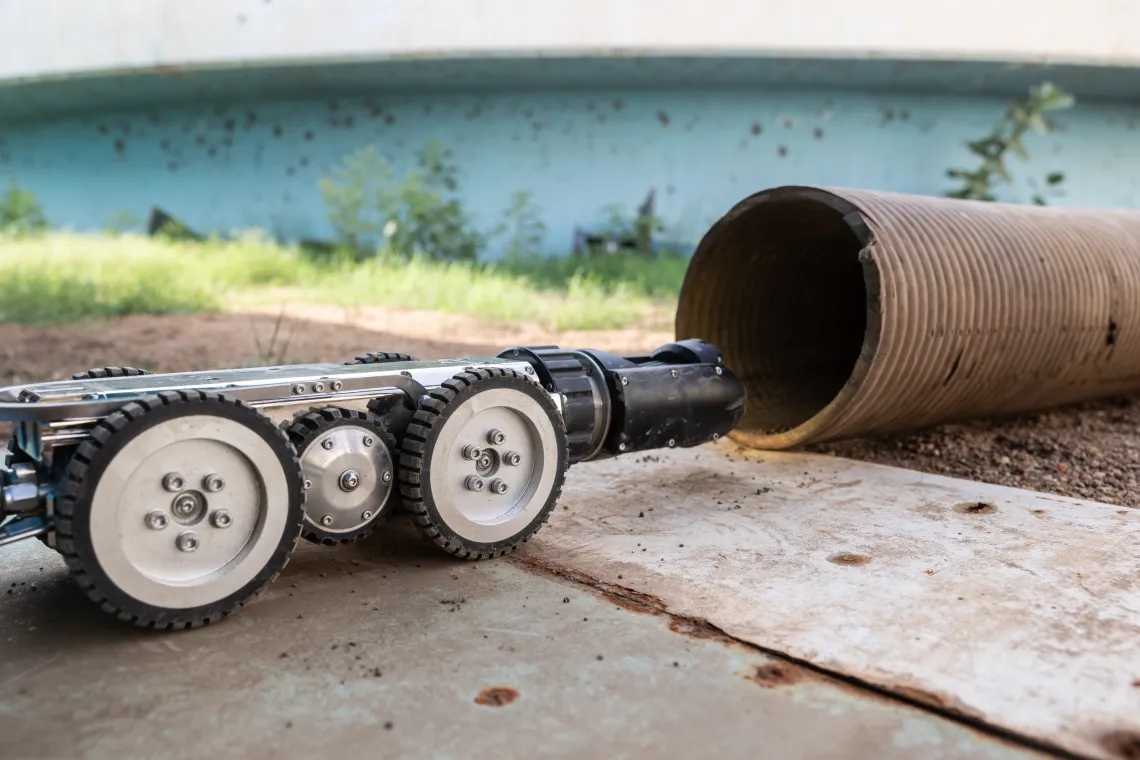
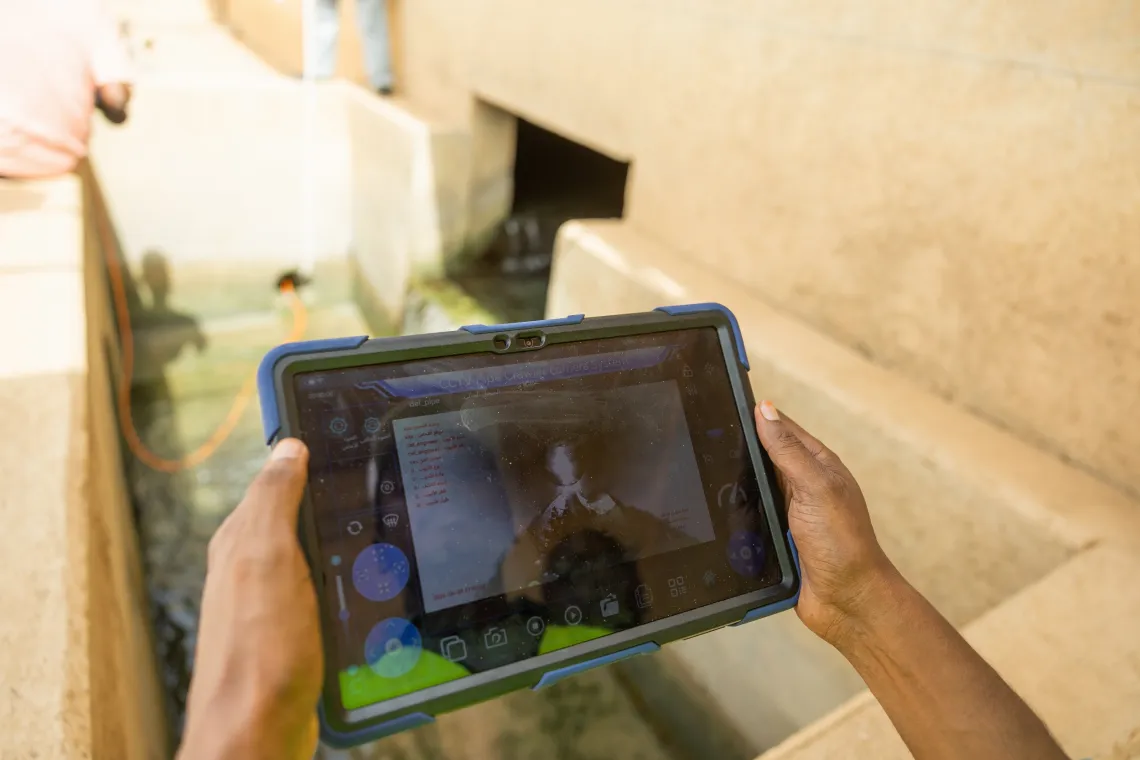
How does the technology work?
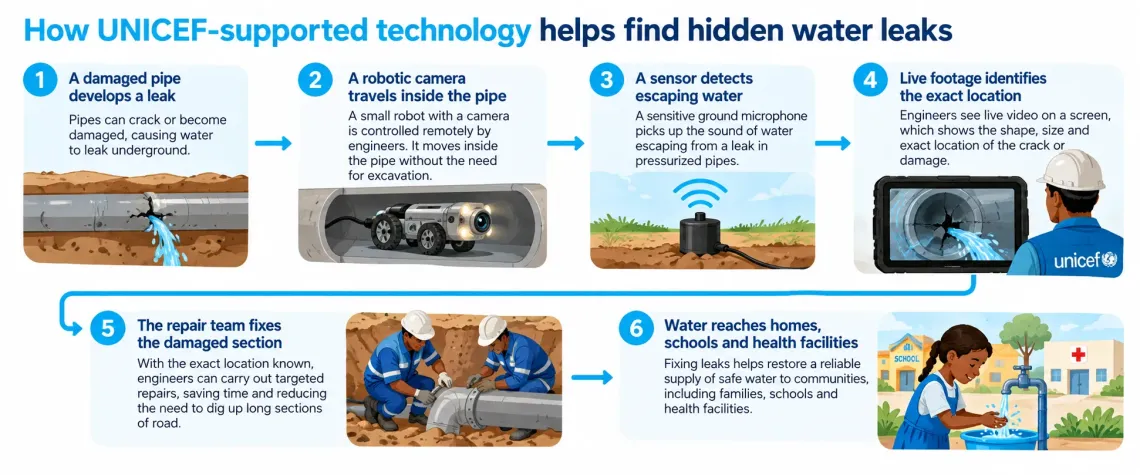
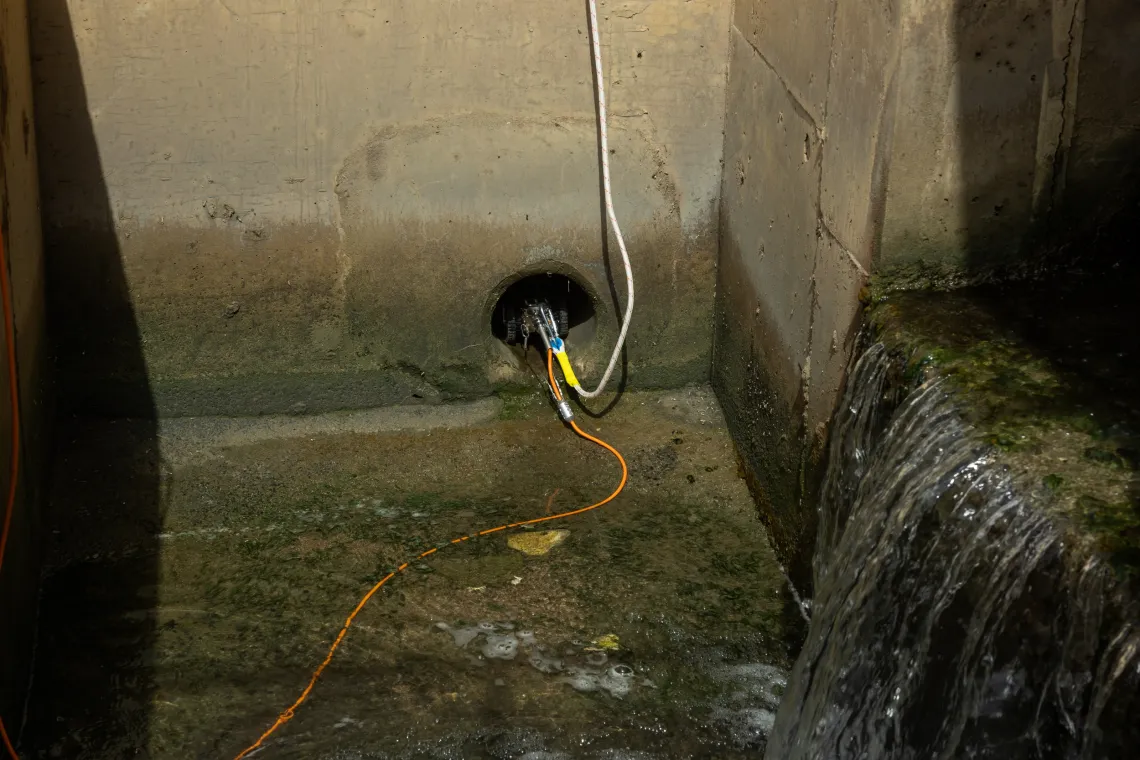
The robot is remotely controlled by engineers using a device and screen connected to a moving camera. It travels inside the pipe and transmits live video footage without the need for excavation.
Once inside, the robot can show the shape and size of a crack and help engineers pinpoint its exact location.
The system is complemented by a sensitive ground microphone that detects the sound of pressurized water escaping from leaking or damaged pipe.
Together, these tools enable engineers to identify leakages more quickly and accurately, significantly reducing the time needed to find the source of a problem.
“With the robot, we can quickly identify the location of the problem without having to break up large sections of the road,” says engineer Moataz Salah.
Previously, engineers often had to excavate pipes across long distances while searching for hidden leakages. The process was time-consuming and costly and could delayed repairs, leaving communities without reliable access to water for extended periods.
How UNICEF-supported technology helps find hidden water leaks
The team behind the technology
To support the continued use of the new technology, UNICEF supported a team of engineers from the State Water Corporation to undertake specialized training on the operation and maintenance of the robotics equipment.
Today, these engineers are applying their new skills to identify leakages, assess damaged pipelines and support faster repairs across Khartoum’s water network. They are also training other engineers for a larger team that will reach every locality.
Their work helps ensure that water pumped from treatment plants reaches children and families who depend on it.
The cost of water leakages
The impact of water leakages on communities can be vast.
Leaks can reduce water supply across entire communities, create waterlogged areas where mosquitoes can breed and increase the risk of contaminating the entire water network.
Identifying and repairing damaged sections of the network helps reduce water losses, restore services more quickly and improve reliable access to safe water for communities across Khartoum.
At Al-Mogran water treatment plant, Engineer Salah and his team are responsible for maintaining critical parts of the water network. Today, their focus is maintenance work of the water pump number four following a damage and blockage in a pipe.
But their work extends beyond the treatment plant and into communities that depend on the network.
In Bahri locality, for example, one community spent several days trying to locate a hidden water leak. Residents invested both time and money searching for the source of the problem, but their efforts were unsuccessful.
When the State Water Corporation team arrived with the robotic inspection equipment, the leak was identified in less than an hour.
“Three days later, we called to follow up and the people told us that the leakage was no more. The technology helped us solve the problem quickly and restore water for families immediately.”
For engineers working to rebuild Khartoum's water systems, innovation is helping accelerate recovery efforts. By detecting problems faster, reducing water losses and supporting more efficient repairs, the technology is helping restore access to safe water for thousands of families.
For children and families returning home after years of conflict, every repaired pipe means something essential: more reliable access to safe water.