Sudan launches Bed-net campaign to curb malaria in over 150 endemic localities

- English
- العربية
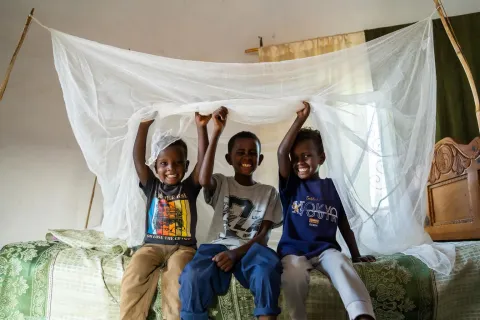
KASSALA, 21 December 2022 – The Ministry of Health in partnership with UNICEF have launched a bed-net campaign that will benefit 33 million people, including over 17 million children, in 150 localities with Long-Lasting Insecticide-Treated Nets (LLINs), protecting them from malaria, with huge thanks to financial support from the Global Fund.
During the campaign, one of the largest in the Middle East and North Africa region, over 18 million Long-Lasting Insecticide-Treated Nets (LLINs) will be distributed to the most vulnerable communities in Sudan. Community awareness drives are being implemented to enhance utilization of the bed nets.
Malaria remains one of the major causes of deaths in Sudan. Children, pregnant women, and marginalized communities are most at risk of suffering from malaria. During the first half of 2022, over 1 million cases of malaria were reported in 11 out of the 18 states in Sudan, with 30 per cent of them among children under five according to the Federal Ministry of Health epidemiological and Statistical report.
“Malaria is a major cause of morbidity and mortality in Sudan. Malaria complications can lead to death especially among children under five years and pregnant women, malaria negatively impacts economic productivity and annual income of individuals and the country at large. It also increases absenteeism of students from schools, hence, affecting their academic performance,” Dr. Haitham Muhammad Ibrahim Awad Allah, Federal Minister of Health emphasized.
“Sudan has adopted the use of LLINs as key strategy to control malaria especially in high-burden rural areas. During this unprecedented campaign, with support from the Global Fund, a total of 18 million bed nets will be distributed to universally cover 33 million individuals in 13 targeted states,” he added.
UNICEF is the largest provider of LLINs for children and families. During the last decade, UNICEF across the world delivered almost 300 million Long-Lasting Insecticide-Treated Nets (LLINs) to the most endemic areas in the world. In Sudan, the UN Children’s Agency distributed 4.6 million LLINs in 12 states in 2020, while about 9.2 million people were targeted with LLINs in 2017.
Sleeping under an insecticide-treated bed net (ITN) is the most common and most effective way to prevent malaria infection. The bed net campaign is therefore one of UNICEF’s strategic interventions to curb the malaria burden that threatens the lives of vulnerable communities especially children and women. According to the World Health Organization, the use of LLINs reduced malaria incidence by 50 per cent in Sub-Saharan Africa.
“Malaria is preventable and treatable. However, despite the high bed net coverage in the country, only 35 per cent of households with insecticide treated nets are using them. This is a missed opportunity in reducing the malaria burden,” said Mandeep O’Brien, UNICEF Representative in Sudan.
“This is why the campaign will have a special focus on social and behavioral interventions that will contribute to increased usage of bed nets, protect and save lives of children,” Ms. O’Brien noted.
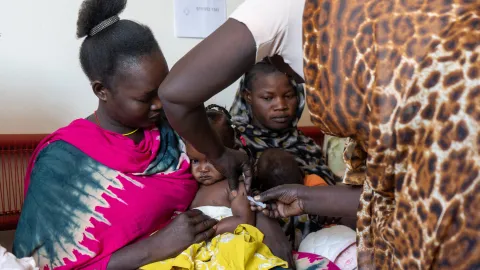
UNICEF and the World Health Organization are partnering with the Federal Ministry of Health to reduce the burden of malaria morbidity and mortality for children and mothers in Sudan.
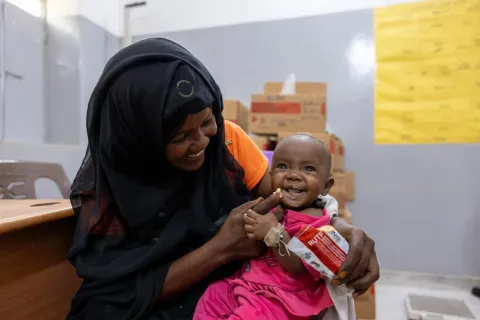
With the generous support of the Global Fund to Fight AIDS, Tuberculosis and Malaria, UNICEF is also supporting the Federal Ministry of Health to procure and deliver anti-malarial medicines and Rapid Diagnostic Kits (RDTs) which are critical to curbing malaria in Sudan.
Media contacts
Additional resources

About UNICEF
UNICEF promotes the rights and wellbeing of every child and is committed to the children of Sudan. We never give up on finding solutions that provide immediate help to save the lives of children or provide durable support so that those children grow up with dignity, health and an education.
For more information about UNICEF in Sudan and its work for children, follow us on Twitter, Facebook and Instagram