Young Mentor Mothers provide a safe space and hope for young girls and women
Dreams deferred but not denied for a young mother despite stigma and challenges

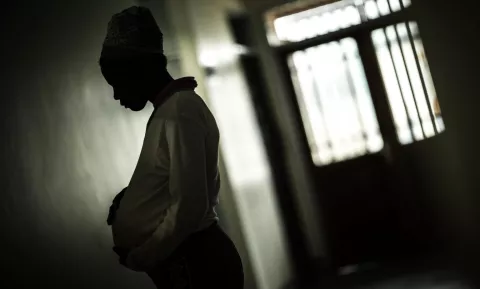
Ndwedwe, KwaZulu-Natal - Growing up in a family with strong religious and cultural values, Sbongakonke had high hopes for her future and wanted to make her mother proud.
But the day she found out she was pregnant, at the age of 24, those dreams seemed to vanish.
Hope was replaced by fear and disappointment as the thought of failing to uphold the values she had been brought up with consumed her. So, she kept the pregnancy to herself until she could muster up the courage to break the news.
“When word spread of my pregnancy, some people in my community started gossiping about me, and one person went to the extent of creating a fake social media profile so they could cyberbully me.”
In South Africa, like many parts of the world, adolescent pregnancy still carries stigma and young mothers are often rejected and ostracized, compounding existing vulnerabilities and negatively affecting their mental health and overall wellbeing.
Sbongakonke’s situation was no different.
“When word spread of my pregnancy, some people in my community started gossiping about me, and one person went to the extent of creating a fake social media profile so they could cyberbully me,” recalls Sbongakonke.
Despite the stress in the early stages of her pregnancy, she had the support of her unborn child’s father and drew strength to begin antenatal visits at her local clinic.

It is at Ndwedwe Community Health Centre where she first encountered the Young Mentor Mother (YMM) program.
UNICEF supports the Department of Health in implementing the YMM program in the provinces of Gauteng, KwaZulu-Natal and Eastern Cape.
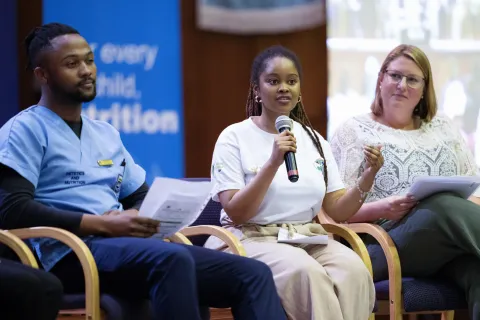
Young women, referred to as Peer Mentors, are trained to provide a range of health education and psychosocial support services at local clinics to girls and young women, including sexual reproductive health rights, maternal, newborn and child health, nutrition and HIV-prevention and treatment services.
Services are provided through group support and one-on-one consultations, facilitating access to services within and beyond clinics.
For Sbongakonke, this became a lifeline and Andile was assigned as her mentor.

Andile had walked the same journey, having had a child at a young age, and understood what Sbongakonke was going through.
“When I met Andile, she offered me psychosocial support and educated me about health interventions such as Pre-exposure prophylaxis (PrEP) to help protect me and my child. She helped restore my confidence and encouraged me to pursue my dreams”.
This, Sbongakonke says, allowed her to confide in Andile, especially as a fellow young woman who wouldn’t pass judgment on her.
Hope through helping fellow young mothers

Growing up as an orphan and having been born HIV-positive, Andile knew all about stigma.

“I wanted to be a voice for young mothers who are like me. We are the voice for them in our clinic, especially if they don’t feel comfortable confiding in older health workers.”
“When I met Sbongakonke, she had lost hope and confidence. Walking her journey with her, being there for her and seeing her doing so wonderfully now means a lot to me,” Andile says.
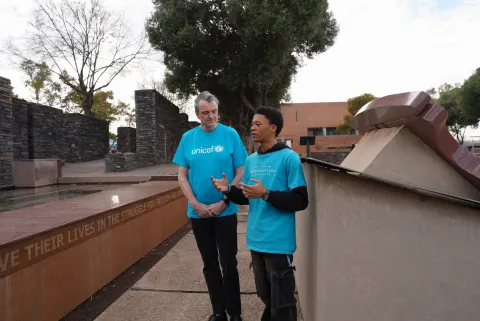
“Our aim as UNICEF, in partnership with the Department of Health through the YMM program, is to reduce the rate of unintended pregnancies and HIV infections among girls and young women,” says Boitumelo Morakile, the HIV/AIDS Officer at UNICEF South Africa.
“This support does more than respond - it empowers. It prevents future risk, protects young families, and strengthens communities.”

Dreams deferred, not denied

Sbongakonke dreams of becoming a healthcare worker one day and says the YMM program has spurred her on even more.
“I will spend some time raising my daughter in her early years and once I am back up on my feet, I will pursue my higher education again because I now know that I still can have a bright future and that hope has not been lost.”